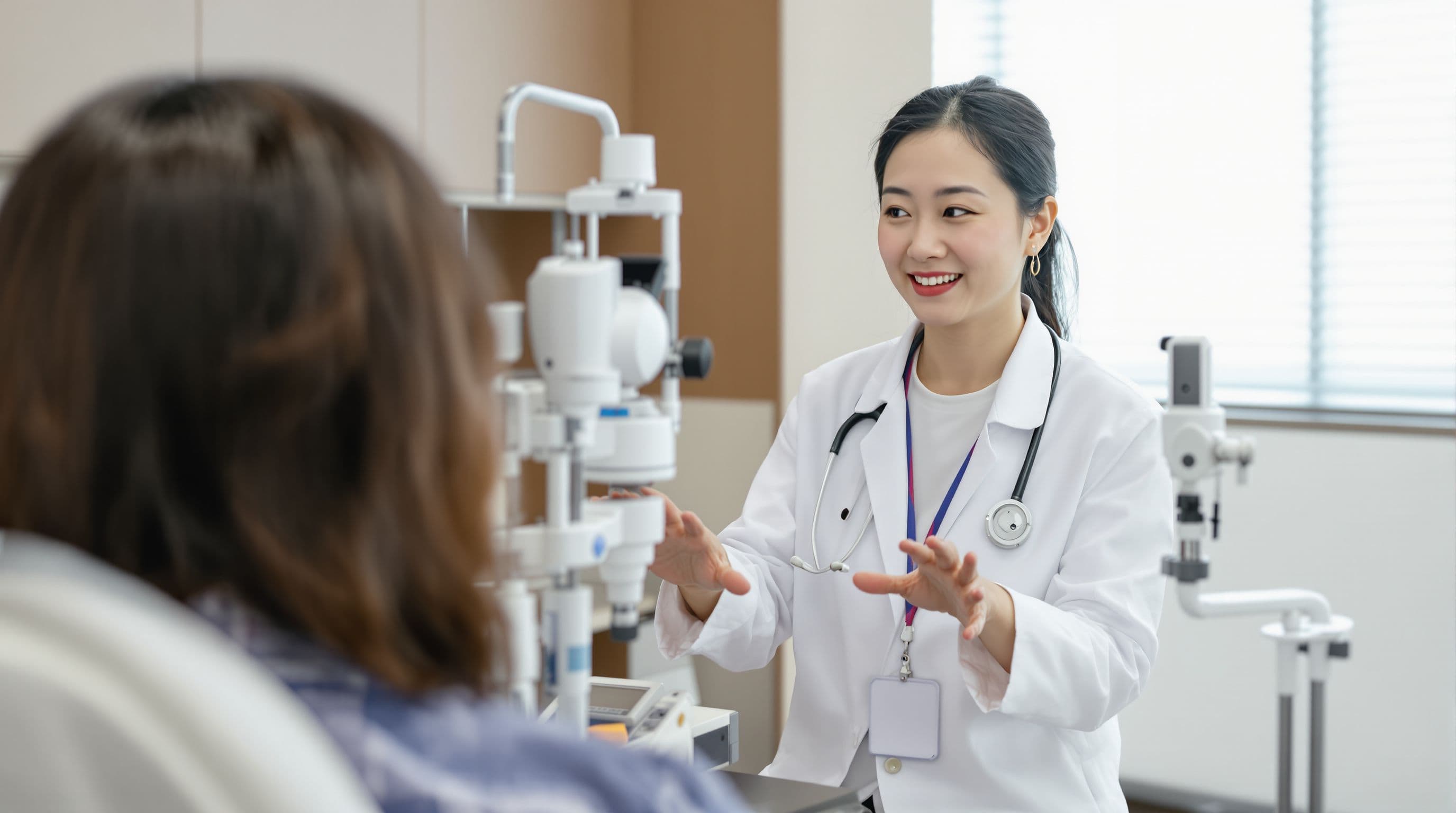
Medical Aesthetics
We help dermatology practices integrate AI into lesion analysis, teledermatology triage, treatment protocol optimization, and pathology workflows while maintaining diagnostic rigor and payer compliance.
CHALLENGES WE SEE
Manual documentation of patient visits and cosmetic consultations consumes 2-3 hours daily, reducing billable procedure time.
Inconsistent skin lesion assessment between providers leads to unnecessary biopsies and missed early-stage melanomas.
No-shows and last-minute cancellations for cosmetic procedures result in 20-30% revenue loss from unfilled appointment slots.
Insurance pre-authorization for medical dermatology treatments requires extensive staff time and delays patient care.
Tracking treatment outcomes for cosmetic procedures relies on subjective assessments rather than standardized measurements.
Managing inventory for both medical supplies and cosmetic products leads to frequent stockouts or expensive overstocking.
HOW WE CAN HELP
Know exactly where you stand.
Prove AI works for your organization.
Transform how your leadership thinks about AI in 2-3 intensive days.
Turn base AI models into domain experts that know your business.
Enhance consultations, operations, and marketing with AI.
Attract more patients and streamline your practice with AI.
PROOF

Mayo Clinic

Klarna

Octopus Energy
THE LANDSCAPE
Dermatology practices diagnose and treat skin conditions, perform cosmetic procedures, and provide surgical interventions for skin cancer and disorders. AI assists with lesion analysis, automates patient documentation, predicts treatment outcomes, and optimizes scheduling. Practices using AI improve diagnostic accuracy by 70% and increase patient throughput by 45%.
The dermatology market exceeds $20 billion annually in the US, driven by aging demographics and rising demand for aesthetic procedures. Practices typically blend medical services (insurance-based) with cosmetic treatments (cash-pay), creating hybrid revenue models that balance predictable insurance reimbursements with high-margin elective procedures.
DEEP DIVE
Key technologies include dermoscopy imaging systems, electronic health records, practice management platforms, and patient engagement tools. AI-powered diagnostic systems now analyze moles and lesions with dermatologist-level accuracy, while computer vision identifies skin cancer markers invisible to the human eye.
Data-driven research and reports relevant to this industry
Forrester
Forrester's analysis of AI adoption maturity across Asia Pacific markets including Singapore, Australia, India, Japan, and Southeast Asia. Examines industry-specific adoption rates, barriers to AI imp
ASEAN Secretariat
Multi-year implementation roadmap for responsible AI across ASEAN member states. Defines maturity levels for AI governance, from basic awareness to advanced implementation. Includes self-assessment to
Oliver Wyman
Analysis of AI adoption across Asian markets. Singapore, Japan, and South Korea lead adoption, but China dominates in AI talent and investment. Southeast Asia growing fastest from low base. Key findin
Intuit QuickBooks
Quarterly tracking of AI adoption and its impact on mid-market financial health. Based on anonymized data from 7M+ QuickBooks users. mid-market companies adopting AI-powered tools see 15% lower delinq
Our team has trained executives at globally-recognized brands


YOUR PATH FORWARD
Every AI transformation is different, but the journey follows a proven sequence. Start where you are. Scale when you're ready.
ASSESS · 2-3 days
Understand exactly where you stand and where the biggest opportunities are. We map your AI maturity across strategy, data, technology, and culture, then hand you a prioritized action plan.
Get your AI Maturity ScorecardChoose your path
TRAIN · 1 day minimum
Upskill your leadership and teams so AI adoption sticks. Hands-on programs tailored to your industry, with measurable proficiency gains.
Explore training programsPROVE · 30 days
Deploy a working AI solution on a real business problem and measure actual results. Low risk, high signal. The fastest way to build internal conviction.
Launch a pilotSCALE · 1-6 months
Roll out what works across the organization with governance, change management, and measurable ROI. We embed with your team so capability transfers, not just deliverables.
Design your rolloutITERATE & ACCELERATE · Ongoing
AI moves fast. Regular reassessment ensures you stay ahead, not behind. We help you iterate, optimize, and capture new opportunities as the technology landscape shifts.
Plan your next phaseAI lesion analysis systems work by processing dermoscopic images through deep learning algorithms trained on millions of labeled skin images. When you capture an image of a suspicious mole or lesion with a dermoscope connected to the AI system, the software analyzes dozens of visual features—color variation, border irregularity, asymmetry, texture patterns, and vascular structures—many of which are subtle or invisible to the human eye. The system then generates a risk assessment score and flags potential melanomas or other cancerous lesions for further evaluation. The accuracy claims are legitimate but require context. Clinical studies show AI systems achieving 95%+ sensitivity for melanoma detection, often matching or exceeding individual dermatologists. However, these systems work best as decision-support tools rather than replacements. In practice, we see the most success when dermatologists use AI as a "second opinion" that catches cases they might have missed and provides documentation for medical necessity. The real value isn't replacing clinical judgment—it's reducing false negatives, standardizing image quality across your practice, and providing defensible documentation for biopsies and procedures. Implementation matters significantly for accuracy. Systems perform poorly with inconsistent lighting, low-resolution images, or improper dermoscope positioning. Practices achieving the best results invest in staff training for image capture protocols and integrate AI feedback into their clinical workflow rather than treating it as an afterthought. The technology also continuously improves as it processes more images, so accuracy typically increases 6-12 months post-implementation once the system learns your specific patient demographics and image capture patterns.
The ROI from AI in dermatology practices typically manifests across three major areas: increased patient throughput, reduced administrative burden, and improved billing compliance. Practices implementing comprehensive AI solutions report 35-50% reduction in documentation time, which translates directly to seeing 4-6 additional patients daily per provider. If your average visit generates $200 in revenue, that's an additional $800-$1,200 daily per dermatologist, or roughly $200,000-$300,000 annually. AI-powered scheduling optimization adds another 15-20% capacity by reducing gaps and no-shows, while automated prior authorization and coding assistance improves clean claim rates by 25-30%. The financial payback timeline varies by implementation scope. Practices starting with AI scribes or automated documentation typically see positive ROI within 3-4 months, as these tools require minimal workflow disruption and immediately free up provider time. More comprehensive implementations involving diagnostic AI, practice management integration, and patient engagement platforms usually break even within 8-12 months. Initial investments range from $15,000-$50,000 for single-provider practices to $100,000-$250,000 for multi-location groups, depending on existing infrastructure and integration complexity. Beyond direct financial returns, we see significant indirect value that's harder to quantify but equally important. Providers report reduced burnout and higher job satisfaction when freed from documentation drudgery. Patient satisfaction scores typically improve 20-30% due to more face-time during visits and faster response times. Malpractice risk decreases when AI flags potentially dangerous lesions that might otherwise be dismissed. Many practices also find AI capabilities become a competitive differentiator for attracting both patients and top dermatology talent who want to work with cutting-edge technology rather than spending hours on paperwork.
The most significant risk is workflow disruption that reduces productivity during the transition period. We've seen practices lose 20-30% efficiency for 4-8 weeks when AI implementation isn't properly staged, causing provider frustration and revenue dips that undermine buy-in. The key is phased rollout—start with one use case like AI documentation for medical visits only, achieve competency, then expand to cosmetic consultations, then add diagnostic AI, then layer in scheduling optimization. Trying to transform everything simultaneously overwhelms staff and creates chaos that makes people want to revert to old systems. Data security and compliance present another critical challenge. AI systems processing patient images and clinical notes must be fully HIPAA-compliant with business associate agreements in place, encrypted data transmission, and secure storage. We recommend thoroughly vetting vendors for healthcare-specific security certifications and incident response protocols. Some practices face unexpected issues when AI vendors store data on cloud servers that don't meet regulatory requirements or when image analysis happens on non-compliant servers. Always verify data residency, encryption standards, and audit trail capabilities before signing contracts. Provider resistance is perhaps the most underestimated challenge. Experienced dermatologists sometimes view AI diagnostic suggestions as questioning their expertise, while others fear technology replacing their role. Address this proactively by framing AI as augmentation rather than replacement, involving physicians in vendor selection, and sharing decision-making authority on implementation pace. Start with enthusiastic early adopters, document their positive experiences, and let peer influence drive broader adoption. We also see better outcomes when practices set realistic expectations—AI won't be perfect immediately, and there will be learning curves for both the technology and your team.
Start by identifying your biggest operational pain point rather than chasing the most exciting AI application. If your dermatologists spend excessive time on documentation and regularly work late finishing notes, AI scribes or automated clinical documentation should be your entry point. If you're losing revenue to scheduling gaps and last-minute cancellations, intelligent scheduling systems deliver faster value. If you're concerned about missed melanomas or inconsistent diagnostic accuracy across providers, lesion analysis AI makes sense as a starting point. The worst approach is implementing AI because it sounds innovative without connecting it to a specific, measurable problem. Once you've identified the priority use case, conduct a 30-60 day pilot with one or two providers before practice-wide rollout. This allows you to identify integration issues, refine workflows, and build internal champions who can train others. During the pilot, track specific metrics—documentation time per patient, number of daily patients seen, claim denial rates, or diagnostic confidence scores—so you have concrete data proving value. Most AI vendors offer trial periods or pilot programs, and the investment in a limited test is far smaller than discovering major problems after full implementation. We recommend working backward from desired outcomes to select the right technology. Define what success looks like in concrete terms—"reduce documentation time by 50%" or "see 5 more patients daily" or "achieve 98% clean claim rate"—then evaluate vendors based on their ability to deliver those outcomes in practices similar to yours. Request references from dermatology practices specifically, not just general medical practices, as the workflow requirements differ significantly. Ask about EHR integration complexity, training requirements, ongoing support models, and typical time-to-value. The right first AI implementation should deliver measurable results within 90 days while requiring minimal disruption to patient care.
AI delivers substantial business intelligence advantages beyond clinical applications, particularly for optimizing the medical-cosmetic revenue mix that defines modern dermatology economics. Predictive analytics can identify medical patients who are strong candidates for cosmetic services based on demographics, treatment history, expressed concerns, and engagement patterns. For example, AI systems analyze patient records to flag individuals treated for acne scarring who might benefit from laser resurfacing, or patients asking about aging concerns during medical visits who could be introduced to injectable treatments. This targeted approach converts 15-25% of medical patients to cosmetic services compared to 3-5% with generic marketing. Patient acquisition and retention benefit enormously from AI-powered engagement tools. Chatbots handle routine appointment scheduling, answer common questions about procedures and pricing, and pre-qualify cosmetic consultation requests 24/7 without staff involvement. Automated follow-up systems send personalized skincare recommendations, treatment reminders, and replenishment prompts for medical-grade products, improving retention by 30-40%. AI also optimizes marketing spend by analyzing which channels and messages drive the highest-value patient acquisitions, then automatically adjusting campaign budgets to maximize ROI. Some practices use AI to predict patient lifetime value at first contact, allowing them to allocate more intensive service to high-value prospects. Scheduling optimization represents a major business advantage, especially for practices balancing quick medical visits with longer cosmetic procedures. AI systems learn your providers' efficiency patterns, procedure duration variations, and no-show likelihood by patient type, then build schedules that maximize revenue per day while minimizing gaps. Smart systems automatically fill cancellations by texting patients on waitlists, prioritizing those seeking high-value cosmetic procedures during prime time slots while filling early mornings and late afternoons with quick medical follow-ups. Practices using AI scheduling typically see 15-20% revenue increases from the same provider capacity simply by optimizing the mix and minimizing downtime.
Let's discuss how we can help you achieve your AI transformation goals.
