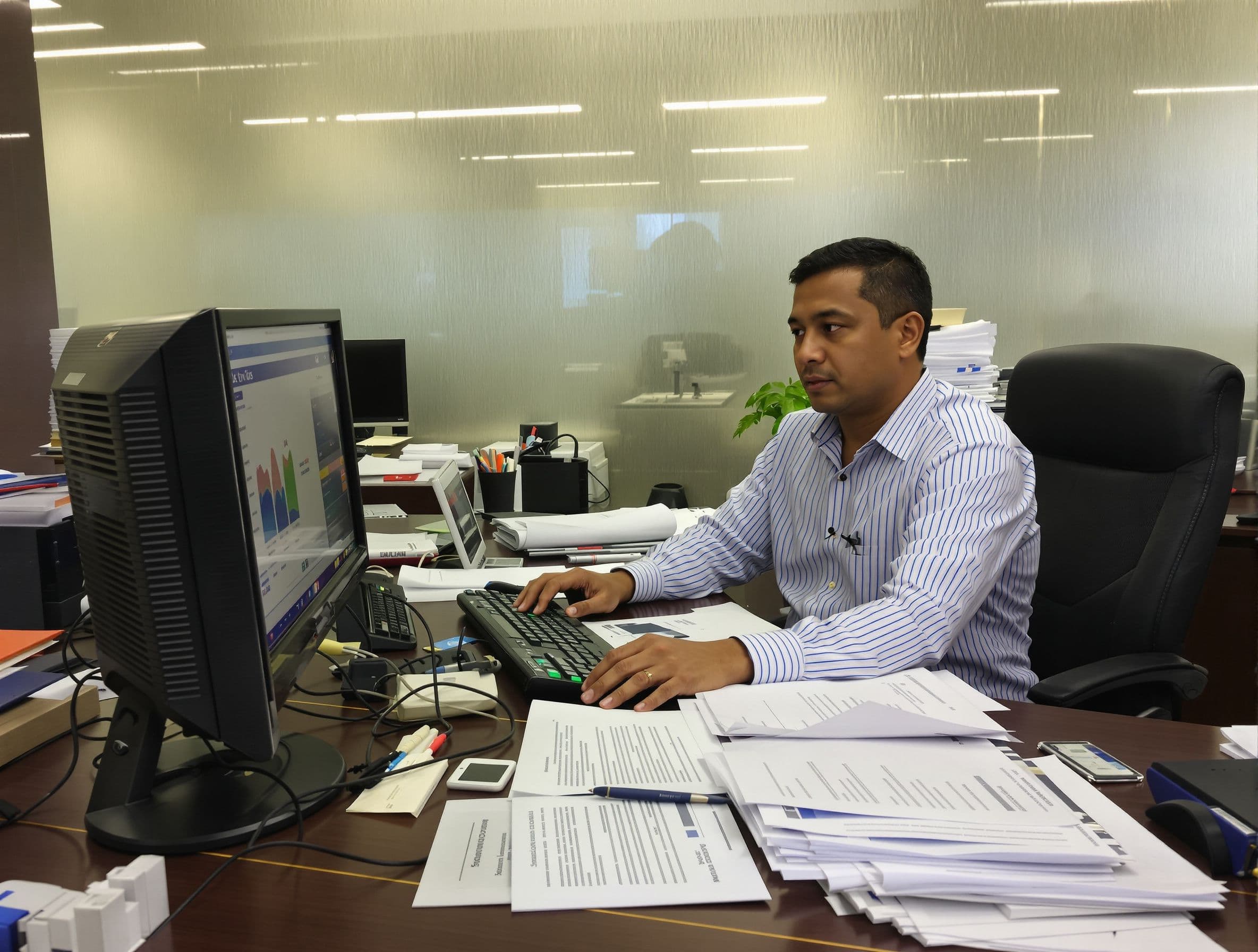
AI transformation for regulated financial institutions
Financial services organizations face unique AI implementation challenges. Regulatory requirements from MAS, BNM, and other authorities demand explainable, auditable AI systems. Model risk management frameworks must evolve to accommodate new technologies. Data privacy and cross-border restrictions add complexity to every deployment.
Every AI initiative triggers compliance review across MAS, BNM, and PDPA requirements. Your compliance team spends 3+ hours per regulatory update assessing AI implications—multiply that by 20+ updates per year.
AI models require the same governance rigor as traditional risk models—but the tooling and processes aren't mature yet. You need model validation frameworks that satisfy regulators while enabling innovation.
Your core banking platform is 15+ years old and every integration is a project. AI solutions need to work with existing infrastructure, not require a digital transformation first.
HOW WE CAN HELP
Know exactly where you stand.
Prove AI works for your organization.
Transform how your leadership thinks about AI in 2-3 intensive days.
Automate compliance monitoring and reduce regulatory risk with AI.
Deliver personalised banking experiences your customers expect.
Build structured frameworks for AI investment decisions in 1-2 days.
SPECIALIZATIONS
Malaysia / HRDF
Up to 100% HRDF claimable under SBL/SBL-Khas; typical programme cost RM3,000-RM15,000 per cohort
FUNDING
Government training subsidies and grants can offset a significant portion of your AI transformation costs. We help you identify and apply for relevant programs.
Malaysia / HRDF
Corporate AI Training Malaysia — HRDF Claimable Programmes 2026
Malaysia / HRDF
HRDF Levy and Contribution Guide Malaysia 2026
Malaysia / HRDF
HRDF Registration Guide — How to Register Your Company 2026
Singapore / SkillsFuture
Enhanced Training Support for SMEs in Singapore 2026
INSIGHTS
Our team has trained executives at globally-recognized brands


AI is reshaping financial services across credit risk assessment, fraud detection, regulatory compliance (RegTech), customer onboarding, and personalised wealth management. In Asia-Pacific specifically, institutions are leveraging AI to navigate complex multi-jurisdictional regulations and serve increasingly digital-first customers.
Key challenges include model explainability requirements from regulators (MAS, APRA, HKMA), data privacy across jurisdictions, algorithmic bias in lending decisions, and maintaining audit trails for AI-driven decisions. A robust AI governance framework is essential before scaling AI initiatives.
A pilot project typically takes 6-8 weeks. A full-scale implementation with governance frameworks, team training, and production deployment usually spans 4-6 months. The key is starting with high-impact, lower-risk use cases and building organisational confidence before tackling more complex applications.
ROI varies by use case, but common outcomes include 30-50% reduction in manual compliance review time, 20-40% improvement in fraud detection rates, and significant reduction in customer onboarding time. The fastest payback typically comes from automating repetitive, document-heavy processes.
We stay closely aligned with regulatory frameworks from MAS (Singapore), APRA (Australia), BNM (Malaysia), and other APAC regulators. Our governance frameworks are designed to meet current and emerging regulatory expectations, and we regularly brief clients on regulatory developments that affect their AI initiatives.
Book a 30-minute strategy call. We'll discuss your specific challenges and outline practical next steps.