Medical Aesthetics
We help aesthetic clinics deploy AI across patient consultation, treatment planning, inventory management, and marketing attribution while maintaining clinical governance and regulatory compliance.
CHALLENGES WE SEE
Managing multi-practitioner schedules with complex treatment durations leads to double-bookings and inefficient room utilization.
Inconsistent treatment documentation across providers creates compliance risks and makes outcome tracking nearly impossible.
Manual consultation-to-conversion process results in 40% of qualified leads not booking their first treatment.
Inventory management for injectables with short shelf lives causes waste from expiration or stock-outs during peak demand.
Difficulty predicting treatment results leads to patient dissatisfaction and increased touch-up appointments that erode margins.
Pricing optimization across multiple services and practitioners is manual, leaving significant revenue on the table.
HOW WE CAN HELP
Know exactly where you stand.
Prove AI works for your organization.
Transform how your leadership thinks about AI in 2-3 intensive days.
Enhance consultations, operations, and marketing with AI.
Grow your aesthetics clinic with AI-powered consultations and marketing.
Turn base AI models into domain experts that know your business.
PROOF

Mayo Clinic

Klarna

Octopus Energy
THE LANDSCAPE
Aesthetic clinics provide cosmetic treatments including Botox, fillers, laser procedures, and skin rejuvenation services to patients seeking appearance enhancement. AI personalizes treatment plans, predicts patient outcomes, automates appointment scheduling, and optimizes pricing strategies. Clinics using AI increase patient satisfaction by 50% and improve booking conversion by 60%.
The medical aesthetics market reaches $15 billion annually, driven by growing consumer demand for non-invasive procedures. Multi-practitioner clinics typically operate on appointment-based revenue models, with income from treatment packages, membership programs, and retail product sales. Average patient lifetime value ranges from $3,000-$8,000.
DEEP DIVE
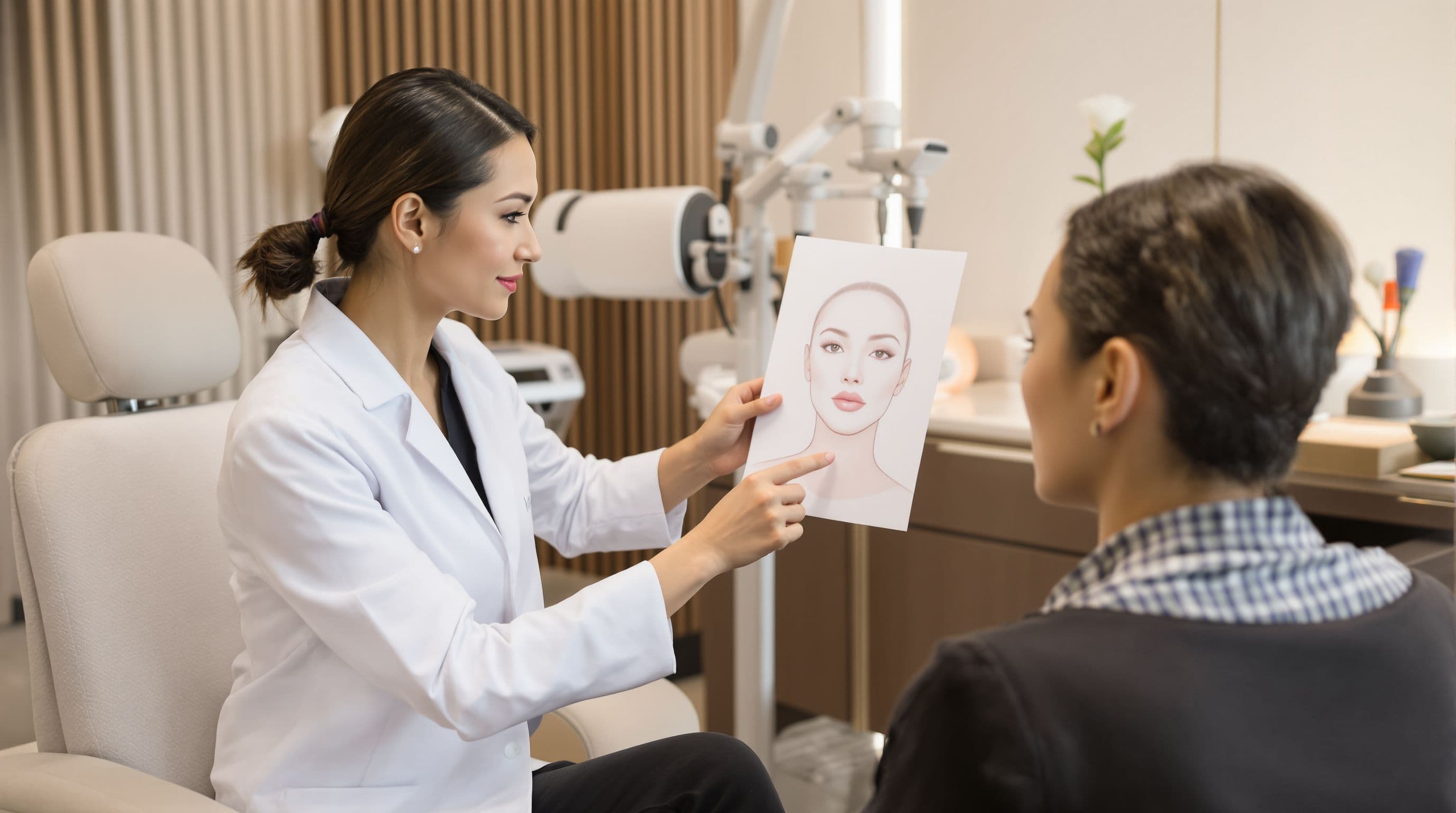
Key technologies include practice management systems, patient CRM platforms, digital imaging software, and inventory management tools. Leading clinics integrate AI-powered consultation tools that analyze facial structures and simulate treatment outcomes, reducing consultation time by 40%.
INSIGHTS
Data-driven research and reports relevant to this industry
Forrester
Forrester's analysis of AI adoption maturity across Asia Pacific markets including Singapore, Australia, India, Japan, and Southeast Asia. Examines industry-specific adoption rates, barriers to AI imp
ASEAN Secretariat
Multi-year implementation roadmap for responsible AI across ASEAN member states. Defines maturity levels for AI governance, from basic awareness to advanced implementation. Includes self-assessment to
Oliver Wyman
Analysis of AI adoption across Asian markets. Singapore, Japan, and South Korea lead adoption, but China dominates in AI talent and investment. Southeast Asia growing fastest from low base. Key findin
Intuit QuickBooks
Quarterly tracking of AI adoption and its impact on mid-market financial health. Based on anonymized data from 7M+ QuickBooks users. mid-market companies adopting AI-powered tools see 15% lower delinq
Our team has trained executives at globally-recognized brands


YOUR PATH FORWARD
Every AI transformation is different, but the journey follows a proven sequence. Start where you are. Scale when you're ready.
ASSESS · 2-3 days
Understand exactly where you stand and where the biggest opportunities are. We map your AI maturity across strategy, data, technology, and culture, then hand you a prioritized action plan.
Get your AI Maturity ScorecardChoose your path
TRAIN · 1 day minimum
Upskill your leadership and teams so AI adoption sticks. Hands-on programs tailored to your industry, with measurable proficiency gains.
Explore training programsPROVE · 30 days
Deploy a working AI solution on a real business problem and measure actual results. Low risk, high signal. The fastest way to build internal conviction.
Launch a pilotSCALE · 1-6 months
Roll out what works across the organization with governance, change management, and measurable ROI. We embed with your team so capability transfers, not just deliverables.
Design your rolloutITERATE & ACCELERATE · Ongoing
AI moves fast. Regular reassessment ensures you stay ahead, not behind. We help you iterate, optimize, and capture new opportunities as the technology landscape shifts.
Plan your next phaseAI-powered booking systems tackle no-shows through intelligent prediction and intervention. These systems analyze patient history, appointment timing, treatment type, and booking behavior to identify high-risk appointments before they become problems. When the system flags a likely no-show, it automatically triggers personalized interventions—sending strategically timed SMS reminders, offering easy rescheduling options, or prompting staff to make confirmation calls for high-value appointments like full-face laser treatments or multi-syringe filler sessions. The technology goes beyond simple reminders by optimizing your appointment book in real-time. If a patient has a 70% predicted no-show probability for a 2pm Botox appointment, the AI might automatically open that slot for online booking while placing the original patient on a confirmation-required list. Some systems even implement smart overbooking strategies based on historical patterns—if your Tuesday mornings historically see 25% no-shows for consultations, the AI calculates optimal overbooking levels without creating actual scheduling conflicts. We've seen clinics reduce no-shows from 20% to under 8% within three months of implementing these systems. The financial impact is substantial: for a clinic performing 400 appointments monthly with an average treatment value of $450, reducing no-shows by 12 percentage points recovers approximately $259,200 annually. The system also identifies patients with chronic no-show patterns, allowing you to adjust policies—like requiring deposits—for specific patient segments rather than applying blanket rules that might deter reliable clients.
The ROI timeline varies significantly based on which AI applications you prioritize, but most aesthetic clinics see measurable returns within 3-6 months. Quick-win applications like intelligent booking systems and automated follow-up sequences typically pay for themselves in the first quarter. If you're spending $8,000 monthly on patient acquisition and an AI system improves your booking conversion from 35% to 56% (the 60% improvement cited in industry benchmarks), you're effectively getting $4,800 more value from the same ad spend—that's $57,600 annually from one application alone. Medium-term returns (6-12 months) come from AI applications requiring more integration and training data, like predictive inventory management and treatment outcome simulation tools. A clinic spending $15,000 monthly on injectables with 12% waste due to expiration can reduce that to 3-4% through AI-optimized ordering, saving approximately $13,500 annually. The outcome simulation tools take longer to show ROI because you need to build a library of before-after images and patient data, but once operational, they increase consultation-to-treatment conversion by 30-40% by helping patients visualize results. We recommend starting with a phased approach: implement booking optimization and automated patient communication first (Month 1-2), add treatment documentation and follow-up identification next (Month 3-4), then layer in advanced applications like dynamic pricing and outcome prediction (Month 6+). Most clinics investing $15,000-$30,000 in AI infrastructure see complete payback within 12-18 months, with ongoing annual benefits of $75,000-$150,000 depending on clinic size. The key is choosing systems that integrate with your existing practice management software rather than requiring complete platform replacement.
AI-driven treatment personalization in aesthetic clinics is very real, though the sophistication varies considerably between systems. The most practical application combines computer vision analysis with patient history and preferences to generate customized recommendations. When a patient comes in concerned about aging, the AI analyzes facial photographs to quantify specific concerns—measuring mid-face volume loss, mapping fine lines, assessing skin texture, and identifying asymmetries. It then cross-references these findings with the patient's age, skin type, budget, and previous treatments to suggest an optimized treatment sequence. For example, it might recommend starting with neuromodulators for forehead lines, followed by hyaluronic acid fillers in the cheeks, rather than the reverse approach. The technology excels at creating data-driven treatment roadmaps that consider both aesthetic goals and practical constraints. If a patient has a $2,000 budget and wants to address multiple concerns, the AI prioritizes treatments by impact-per-dollar and schedules them across multiple visits to avoid overwhelming results. It also factors in recovery time—if your system knows a patient has a wedding in six weeks, it won't recommend aggressive laser resurfacing that requires three weeks of downtime. More advanced systems analyze thousands of before-after cases to predict individual patient responses based on similar facial structures, skin types, and age ranges, setting realistic expectations during consultations. That said, AI personalization works best as a clinical decision support tool, not a replacement for practitioner expertise. The technology provides data-backed starting points and catches things human practitioners might miss—like a patient being due for a touch-up based on typical filler longevity patterns—but experienced injectors still make final decisions. We've found the biggest value is consistency across multiple practitioners in your clinic; the AI ensures every provider considers the same comprehensive factors, reducing the variability in treatment planning that often occurs in multi-practitioner environments.
The most significant risk is data quality and patient privacy management. AI systems are only as good as the data they're trained on, and aesthetic clinics often have inconsistent treatment documentation across practitioners. If your before-after photos aren't standardized (different lighting, angles, camera settings), the AI's outcome predictions will be unreliable. Similarly, if treatment notes are sparse or inconsistent—one practitioner documents "1mL Juvederm mid-face" while another writes "cheek filler"—the system can't learn meaningful patterns. You'll need to invest 2-3 months in standardizing documentation protocols before AI applications deliver reliable value. The privacy dimension is equally critical; you're handling sensitive patient images and medical information, requiring HIPAA-compliant systems with robust encryption and access controls. The second major challenge is staff adoption and workflow disruption. Practitioners who've relied on intuition and experience for years often resist AI recommendations, viewing them as threats to their clinical autonomy. Front desk staff may see automated booking systems as job threats rather than tools that eliminate tedious tasks. We've seen clinics invest $40,000 in AI technology only to have it sit unused because they skipped change management. Successful implementation requires involving your team early, clearly communicating that AI handles repetitive tasks while freeing practitioners for high-value patient interactions, and providing thorough training. Plan for a 3-6 month adoption curve where productivity might temporarily dip before improvements materialize. The third risk is over-reliance on AI for clinical decisions, particularly with outcome prediction tools. These systems provide probabilities based on historical data, not guarantees. A patient seeing a simulated outcome of lip filler treatment might expect that exact result, creating liability issues if natural variation produces different outcomes. You need clear informed consent processes explaining that AI simulations are educational tools showing likely ranges, not promises. Additionally, some AI pricing optimization tools might recommend rates that feel uncomfortable—suggesting premium pricing for high-demand Saturday slots or charging different rates based on patient price sensitivity. You'll need to establish ethical guidelines around dynamic pricing that align with your clinic's values and local market expectations.
Start by auditing your current pain points rather than chasing every AI capability. If you're losing $30,000 annually to no-shows, prioritize intelligent booking and reminder systems. If you're spending 10 hours weekly manually following up with patients due for Botox touch-ups, implement AI-driven patient communication first. Most aesthetic clinic owners make the mistake of seeking comprehensive AI platforms when focused solutions addressing your top 2-3 problems deliver faster ROI with less complexity. Create a simple spreadsheet listing your operational challenges, estimate the cost of each problem (lost revenue, staff time, product waste), and rank them. This becomes your implementation roadmap. For technical implementation, look for AI-enhanced versions of software categories you already use rather than standalone AI products requiring integration. If you're currently using Aesthetics Pro or Nextech, explore their AI modules for appointment optimization and patient engagement—these integrate seamlessly with your existing workflows. For outcome simulation, platforms like Crisalix and ModiFace are designed specifically for aesthetic practices with minimal technical setup. Many offer white-labeled iPad apps your consultants can use immediately. The key is choosing solutions with strong vendor support and training; you're not hiring data scientists, you're buying tools with built-in intelligence that your current team can operate. We recommend a 90-day pilot approach: select one high-impact AI application, implement it fully with one or two practitioners, measure results rigorously, then expand based on demonstrated value. For example, start with AI-powered patient communication for just your injectable patients. Track metrics like rebooking rates, time-to-next-appointment, and staff hours saved. If you see a 25% improvement in repeat booking rates within 90 days, you've validated the technology and built internal confidence for expanding to other applications. Budget $5,000-$15,000 for your first AI implementation including software, training, and process adjustment time. Most importantly, assign an internal champion—often a tech-savvy practitioner or your practice manager—who owns the implementation and becomes the go-to resource as you scale AI across your clinic.
Let's discuss how we can help you achieve your AI transformation goals.
