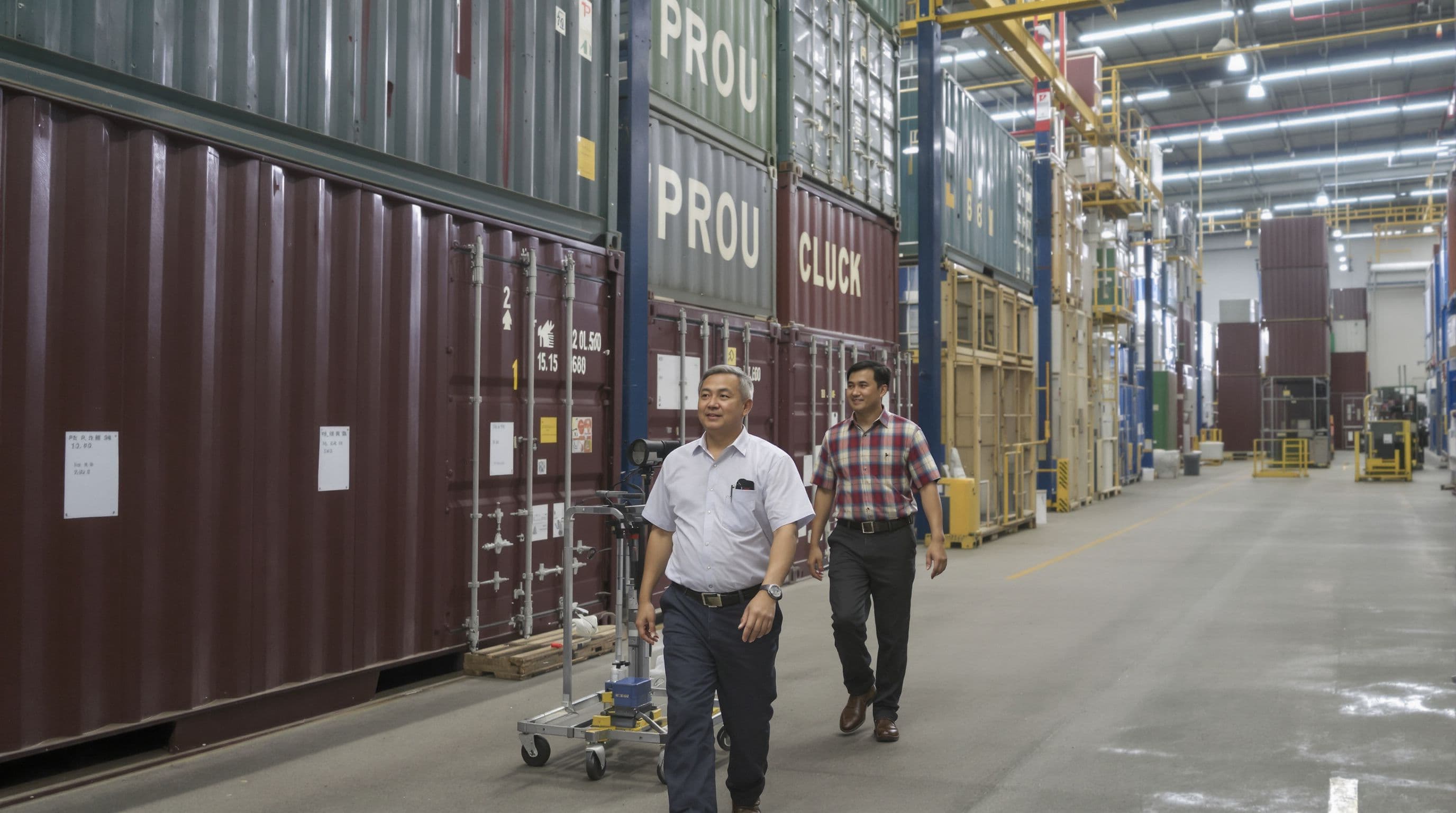
Family Business
We advise family-owned trading and distribution enterprises on digital transformation of procurement, logistics optimization, and governance modernization while preserving relationship-driven competitive advantages across ASEAN supply chains.
CHALLENGES WE SEE
Inconsistent pricing across multiple sales channels and family-managed branches erodes profit margins and creates customer confusion about actual product costs.
Manual inventory tracking across warehouses leads to frequent stockouts of fast-moving items while slow-moving products tie up working capital unnecessarily.
Legacy customers receive preferential treatment based on family relationships rather than data-driven credit risk assessment, increasing bad debt exposure significantly.
Succession planning lacks clear performance metrics, making it difficult to objectively evaluate next-generation family members' readiness for leadership roles in operations.
Sales team relies on personal relationships and intuition rather than demand forecasting, resulting in missed cross-selling opportunities and inefficient territory coverage.
Product procurement decisions depend on supplier relationships built over decades without analyzing cost trends, quality data, or alternative vendor performance metrics.
HOW WE CAN HELP
Know exactly where you stand.
Prove AI works for your organization.
Transform how your leadership thinks about AI in 2-3 intensive days.
Turn base AI models into domain experts that know your business.
Make smarter hiring decisions with AI-powered talent insights.
Deliver personalised banking experiences your customers expect.
THE LANDSCAPE
Trading and distribution companies operate in complex, fast-moving environments where they manage wholesale operations, inventory logistics, and supply chain coordination connecting manufacturers with retailers and end customers. These businesses face constant pressure to balance inventory costs, manage supplier relationships, optimize delivery routes, and respond to volatile market demand while maintaining thin profit margins in competitive markets.
AI transforms trading and distribution operations through demand forecasting that analyzes historical sales data, seasonal patterns, and market signals to predict inventory requirements. Machine learning algorithms optimize stock levels across multiple warehouses, automatically triggering reorders and preventing both stockouts and overstock situations. Intelligent order routing systems determine the most efficient fulfillment locations and delivery methods, while dynamic pricing engines adjust wholesale prices based on inventory levels, competitor pricing, and customer segments.
DEEP DIVE
Key technologies include predictive analytics for demand planning, computer vision for automated inventory counting and quality inspection, natural language processing for supplier communication and document processing, and optimization algorithms for route planning and warehouse operations. Distributors implementing AI solutions reduce stockouts by 60%, improve inventory turnover by 45%, and increase profit margins by 30%.
INSIGHTS
Data-driven research and reports relevant to this industry
Forrester
Forrester's analysis of AI adoption maturity across Asia Pacific markets including Singapore, Australia, India, Japan, and Southeast Asia. Examines industry-specific adoption rates, barriers to AI imp
ASEAN Secretariat
Multi-year implementation roadmap for responsible AI across ASEAN member states. Defines maturity levels for AI governance, from basic awareness to advanced implementation. Includes self-assessment to
Oliver Wyman
Analysis of AI adoption across Asian markets. Singapore, Japan, and South Korea lead adoption, but China dominates in AI talent and investment. Southeast Asia growing fastest from low base. Key findin
Intuit QuickBooks
Quarterly tracking of AI adoption and its impact on mid-market financial health. Based on anonymized data from 7M+ QuickBooks users. mid-market companies adopting AI-powered tools see 15% lower delinq
Our team has trained executives at globally-recognized brands


YOUR PATH FORWARD
Every AI transformation is different, but the journey follows a proven sequence. Start where you are. Scale when you're ready.
ASSESS · 2-3 days
Understand exactly where you stand and where the biggest opportunities are. We map your AI maturity across strategy, data, technology, and culture, then hand you a prioritized action plan.
Get your AI Maturity ScorecardChoose your path
TRAIN · 1 day minimum
Upskill your leadership and teams so AI adoption sticks. Hands-on programs tailored to your industry, with measurable proficiency gains.
Explore training programsPROVE · 30 days
Deploy a working AI solution on a real business problem and measure actual results. Low risk, high signal. The fastest way to build internal conviction.
Launch a pilotSCALE · 1-6 months
Roll out what works across the organization with governance, change management, and measurable ROI. We embed with your team so capability transfers, not just deliverables.
Design your rolloutITERATE & ACCELERATE · Ongoing
AI moves fast. Regular reassessment ensures you stay ahead, not behind. We help you iterate, optimize, and capture new opportunities as the technology landscape shifts.
Plan your next phaseAI-powered demand forecasting goes far beyond the basic historical averages most distributors rely on. Modern systems analyze dozens of variables simultaneously—seasonal patterns, economic indicators, weather forecasts, regional events, competitor activities, and even social media trends—to predict demand with remarkable accuracy. For example, a beverage distributor we work with reduced stockouts by 65% by implementing machine learning models that detected subtle patterns like how temperature changes three days ahead correlated with specific product demand shifts. The real power comes from continuous learning. Unlike static forecasting models, AI systems improve their predictions every week as they ingest new sales data and refine their understanding of your unique market dynamics. They can identify which products tend to move together, which customers order in predictable cycles, and which external factors genuinely impact your inventory needs versus statistical noise. For implementation, we recommend starting with your most problematic product categories—typically high-value items with volatile demand or perishables with short shelf lives. Deploy AI forecasting for these segments first, run it parallel to your existing system for 2-3 months to build confidence, then expand. Most distributors see ROI within 6-9 months through reduced emergency orders, fewer markdowns on excess stock, and improved customer satisfaction from better availability.
The ROI timeline varies significantly based on which AI applications you prioritize, but most distributors see measurable returns within 6-12 months for properly scoped implementations. Quick wins typically come from automated document processing and order entry—we've seen distributors eliminate 15-20 hours of manual data entry weekly within the first month, translating to immediate labor cost savings. Similarly, AI-powered route optimization often delivers 12-18% fuel cost reductions and enables 10-15% more deliveries per vehicle within the first quarter. Medium-term returns (6-12 months) emerge from demand forecasting and inventory optimization. A building materials distributor recently achieved 42% improvement in inventory turnover within eight months, freeing up $2.3 million in working capital that had been tied up in slow-moving stock. The key is that AI systems need sufficient historical data and time to learn your patterns—rushing implementation often means suboptimal initial results. Longer-term strategic value (12-24 months) comes from compound effects: better demand forecasts enable more confident supplier negotiations, improved inventory positions strengthen customer relationships, and accumulated data insights reveal market opportunities you couldn't see before. Calculate ROI beyond just cost savings—include revenue gains from reduced stockouts, margin improvements from dynamic pricing, and competitive advantages from faster market response. Most family-owned distributors we work with target 200-300% ROI over three years, and well-executed implementations typically exceed these targets.
This is actually one of the most common—and solvable—challenges in distribution. You don't need your entire ecosystem to be digitally advanced to benefit from AI. Natural language processing and computer vision technologies now excel at extracting structured data from unstructured sources like email orders, PDF invoices, and even scanned handwritten documents. We've implemented systems that automatically process supplier emails, extract order details, cross-reference with inventory, and generate purchase orders without human intervention—achieving 94% accuracy rates. For customer interactions, conversational AI can handle routine order inquiries via phone, WhatsApp, or email while seamlessly escalating complex situations to your team. A food distributor we worked with deployed an AI assistant that handles 60% of routine customer queries about order status, product availability, and pricing, freeing their sales team to focus on relationship building and complex negotiations. The system learns from your actual communication history, so it naturally adapts to your business terminology and customer expectations. The strategy is to position AI as your translation layer between traditional business practices and modern efficiency. Start by digitizing your internal operations—let AI extract data from whatever format it arrives in, then use that structured data for forecasting and optimization. Gradually, as you demonstrate value through faster response times and fewer errors, partners often become more willing to adopt collaborative digital tools. Focus first on automating the repetitive data handling that drains your team's time, not on forcing ecosystem-wide digital transformation.
The most common failure point is poor data quality—AI systems are only as good as the data they learn from. Many distributors discover their historical sales data is riddled with inconsistencies: product codes that changed over time, duplicate customer records, returned items logged incorrectly, or promotional sales mixed with regular demand. We always recommend a data audit before implementation. If your system shows a product simultaneously in two warehouses with different names, or if you can't cleanly separate one-time bulk orders from regular demand patterns, your AI predictions will be unreliable. The second major risk is over-automation without human oversight, especially in the early stages. AI should augment decision-making, not replace business judgment entirely. A frozen food distributor nearly damaged key customer relationships by letting their AI system automatically reject orders that exceeded credit limits, without considering long-standing relationships and verbal agreements. Smart implementation means defining clear guardrails: which decisions AI can make autonomously (like routine reorders), which require human approval (large purchases, new suppliers), and which should remain entirely human-driven (strategic partnerships, crisis management). Finally, inadequate change management kills many technically sound AI projects. Your warehouse staff, sales team, and operations managers need to understand how AI helps them, not threatens them. We've seen implementations fail because experienced employees weren't consulted, felt their expertise was being dismissed, and subtly sabotaged the system by working around it. Involve your frontline people early, show them how AI eliminates their frustrating tasks rather than their jobs, and create feedback loops where their domain expertise improves the AI's performance. The technology is rarely the limiting factor—organizational adoption is.
Start with one high-impact, low-complexity problem rather than attempting a comprehensive transformation. For most distributors, the sweet spot is demand forecasting for your top 20% of SKUs—the products that generate the majority of your revenue. This delivers substantial value (reduced stockouts, better cash flow, improved service levels) while requiring relatively straightforward implementation. Modern AI platforms designed for distribution often come pre-trained on similar businesses, so you're not starting from scratch. A beverage distributor with zero data science expertise implemented forecasting software that reduced their safety stock requirements by 28% within five months. Look for solutions with strong vendor support and industry-specific expertise rather than generic AI platforms. You want a partner who understands distribution challenges like seasonality, promotional impacts, and the difference between sell-in and sell-through data. Ask potential vendors about their implementation methodology, typical time-to-value, and what data you'll need to provide. The best solutions include guided onboarding, pre-built integrations with common distribution ERPs, and ongoing optimization support. We recommend forming a small internal team with representatives from operations, sales, and IT (even if IT is one person or an external consultant). This team's job isn't to build AI—it's to clearly define your business problem, ensure data accessibility, and serve as the bridge between vendor technology and daily operations. Start with a 3-6 month pilot focused on measurable outcomes, document lessons learned, then expand to additional use cases. Many successful family distributors now running sophisticated AI operations started exactly this way—one focused problem, external expertise, clear success metrics, and patient scaling.
Let's discuss how we can help you achieve your AI transformation goals.