Hospitals and health systems provide comprehensive inpatient and outpatient care including emergency services, surgery, diagnostics, and specialty treatment across multiple facilities. This $1.3 trillion U.S. sector faces mounting pressure from labor shortages, rising costs, and value-based care mandates that tie reimbursement to outcomes rather than volume. AI improves patient flow, predicts readmission risks, optimizes staffing levels, and accelerates diagnosis. Systems using AI reduce wait times by 40%, improve bed utilization by 35%, and decrease readmissions by 25%. Key technologies include computer vision for medical imaging analysis, natural language processing for clinical documentation, and predictive analytics for capacity planning and sepsis detection. Major pain points include clinician burnout from documentation burden, emergency department overcrowding, inefficient bed turnover, and difficulty predicting patient volumes. Revenue depends on patient admissions, procedural volumes, and quality metrics that affect government and commercial payer reimbursement rates. Digital transformation opportunities center on ambient clinical intelligence that automates documentation, AI triage systems that prioritize patients by acuity, and operational command centers using real-time data to coordinate resources across campuses. Remote patient monitoring and virtual nursing extend care capacity while reducing physical staffing constraints.
We understand the unique regulatory, procurement, and cultural context of operating in Sri Lanka
Sri Lanka's primary data protection legislation establishing rights for data subjects and obligations for data controllers and processors
Framework allowing financial institutions and fintechs to test innovative products including AI-driven solutions under regulatory supervision
Provides legal recognition for electronic records and digital signatures, foundational for digital commerce and AI implementations
No mandatory data localization requirements for most commercial sectors. Banking and financial services data is expected to be accessible to Central Bank for regulatory oversight but does not require physical storage in Sri Lanka. Government procurement often prefers local or regional data hosting. Cross-border data transfers permitted under Personal Data Protection Act with adequate safeguards. Cloud adoption increasing with AWS Singapore, Azure Singapore, and Google Cloud Singapore commonly used due to lack of local hyperscale data centers.
Government procurement follows Central Procurement Guidelines with preference for competitive bidding processes through Government Procurement Portal. Decision cycles typically 3-6 months for government projects with multiple committee approvals required. State-owned enterprises (SOEs) and banks drive larger technology purchases with RFP processes favoring established vendors with local presence or partnerships. Private sector procurement faster (1-3 months) with relationship-based selling important. Proof-of-concept (POC) stages common before full deployment. Local representation or partnerships with Sri Lankan system integrators often required for government tenders.
ICTA Sri Lanka provides grants and support through programs like the Innovation Challenge and Digital Skills programs. Export Development Board offers support for tech exporters including BPO and software development companies. Tax holidays available for IT/BPO companies under Board of Investment (BOI) agreements, typically 5-10 years. Limited specific AI subsidies but general ICT sector benefits apply. Startup Sri Lanka initiative provides incubation and acceleration support. Academic institutions receive research grants through National Research Council but AI-specific funding remains limited.
Business culture emphasizes relationship-building and face-to-face meetings before major commitments. Hierarchical decision-making with senior executives and board-level approvals required for significant investments. Respect for seniority and formal communication protocols important in corporate and government settings. Family-owned conglomerates and state enterprises dominate economy with conservative technology adoption patterns. English proficiency strong in business community but multilingual support (Sinhala/Tamil) valued for customer-facing applications. Work culture balances traditional values with growing startup dynamism in Colombo tech scene. Personal connections and trusted referrals carry significant weight in vendor selection.
By 2026, the US faces a shortage of over 3 million lower-wage healthcare workers (aides, medical assistants, foodservice staff) with rural and underserved communities hit hardest. Burnout, vacancies, and turnover strain remaining staff while compromising care quality and patient safety.
Regulatory reporting requirements and administrative workloads continue escalating while clinical time decreases. Physicians spend more time on EHR documentation, prior authorizations, and compliance tasks than patient care, accelerating burnout and reducing throughput.
Hospitals rely on expensive agency nurses and locum physicians to fill gaps, with agency costs often 2-3x permanent staff salaries. This creates unsustainable labor budgets while agency workers lack institutional knowledge, reducing care coordination and patient outcomes.
Despite massive EHR investments, documentation remains painfully slow and error-prone. Clinicians spend 2-3 hours on notes for every hour of patient care, with copy-paste practices creating legal liability while adding no clinical value.
Health systems lack predictive tools to forecast staffing needs based on patient acuity, seasonal trends, and procedure schedules. This leads to expensive overstaffing during slow periods and dangerous understaffing during high-acuity shifts, impacting both costs and quality.
Let's discuss how we can help you achieve your AI transformation goals.
Indonesian Healthcare Network deployed AI diagnostic imaging across 12 hospitals, achieving 45% faster radiology turnaround times and 30% reduction in diagnostic errors within 6 months.
Mayo Clinic's AI clinical decision support implementation resulted in 35% reduction in medication errors and 28% decrease in 30-day readmissions.
Ping An's AI healthcare platform scaled to 200+ million users with 92% provider adoption, processing 800,000+ daily consultations with 20% improvement in treatment outcomes.
AI doesn't replace nurses or doctors—it multiplies their effectiveness. Ambient documentation saves clinicians 1.5-2 hours daily, allowing them to see more patients. AI scheduling reduces expensive agency reliance by optimizing existing staff deployment. The result: same staff, 20-30% more capacity.
AI clinical decision support provides recommendations with evidence citations, not autonomous decisions. Clinicians retain full authority and liability—AI flags potential issues (drug interactions, rare diagnoses, care gaps) that humans might miss. This actually reduces liability by catching errors before they reach patients.
Pilots launch in 4-8 weeks for a single department. Most health systems start with high-volume specialties (primary care, ED) where ROI is immediate, then expand over 6-12 months. Physicians typically achieve full proficiency within 2-3 weeks, with documentation time savings appearing immediately.
Yes. Leading AI platforms integrate with major EHRs (Epic, Cerner, MEDITECH, Allscripts) via certified APIs. Ambient documentation flows directly into the EHR, AI scheduling pulls from your existing workforce management system, and clinical decision support appears within existing clinical workflows—no system replacement required.
Ambient documentation and AI scheduling deliver ROI within 3-6 months through reduced documentation time (0.5-1.5 FTE savings per physician) and lower agency costs (30-40% reduction). Clinical decision support shows 6-12 month ROI through reduced length-of-stay, fewer readmissions, and lower malpractice risk. Most health systems achieve payback within the first year.
Choose your engagement level based on your readiness and ambition
workshop • 1-2 days
Map Your AI Opportunity in 1-2 Days
A structured workshop to identify high-value AI use cases, assess readiness, and create a prioritized roadmap. Perfect for organizations exploring AI adoption. Outputs recommended path: Build Capability (Path A), Custom Solutions (Path B), or Funding First (Path C).
Learn more about Discovery Workshoprollout • 4-12 weeks
Build Internal AI Capability Through Cohort-Based Training
Structured training programs delivered to cohorts of 10-30 participants. Combines workshops, hands-on practice, and peer learning to build lasting capability. Best for middle market companies looking to build internal AI expertise.
Learn more about Training Cohortpilot • 30 days
Prove AI Value with a 30-Day Focused Pilot
Implement and test a specific AI use case in a controlled environment. Measure results, gather feedback, and decide on scaling with data, not guesswork. Optional validation step in Path A (Build Capability). Required proof-of-concept in Path B (Custom Solutions).
Learn more about 30-Day Pilot Programrollout • 3-6 months
Full-Scale AI Implementation with Ongoing Support
Deploy AI solutions across your organization with comprehensive change management, governance, and performance tracking. We implement alongside your team for sustained success. The natural next step after Training Cohort for middle market companies ready to scale.
Learn more about Implementation Engagementengineering • 3-9 months
Custom AI Solutions Built and Managed for You
We design, develop, and deploy bespoke AI solutions tailored to your unique requirements. Full ownership of code and infrastructure. Best for enterprises with complex needs requiring custom development. Pilot strongly recommended before committing to full build.
Learn more about Engineering: Custom Buildfunding • 2-4 weeks
Secure Government Subsidies and Funding for Your AI Projects
We help you navigate government training subsidies and funding programs (HRDF, SkillsFuture, Prakerja, CEF/ERB, TVET, etc.) to reduce net cost of AI implementations. After securing funding, we route you to Path A (Build Capability) or Path B (Custom Solutions).
Learn more about Funding Advisoryenablement • Ongoing (monthly)
Ongoing AI Strategy and Optimization Support
Monthly retainer for continuous AI advisory, troubleshooting, strategy refinement, and optimization as your AI maturity grows. All paths (A, B, C) lead here for ongoing support. The retention engine.
Learn more about Advisory RetainerExplore articles and research about AI implementation in this sector and region
Article

AI courses for healthcare organisations. Modules covering administrative AI, clinical documentation support, compliance, and patient data governance for hospitals, clinics, and health-tech.
Article

AI governance framework for healthcare organisations in Malaysia and Singapore. Covers patient data protection, clinical AI safety, regulatory compliance, and practical governance controls.
Article

Healthcare AI implementation costs: medical imaging $200K-$1M, clinical decision support $150K-$700K, patient monitoring $100K-$500K. Includes regulatory compliance.
Article
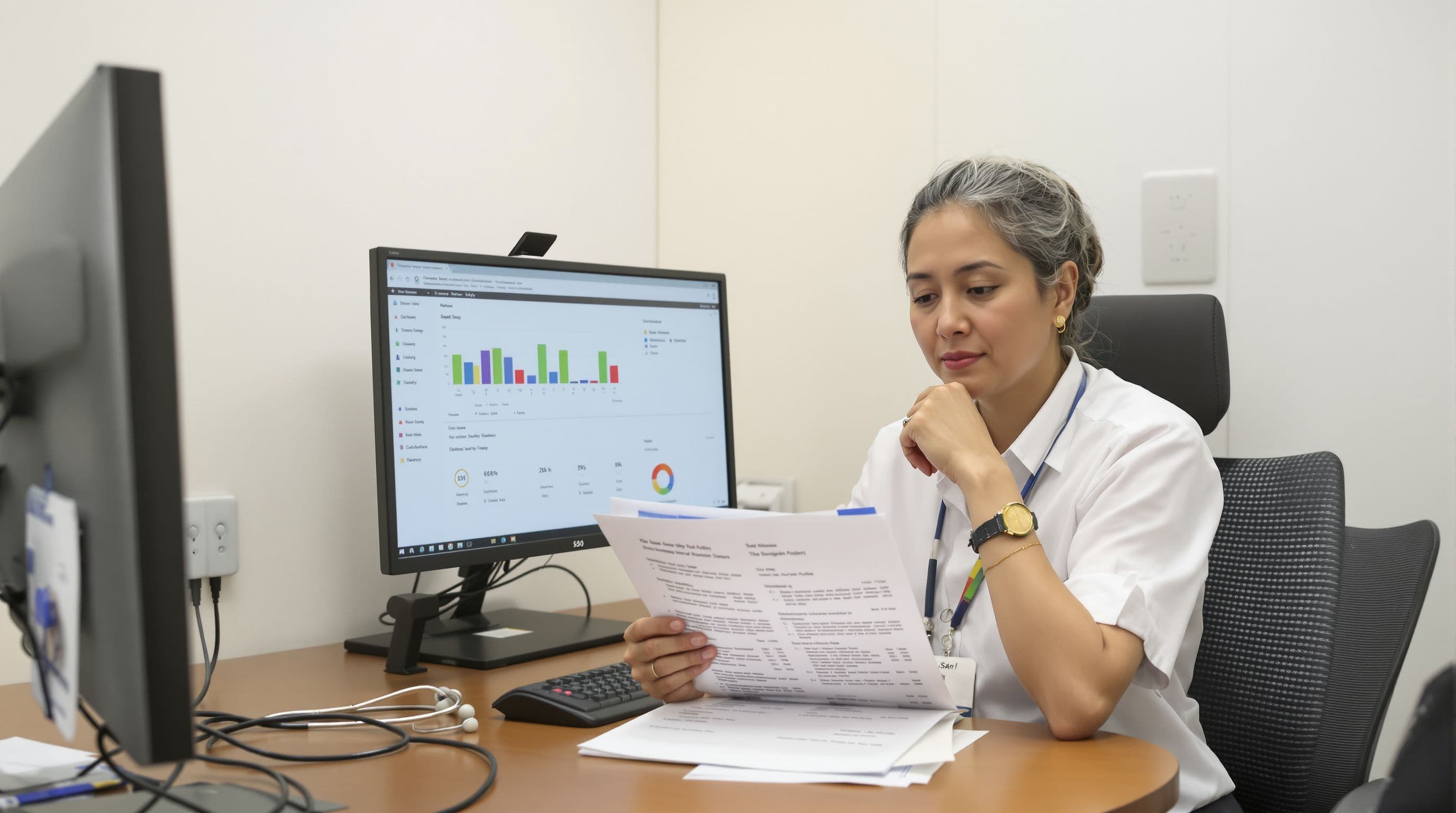
Healthcare AI faces a 79% failure rate. This analysis reveals the data privacy constraints, clinical validation requirements, and EHR integration challenges...
