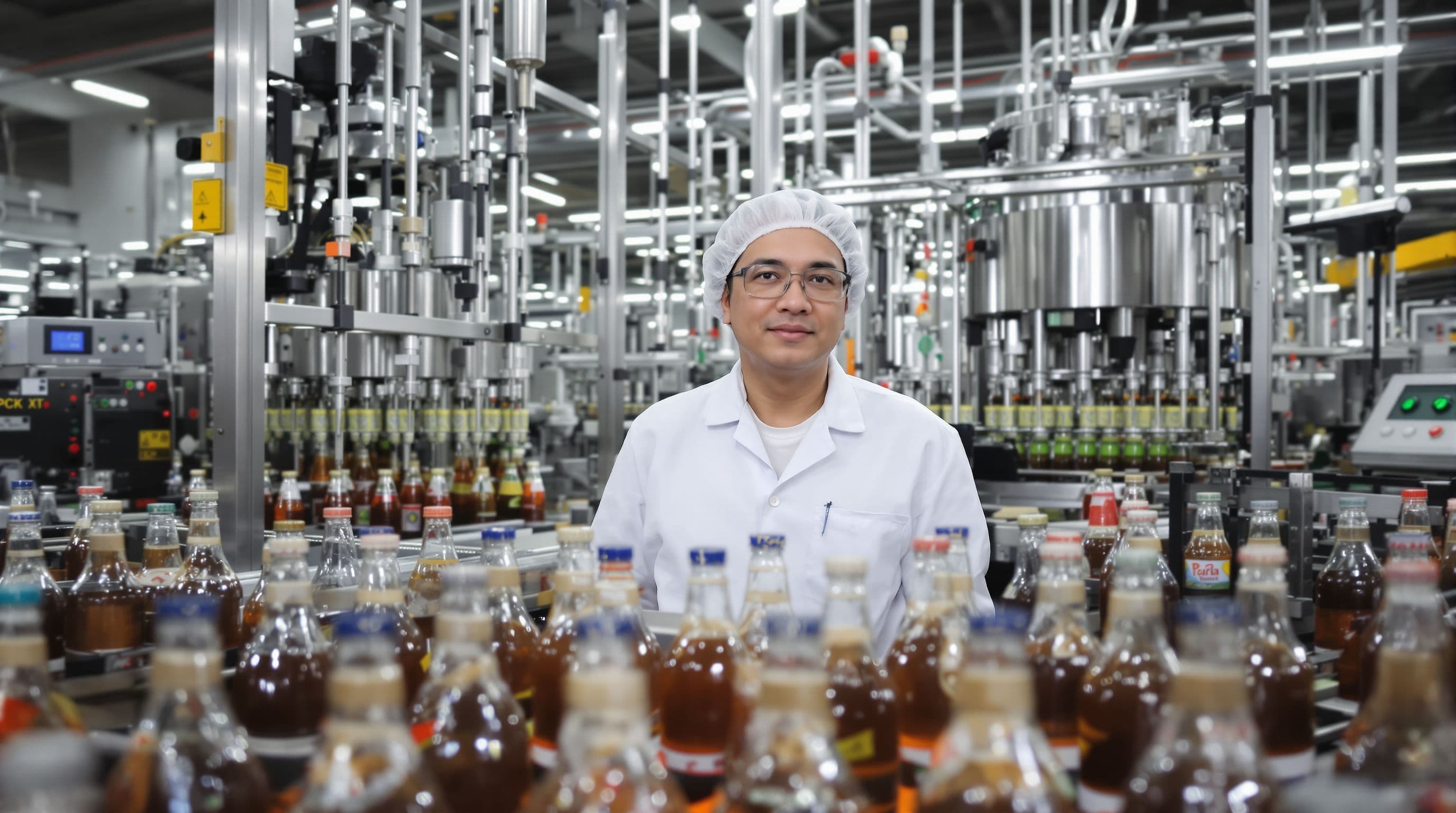
Manufacturing
We help food and beverage manufacturers deploy AI for safety compliance, demand forecasting, traceability, and formulation optimization to reduce waste, accelerate product development, and maintain rigorous quality standards.
CHALLENGES WE SEE
Inconsistent product quality across production batches leads to customer complaints, brand damage, and costly product recalls that erode profit margins.
Manual inventory tracking of perishable ingredients results in frequent stockouts or spoilage, causing production delays and 15-20% waste of raw materials.
Inefficient production scheduling creates bottlenecks during peak demand periods, reducing throughput by 30% and preventing fulfillment of large distributor orders.
Food safety compliance documentation relies on paper-based systems, increasing audit failures, regulatory fines, and risk of contamination incidents going undetected.
Demand forecasting based on historical averages fails to predict seasonal fluctuations, causing either excess inventory costs or lost sales from insufficient stock.
Equipment breakdowns occur unexpectedly on critical production lines, resulting in 48-72 hour downtime, missed delivery deadlines, and emergency maintenance costs.
HOW WE CAN HELP
Know exactly where you stand.
Prove AI works for your organization.
Transform how your leadership thinks about AI in 2-3 intensive days.
Turn base AI models into domain experts that know your business.
Forecast demand accurately and never over-stock again.
Engineer more profitable menus and forecast demand with precision.
THE LANDSCAPE
Food and beverage manufacturers operate in a highly competitive, margin-sensitive industry where production efficiency, food safety compliance, and supply chain responsiveness directly impact profitability. These companies face mounting pressure from retailers demanding shorter lead times, consumers expecting product consistency, and regulators requiring comprehensive traceability across complex ingredient networks.
AI applications transform critical operational areas: computer vision systems inspect products for defects at speeds impossible for human quality control teams, identifying contamination, packaging errors, and specification deviations in real-time. Machine learning models analyze historical sales data, weather patterns, and market trends to generate accurate demand forecasts, reducing overproduction and stockouts. Predictive maintenance algorithms monitor processing equipment to schedule interventions before breakdowns occur, minimizing costly downtime during peak production periods.
DEEP DIVE
Key technologies include sensor networks integrated with IoT platforms for continuous monitoring of temperature, humidity, and production variables; natural language processing for analyzing customer feedback and quality reports; and optimization algorithms that balance production schedules against ingredient availability, equipment capacity, and distribution requirements.
INSIGHTS
Data-driven research and reports relevant to this industry
Southeast Asia's 70+ million small and medium businesses stand at an inflection point in artificial intelligence adoption. The Pertama Partners SEA mid-market AI Adoption Index 2026 — a composite meas
Artificial intelligence is reshaping competitive dynamics across Asia at an unprecedented pace. Asia-Pacific AI spending is projected to reach USD 175 billion by 2028, growing at a 33.6% compound annu
Forrester
Forrester's analysis of AI adoption maturity across Asia Pacific markets including Singapore, Australia, India, Japan, and Southeast Asia. Examines industry-specific adoption rates, barriers to AI imp
NVIDIA
NVIDIA's industry-specific survey on AI adoption in retail and consumer packaged goods. Covers deployment patterns, ROI measurement, use cases in demand forecasting, personalization, supply chain opti
Our team has trained executives at globally-recognized brands


YOUR PATH FORWARD
Every AI transformation is different, but the journey follows a proven sequence. Start where you are. Scale when you're ready.
ASSESS · 2-3 days
Understand exactly where you stand and where the biggest opportunities are. We map your AI maturity across strategy, data, technology, and culture, then hand you a prioritized action plan.
Get your AI Maturity ScorecardChoose your path
TRAIN · 1 day minimum
Upskill your leadership and teams so AI adoption sticks. Hands-on programs tailored to your industry, with measurable proficiency gains.
Explore training programsPROVE · 30 days
Deploy a working AI solution on a real business problem and measure actual results. Low risk, high signal. The fastest way to build internal conviction.
Launch a pilotSCALE · 1-6 months
Roll out what works across the organization with governance, change management, and measurable ROI. We embed with your team so capability transfers, not just deliverables.
Design your rolloutITERATE & ACCELERATE · Ongoing
AI moves fast. Regular reassessment ensures you stay ahead, not behind. We help you iterate, optimize, and capture new opportunities as the technology landscape shifts.
Plan your next phaseComputer vision systems trained on thousands of images can identify contamination, foreign objects, and packaging defects at production line speeds of 1,000+ items per minute—far beyond human capability. These systems use hyperspectral imaging to detect issues invisible to the naked eye, like bruising beneath fruit skin, early signs of mold growth, or metal fragments in packaged goods. For example, a bakery manufacturer might deploy AI vision systems that simultaneously check for proper seal integrity, correct label placement, and product color consistency across every package, flagging anomalies in milliseconds. The real advantage comes from consistency and learning capability. Human inspectors experience fatigue and subjective judgment variations, especially during long shifts. AI systems maintain the same detection accuracy 24/7 and continuously improve as they're exposed to new defect patterns. When integrated with your existing SCADA systems, these platforms can automatically trigger production line stops, alert quality managers, and generate compliance documentation—creating an auditable trail that satisfies FDA, FSMA, and retailer audit requirements. We recommend starting with your highest-risk or highest-volume production lines where defect costs are most significant. A mid-sized beverage company might begin by deploying vision AI on fill-level inspection and cap placement before expanding to label verification and case packaging. The key is ensuring your training data includes sufficient examples of actual defects from your facility, not just generic datasets, so the system learns your specific quality standards and product variations.
Food and beverage manufacturers typically see 15-30% reduction in inventory holding costs and 20-40% decrease in waste from expired or obsolete products within the first year of deploying AI forecasting. Traditional statistical methods struggle with the complexity F&B companies face—seasonal demand patterns, weather impacts on consumer behavior, promotional effects, and the ripple effects of competitor actions. Machine learning models can simultaneously process hundreds of variables including point-of-sale data, social media trends, economic indicators, and even local event calendars to generate forecasts at the SKU-store level. The financial impact extends beyond waste reduction. A dairy producer using AI forecasting reduced product shortages by 35%, which directly translated to retaining promotional slots with major retailers and avoiding the penalty fees that come with stockouts during planned promotions. Another snack manufacturer cut raw ingredient safety stock by $2.3M annually because accurate demand signals allowed them to shift from conservative bulk purchasing to more responsive ordering aligned with actual production needs. The improved forecast accuracy also enables better production scheduling, reducing changeover costs and overtime expenses. We typically see payback periods of 6-18 months depending on your product portfolio complexity and current forecasting maturity. The fastest returns come from companies with high product variety, short shelf lives, and promotional intensity. Start by selecting a product category where forecast errors are most costly—perhaps your refrigerated items with 30-day shelf life or seasonal products where overproduction risk is highest—and expand the model as you validate results.
Data fragmentation is the single largest barrier we encounter. Most F&B manufacturers have production data in one system (often legacy SCADA or MES platforms), quality records in laboratory information systems, supply chain data in ERP, and customer information scattered across CRM and EDI feeds. AI models need integrated, clean data to generate reliable insights, but many companies spend 60-70% of their AI project timeline just on data extraction, standardization, and integration work. A meat processor might discover their temperature sensor data isn't synchronized with production batch records, making it impossible to correlate environmental conditions with quality outcomes. The second major challenge is the operational environment itself. Food production facilities deal with extreme temperatures, humidity, washdown requirements, and physical constraints that make deploying sensors and cameras more complex than in other manufacturing sectors. A dairy plant can't simply mount cameras in processing areas without considering condensation, sanitation protocols, and explosion-proof requirements for certain zones. Additionally, production staff need training not just on using AI tools, but on understanding when to trust the system's recommendations versus applying their domain expertise. We recommend addressing these challenges through phased pilots rather than facility-wide deployments. Start with a contained use case—perhaps predictive maintenance on a single critical asset or quality inspection on one packaging line—where you can prove value while developing your data infrastructure and change management approach. Partner with solution providers who have F&B-specific experience and understand industry requirements like 3-A sanitary standards, GFSI compliance, and the operational realities of continuous production environments. Build a cross-functional team including production, quality, IT, and maintenance from day one to ensure the solution addresses real operational pain points, not just theoretical opportunities.
Start by identifying your most expensive operational problems rather than chasing AI for its own sake. Where are you experiencing the highest waste rates? Which equipment failures cause the most costly downtime? What forecasting errors result in the biggest stockouts or write-offs? Focus on one high-impact use case where success will generate both financial returns and organizational buy-in. A regional bakery with limited IT staff might begin with predictive maintenance on their primary oven—a focused application that doesn't require integrating dozens of data sources but can prevent the catastrophic cost of unplanned downtime during peak holiday production. You don't need to build everything in-house. Purpose-built AI platforms designed for F&B operations can integrate with legacy systems through standard protocols (OPC-UA, MQTT) without requiring wholesale replacement of existing infrastructure. Many solutions now offer pre-trained models for common applications like quality inspection or demand forecasting that require customization rather than building from scratch. This approach allows manufacturers with small IT teams to deploy sophisticated AI capabilities by partnering with vendors who handle model development, infrastructure management, and ongoing optimization. We recommend securing executive sponsorship early and establishing clear success metrics before implementation begins. Define what 'success' looks like in concrete terms—perhaps reducing line downtime by 20% or improving forecast accuracy from 70% to 85%—so you can demonstrate ROI and justify expansion. Start with a 90-day pilot that delivers measurable results, then use those wins to build the business case for broader deployment. Consider bringing in a systems integrator with F&B experience for your first project to accelerate implementation and transfer knowledge to your team.
Traditional traceability systems require manual data entry and batch record compilation, which means identifying affected products during a recall can take days or even weeks. AI-powered traceability platforms automatically capture and correlate data from every stage of production—ingredient lot codes, processing parameters, environmental conditions, quality test results, and distribution records—creating a complete digital thread for every finished product. When a contamination issue arises, manufacturers can identify exactly which production runs used the affected ingredient lot, which finished goods contain it, where those products shipped, and who received them, often within minutes rather than days. This capability transforms recall management from reactive crisis control to proactive risk mitigation. A produce processor using AI traceability identified a potential listeria risk from a specific growing region and was able to quarantine affected inventory before it shipped, avoiding a public recall entirely. The system had automatically linked supplier certificates, receiving inspection data, and processing records, allowing quality managers to trace forward and backward through the supply chain instantly. This prevented an estimated $8M in recall costs and protected brand reputation. Beyond recalls, these systems simplify compliance with regulations like FSMA, FDA 204, and retailer-specific requirements from Walmart, Costco, or major grocery chains demanding one-up/one-back traceability within hours. AI can analyze your documentation for completeness, flag gaps before audits occur, and automatically generate the compliance reports regulators and customers require. We see manufacturers reducing audit preparation time by 70% and improving first-time audit pass rates significantly. The key is implementing these systems during normal operations, not waiting for a crisis—once you're in the middle of a recall investigation, it's too late to build the data infrastructure you need.
Let's discuss how we can help you achieve your AI transformation goals.
