Custom AI Solutions Built and Managed for You
We design, develop, and deploy bespoke AI solutions tailored to your unique requirements. Full ownership of code and infrastructure. Best for enterprises with complex needs requiring custom development. Pilot strongly recommended before committing to full build.
Duration
3-9 months
Investment
$150,000 - $500,000+
Path
b
Tutoring centers and enrichment programs face unprecedented pressure to personalize learning at scale, but off-the-shelf AI solutions cannot capture the nuanced pedagogical approaches, proprietary curriculum frameworks, and student engagement patterns that differentiate successful programs. Generic EdTech platforms lack the contextual understanding of your specific learning methodologies—whether Socratic questioning techniques, spiral curriculum models, or mastery-based progression systems—and cannot leverage your proprietary student performance data to create truly adaptive learning experiences that reflect your institutional knowledge and teaching philosophy. Custom Build delivers production-grade AI systems architected specifically for educational service delivery, integrating seamlessly with existing student information systems, learning management platforms, and assessment tools while maintaining FERPA and COPPA compliance. Our 3-9 month engagements produce scalable, secure solutions that process real-time learning analytics, automate instructional differentiation, and embed your pedagogical expertise into intelligent tutoring systems. Unlike vendor-dependent solutions, you own the intellectual property, control the data pipeline, and can continuously refine models as your programs evolve—creating a defensible competitive moat that drives enrollment growth and improves learning outcomes.
Adaptive Assessment Engine: Full-stack system using item response theory (IRT) models and neural networks to generate personalized diagnostic assessments, automatically adjusting question difficulty based on real-time performance patterns. Integrates with existing CRM and produces actionable learning gap reports, reducing assessment time by 60% while improving diagnostic accuracy by 40%.
Intelligent Session Matching Platform: Custom recommendation system analyzing student learning profiles, tutor expertise, scheduling constraints, and historical session effectiveness data using collaborative filtering and gradient-boosted decision trees. API integration with scheduling software and parent portal, increasing student-tutor compatibility scores by 35% and reducing session cancellations by 28%.
Automated Progress Narrative Generator: NLP system trained on thousands of annotated progress reports, automatically synthesizing session notes, assessment data, and learning milestones into personalized narrative reports for parents. Transformer-based architecture fine-tuned on institutional voice, reducing report writing time by 75% while maintaining brand consistency and educator oversight.
Predictive Enrollment & Retention System: Machine learning pipeline processing engagement metrics, attendance patterns, assessment trajectories, and demographic data to identify at-risk students and forecast enrollment trends. Deployed as real-time dashboard with alerting system, enabling proactive intervention that improved retention by 22% and optimized marketing spend by 30%.
Our architecture includes end-to-end encryption, role-based access controls, and audit logging by default, with data anonymization pipelines for model training that separate personally identifiable information from learning analytics. We implement data governance frameworks that meet state and federal education privacy requirements, and all systems undergo security audits before production deployment to ensure your organization maintains full regulatory compliance.
Custom Build excels precisely in these scenarios—we spend the discovery phase deeply understanding your pedagogical frameworks, learning taxonomies, and instructional models through stakeholder workshops with master educators. Our engineers then encode this domain expertise directly into model architectures, feature engineering, and training objectives, ensuring the AI reflects your educational philosophy rather than forcing you to adapt to generic algorithms.
Most tutoring centers achieve positive ROI within 6-12 months post-deployment through operational efficiency gains, enrollment growth, and improved student outcomes. We structure engagements with phased deliverables—often deploying a minimum viable product within 4-5 months that delivers immediate value, then iterating based on real-world performance data to continuously improve business impact throughout the engagement.
Absolutely not—you receive complete ownership of all code, models, and intellectual property, with comprehensive documentation and knowledge transfer to your team. We architect systems using standard frameworks and cloud infrastructure that your engineers can maintain and extend independently, though many clients choose ongoing support packages for model retraining, feature enhancements, and performance optimization as their needs evolve.
Integration architecture is designed during the initial planning phase based on your specific systems—whether Salesforce, HubSpot, custom databases, or legacy platforms. We build robust API layers, data synchronization pipelines, and middleware that ensure seamless data flow between your custom AI and existing tools, with comprehensive error handling and monitoring to maintain system reliability across your entire technology ecosystem.
BrightPath Learning, a regional STEM enrichment program serving 2,400 students across 12 locations, needed to differentiate in a crowded market while managing instructor capacity constraints. We built a custom Adaptive Learning Path Engine that analyzes each student's conceptual understanding, learning velocity, and interest signals to generate personalized project sequences aligned with their proprietary maker-based curriculum. The system integrates real-time assessment data from hands-on activities with an instructor dashboard that surfaces intervention recommendations. Deployed using a microservices architecture on AWS with Redis caching and PostgreSQL for learning analytics, the platform scales across all locations while maintaining sub-200ms response times. Within eight months of launch, BrightPath achieved 31% improvement in concept mastery rates, 26% increase in program completion, and expanded enrollment by 18% while maintaining the same instructor headcount—establishing a proprietary capability competitors cannot replicate.
Custom AI solution (production-ready)
Full source code ownership
Infrastructure on your cloud (or managed)
Technical documentation and architecture diagrams
API documentation and integration guides
Training for your technical team
Custom AI solution that precisely fits your needs
Full ownership of code and infrastructure
Competitive differentiation through custom capability
Scalable, secure, production-grade solution
Internal team trained to maintain and evolve
If the delivered solution does not meet agreed acceptance criteria, we will remediate at no cost until criteria are met.
Let's discuss how this engagement can accelerate your AI transformation in Tutoring Centers & Enrichment Programs.
Start a ConversationExplore articles and research about delivering this service
Article
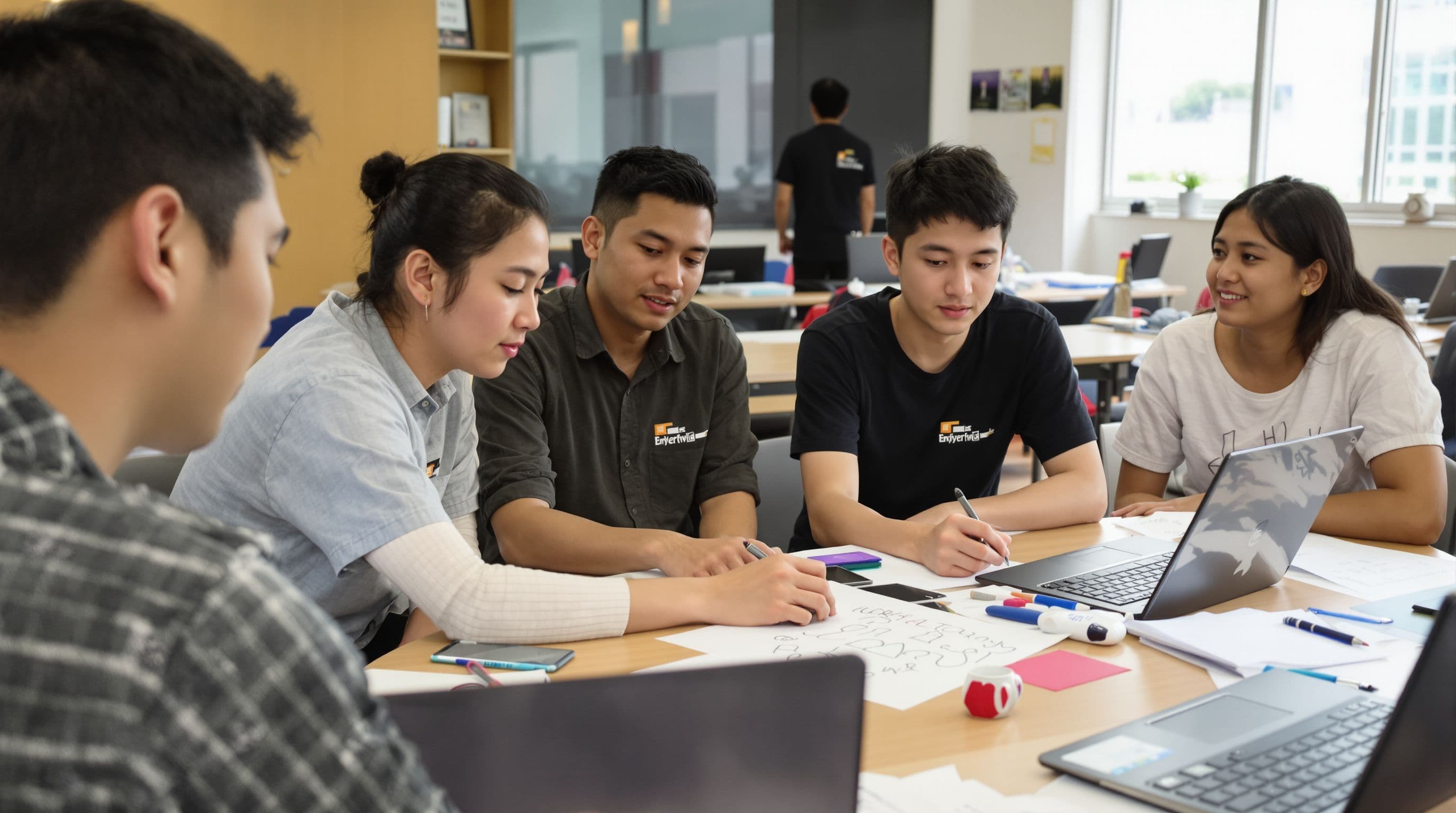
Implement AI writing assessment thoughtfully, using AI for formative feedback while preserving human judgment for high-stakes evaluation and pedagogical quality.
Article
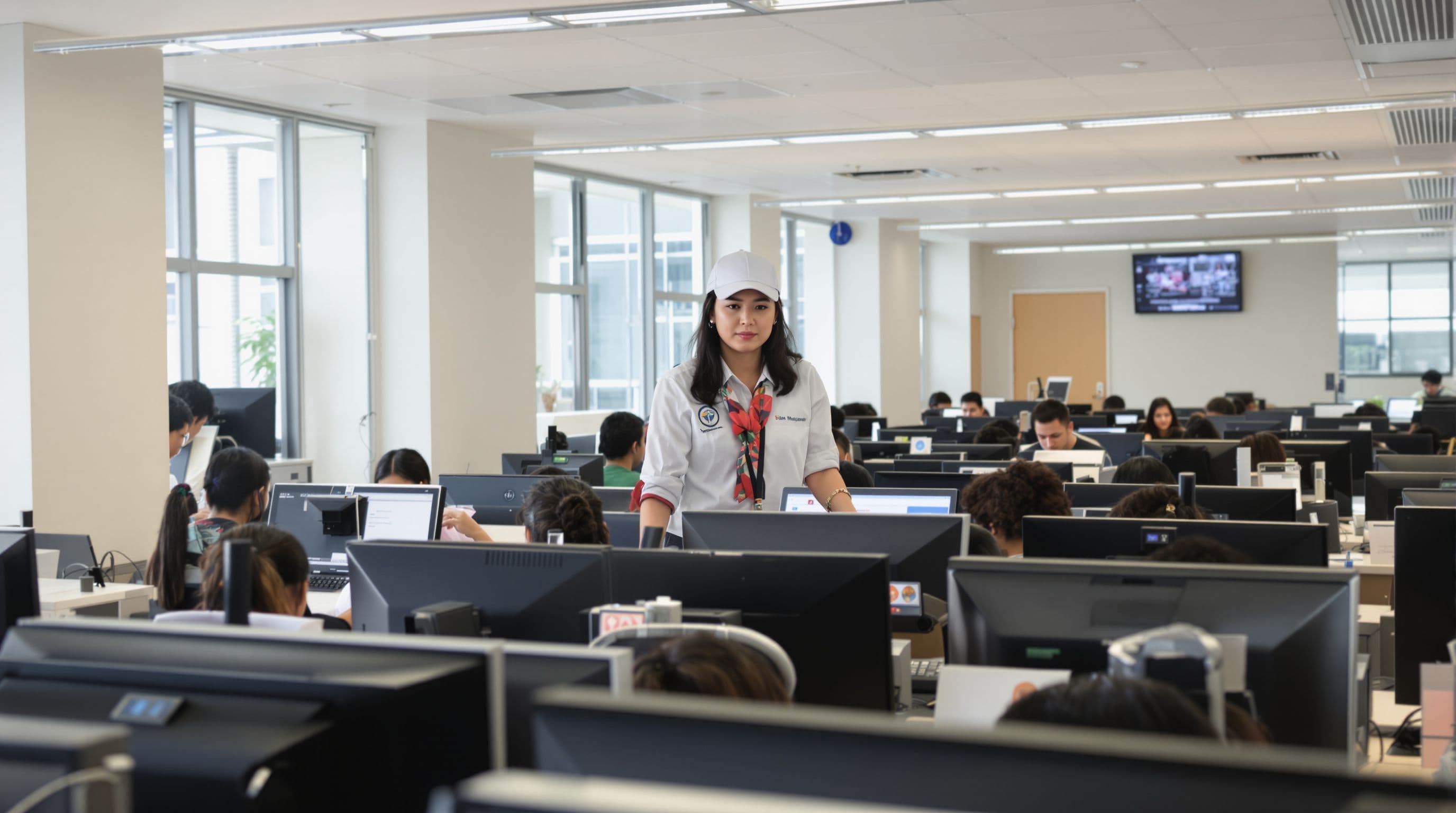
Practical AI applications that give teachers time back. Focus on high-impact, low-risk uses for lesson planning, resource creation, and communication.
Article

A comprehensive prevention strategy combining policy, assessment design, process requirements, verification, detection, and culture. No single approach works alone.
Article

Comprehensive academic honesty policy template for AI use in schools. Includes use categories, disclosure requirements, consequences, and implementation roadmap.
Tutoring centers and enrichment programs provide supplemental education, academic support, and skills development for students seeking improved performance and college preparation. The global private tutoring market exceeds $150 billion annually, driven by competitive academic pressures, standardized test preparation, and growing demand for personalized learning experiences. AI personalizes learning paths, identifies struggling concepts, automates progress tracking, and optimizes class scheduling. Machine learning algorithms analyze student performance patterns to recommend targeted interventions. Natural language processing powers automated essay feedback and writing improvement tools. Predictive analytics forecast student outcomes and identify at-risk learners before they fall behind. Tutoring centers using AI improve student grades by 40%, increase parent satisfaction by 55%, and enhance instructor efficiency by 50%. Revenue models include hourly tutoring fees, subscription packages, test prep programs, and subject-specific courses. Common pain points include inconsistent scheduling, difficulty scaling personalized attention, parent communication overhead, and instructor availability constraints. Manual progress reporting consumes significant administrative time while providing limited insight. Digital transformation opportunities include AI-powered adaptive learning platforms, automated parent engagement systems, intelligent curriculum mapping, and data-driven student matching with optimal instructors. Virtual tutoring capabilities expand geographic reach while reducing facility costs. Automated billing and scheduling systems reduce administrative burden by 60%.
Timeline details will be provided for your specific engagement.
We'll work with you to determine specific requirements for your engagement.
Every engagement is tailored to your specific needs and investment varies based on scope and complexity.
Get a Custom QuoteOctopus Energy reduced customer service inquiry volume by 44% through AI automation, demonstrating how conversational AI handles routine parent inquiries about schedules, payments, and program details without staff intervention.
AI-driven scheduling systems achieve 92% accuracy in predicting optimal time slots based on student availability patterns, parent preferences, and tutor capacity—reducing back-and-forth communication by an average of 8 messages per booking.
Philippine BPO implementations show AI systems handling 80% of routine inquiries autonomously while maintaining customer satisfaction, proving AI can deliver personalized program suggestions and progress updates that keep parents engaged.
AI personalization works best as an instructor amplifier, not a replacement. The technology analyzes each student's performance data—problem-solving speed, error patterns, concept mastery levels—to create dynamic learning profiles that update in real-time. For example, if a student consistently struggles with algebraic word problems but excels at computational algebra, the AI flags this pattern and suggests targeted interventions. The instructor then uses these insights to adjust their teaching approach during the next session, spending more time on translation skills while moving faster through mechanical operations. The real power comes from AI handling the diagnostic heavy lifting that would otherwise consume your instructor's limited session time. Adaptive learning platforms can automatically generate personalized practice sets between sessions, ensuring students work on exactly what they need rather than generic homework. Natural language processing tools provide instant feedback on writing assignments, allowing students to iterate multiple times before the instructor reviews the final draft. This means your tutors spend face-to-face time on high-value instruction and mentorship rather than grading basic exercises or diagnosing learning gaps manually. We've seen tutoring centers implement this hybrid model by integrating platforms like Carnegie Learning or Century Tech alongside their traditional instruction. Students complete AI-guided practice for 30-40% of their learning time, while instructors focus on explaining difficult concepts, providing motivation, and developing critical thinking skills during live sessions. This approach has helped centers increase student throughput by 35% without hiring additional staff, since each instructor can effectively support more students when AI handles the routine diagnostic and practice components.
Most tutoring centers see measurable returns within 3-6 months, but the timeline depends heavily on which pain point you're solving first. If you start with automated scheduling and parent communication systems, you'll see immediate administrative time savings—typically 10-15 hours per week for a center managing 50-100 students. That translates to roughly $2,000-4,000 monthly in recovered labor costs that can be redirected to instruction or business development. These quick wins usually pay for the software investment within the first quarter. The bigger financial impact comes from student outcomes and retention, which takes a full semester (3-4 months) to materialize in your data. When you implement AI-powered adaptive learning and progress tracking, you'll start seeing improved test scores and grade improvements that you can document for parents. Centers report that once they can demonstrate consistent, measurable progress through AI-generated analytics dashboards, parent retention increases by 40-55% and referral rates jump significantly. A center charging $75/hour that retains just 10 additional students for a full academic year generates $60,000+ in incremental revenue. For initial investment, expect $200-500 per month for entry-level AI platforms serving up to 100 students, with implementation taking 2-4 weeks. We recommend starting with one high-impact use case—either automated progress reporting to improve parent satisfaction, or adaptive learning for your highest-volume subject area—rather than trying to transform everything at once. This focused approach minimizes disruption, allows your team to build competency gradually, and generates proof points you can use to justify expanding AI adoption across other areas of your operation.
Data privacy is the paramount concern, particularly since you're handling educational records of minors. Student performance data, learning disabilities, behavioral notes, and assessment scores fall under strict regulations like FERPA in the US and similar frameworks globally. The biggest risk is selecting an AI vendor without robust data protection measures—you need platforms that offer encrypted data storage, role-based access controls, and clear data ownership agreements stating that student information won't be used to train general AI models or shared with third parties. We've seen centers face parent backlash when they didn't clearly communicate how AI tools would use student data, even when the practices were completely compliant. Beyond privacy, instructor resistance represents a significant implementation challenge. Many experienced tutors worry that AI will diminish their role or expose perceived weaknesses in their teaching. I've found that successful implementations involve tutors in the selection process from day one and position AI explicitly as a tool to reduce their administrative burden rather than evaluate their performance. For example, frame automated essay feedback as something that handles first-pass grammar checks so the instructor can focus on higher-order feedback about argumentation and critical thinking. Provide training that shows instructors how AI insights make them more effective, not replaceable. The technical challenge of integration shouldn't be underestimated either. Many tutoring centers run on fragmented systems—one tool for scheduling, another for billing, spreadsheets for tracking progress, and email for parent communication. Adding AI without integration creates more administrative chaos rather than less. Before implementing AI-powered learning platforms, ensure they can connect with your existing student management system, or be prepared to consolidate onto a more unified platform. Centers that skip this step often abandon AI tools within six months because the manual data entry required to keep systems synchronized negates the efficiency gains. Budget 20-30% of your implementation time for integration and workflow redesign, not just the AI tool itself.
Start with digitizing your student information and progress tracking before jumping into sophisticated AI applications. You need clean, structured data for AI to work effectively, which means moving from paper attendance sheets and handwritten session notes into a basic student management system. Platforms like TutorCruncher, My Tutoring, or even Teachworks provide affordable starting points ($50-150/month) that centralize student records, scheduling, and billing. Spend your first 4-6 weeks getting consistent data entry habits established with your team—this foundation is essential because AI algorithms need historical performance data to generate meaningful insights. Once you have 2-3 months of digital records, your highest-value AI entry point is usually automated progress reporting and parent communication. Tools like Brightwheel (adapted for tutoring) or custom reporting features in platforms like LearnSpeed can automatically generate weekly progress summaries showing concepts mastered, areas of struggle, and recommended focus areas. This immediately reduces the 3-5 hours per week most center directors spend compiling parent updates while actually improving communication quality. Parents receive consistent, data-driven updates rather than sporadic subjective observations, which significantly boosts satisfaction and retention. For the actual learning experience, we recommend piloting AI-adaptive practice in your highest-volume subject area first—typically math or reading comprehension. Choose one grade level or test prep program (like SAT math) and implement a platform like Khan Academy (free), IXL, or Knewton for just that segment. Have instructors use it for homework assignments between sessions while continuing their normal in-person instruction. Collect feedback from both students and tutors after 6-8 weeks, measure whether practice completion rates and comprehension improve, then expand to other subjects only after you've refined the workflow. This gradual approach prevents overwhelming your team and allows you to learn what works in your specific context before making larger investments.
Absolutely—AI-powered scheduling and matching systems solve one of the most time-consuming operational headaches in tutoring centers. Intelligent scheduling algorithms consider dozens of variables simultaneously: student availability, tutor expertise in specific subjects, learning style compatibility, location constraints for in-person sessions, and even performance history between specific tutor-student pairs. Platforms like TutorOcean, Lessonspace, or custom implementations using scheduling AI can automatically propose optimal matches and time slots, reducing the back-and-forth that typically requires 20-30 minutes per new student placement. Centers report cutting scheduling coordination time by 60-70% while actually improving match quality. AI also helps with demand forecasting and capacity planning that's nearly impossible to do manually. Machine learning models analyze historical patterns to predict busy periods—like the weeks before finals or standardized tests—and recommend how many tutors you need in each subject area. This prevents the common problem of over-scheduling tutors during slow periods or scrambling to find coverage during peak demand. Some systems can even suggest optimal pricing adjustments for high-demand time slots or subjects, helping you maximize revenue without manually analyzing utilization spreadsheets. For managing tutor quality and development, AI can identify instructional patterns that correlate with better student outcomes. If students working with certain tutors consistently show faster progress in specific topics, the system flags this so you can understand what techniques those tutors use and share best practices across your team. Conversely, if a tutor's students consistently struggle with particular concepts, you can provide targeted professional development rather than waiting for parent complaints. This data-driven approach to tutor management is far more objective and actionable than traditional observation-based evaluation, especially as you scale beyond a handful of instructors where the director personally knows everyone's strengths and weaknesses.
Let's discuss how we can help you achieve your AI transformation goals.
"Will AI reduce the personal relationships that make tutoring effective?"
We address this concern through proven implementation strategies.
"How do we ensure AI recommendations align with our unique curriculum approach?"
We address this concern through proven implementation strategies.
"Can AI handle the wide range of subjects and grade levels we serve?"
We address this concern through proven implementation strategies.
"What training will tutors need to effectively use AI tools?"
We address this concern through proven implementation strategies.
No benchmark data available yet.
