
Thailand has a deeply ingrained tutoring culture, with an estimated 80% of Bangkok students attending supplementary tutoring (known as 'rian phiset'). The market spans from premium multi-subject centers like Kumon Thailand and Mathayom to neighborhood tutors and online platforms. Thai parents' intense focus on academic achievement, particularly for university entrance, drives significant spending on supplementary education. AI is transforming the sector through adaptive learning platforms, automated progress tracking, and personalized curriculum recommendations, helping tutoring centers scale personalization beyond what individual tutors can provide.
Thailand's tutoring market is highly fragmented, with thousands of small operators who lack resources for AI investment. The personal relationship between tutor and student is central to the Thai tutoring model, and parents are skeptical of technology replacing human instruction. Thai-language AI tutoring content for subjects beyond mathematics (particularly Thai language arts and social studies) remains limited. Regulatory oversight of tutoring quality is minimal, meaning AI tools that could improve educational outcomes are adopted inconsistently. Price competition from free online educational content pressures tutoring centers' margins.
The Office of the Private Education Commission (OPEC) licenses tutoring centers as private education institutions, with requirements for facilities, instructor qualifications, and curriculum standards. PDPA governs student and parent data collected by AI tutoring platforms, with explicit consent required for minors' data. The Consumer Protection Board may regulate advertising of AI-enhanced tutoring services, particularly claims about grade improvement or university admission rates. Thai tax law allows parents to deduct education expenses, which may include AI tutoring services from registered institutions.

We understand the unique regulatory, procurement, and cultural context of operating in Thailand
Thailand's 2019 PDPA modeled on GDPR, enforced from 2022. Requires consent for personal data processing with penalties up to 5M THB. AI systems collecting personal data must comply with data subject rights including access and deletion.
Requires critical infrastructure operators to implement security measures. AI systems in banking, telecom, and utilities sectors face additional security and monitoring requirements.
Banking and financial data must be stored in Thailand per Bank of Thailand regulations. Government data subject to data localization under Cybersecurity Act. Commercial data can use regional cloud (AWS Bangkok, Google Cloud Bangkok, Azure Thailand).
Thai conglomerates (CP Group, TCC, Siam Cement) follow formal procurement with 3-5 month cycles. Government procurement via e-GP system requires Thai entity or local partnership. Decision-making hierarchical with CEO/board approval for >10M THB. Family-owned businesses allow faster decisions with owner approval. Relationship building critical for enterprise sales.
Ministry of Labour offers training subsidies through Social Security Fund for employee skills development. BOI (Board of Investment) grants for technology adoption in promoted industries. Digital Economy Promotion Agency (DEPA) provides AI adoption grants for SMEs. Limited compared to Singapore but growing under Thailand 4.0 initiative.
High power distance requires respect for hierarchy and seniority. Thai language training delivery preferred even when management speaks English. 'Kreng jai' (consideration) culture avoids direct confrontation or negative feedback. Decision-making involves face-to-face meetings and relationship building. Buddhist values emphasize harmony and consensus. Avoid loss of face in training scenarios.
Explore articles and research about AI implementation in this sector and region
Article

A guide to the best AI courses for Thai companies in 2026. BOI-supported programmes, corporate workshops in Bangkok and Chiang Mai, and online options for distributed teams.
Article

Thailand's PDPA imposes strict data protection requirements on AI systems. With a draft AI law expected in 2026 and new BOT AI guidelines for financial services, companies must prepare for an increasingly regulated environment.
Article
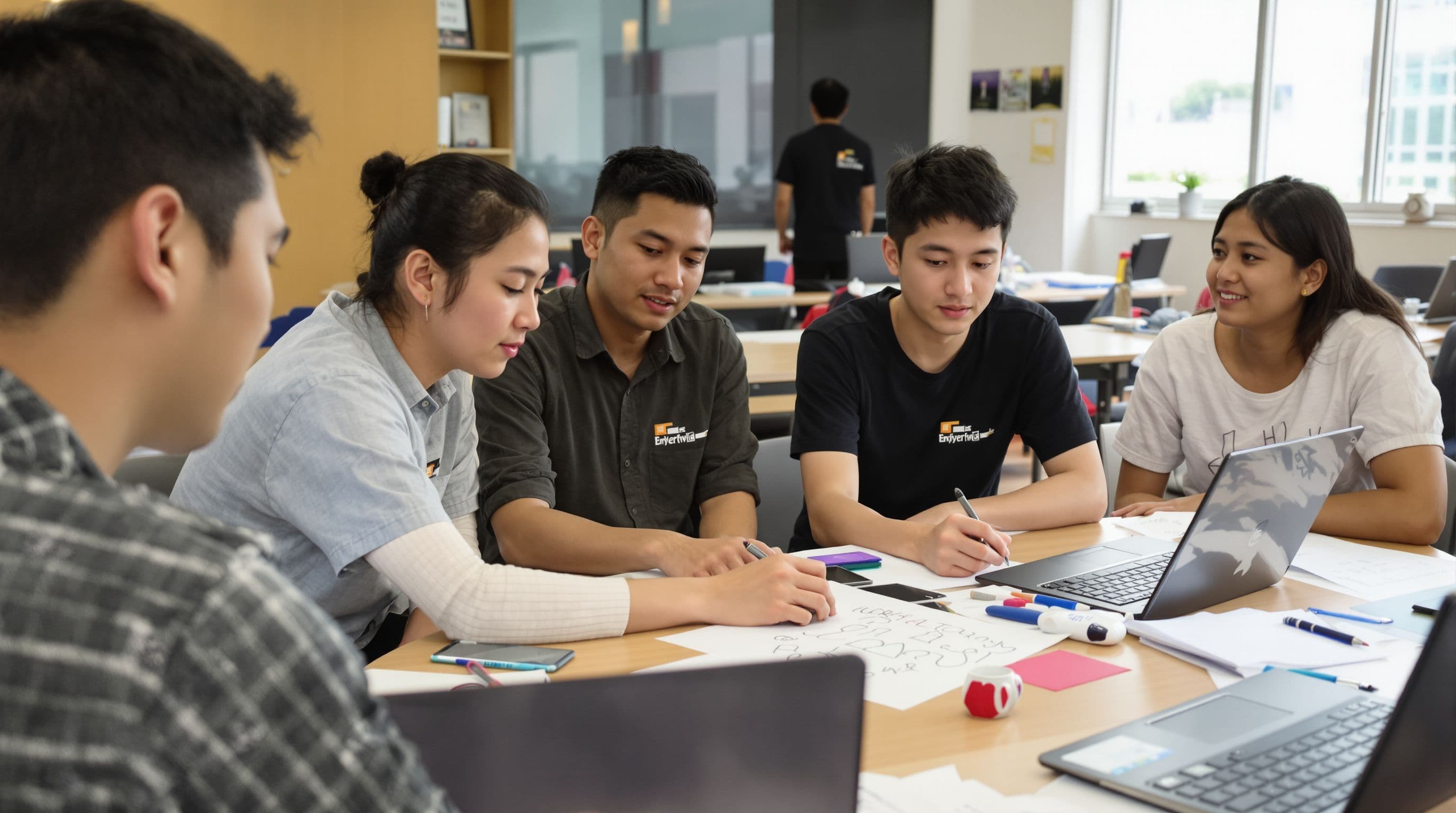
Implement AI writing assessment thoughtfully, using AI for formative feedback while preserving human judgment for high-stakes evaluation and pedagogical quality.
Article

Comprehensive compliance guide for AI in HR covering employment law, data protection, and emerging AI regulations in Singapore, Malaysia, and Thailand.
Our team has trained executives at globally-recognized brands


YOUR PATH FORWARD
Every AI transformation is different, but the journey follows a proven sequence. Start where you are. Scale when you're ready.
ASSESS · 2-3 days
Understand exactly where you stand and where the biggest opportunities are. We map your AI maturity across strategy, data, technology, and culture, then hand you a prioritized action plan.
Get your AI Maturity ScorecardChoose your path
TRAIN · 1 day minimum
Upskill your leadership and teams so AI adoption sticks. Hands-on programs tailored to your industry, with measurable proficiency gains.
Explore training programsPROVE · 30 days
Deploy a working AI solution on a real business problem and measure actual results. Low risk, high signal. The fastest way to build internal conviction.
Launch a pilotSCALE · 1-6 months
Roll out what works across the organization with governance, change management, and measurable ROI. We embed with your team so capability transfers, not just deliverables.
Design your rolloutITERATE & ACCELERATE · Ongoing
AI moves fast. Regular reassessment ensures you stay ahead, not behind. We help you iterate, optimize, and capture new opportunities as the technology landscape shifts.
Plan your next phaseSupplementary tutoring is ubiquitous in Thai education culture, with the vast majority of urban students attending some form of after-school instruction. AI is enabling tutoring centers to offer more personalized learning paths, automated homework grading, and real-time progress dashboards for parents. Online AI tutoring platforms are also expanding access beyond Bangkok, allowing students in provinces to access quality instruction previously available only in the capital's premium tutoring districts.
Most Thai tutoring centers are small operations run by individual tutors or families, with limited technology budgets and digital skills. The Thai tutoring model relies heavily on the personal charisma and teaching style of individual tutors, making parents reluctant to accept AI-mediated instruction. Centers that successfully adopt AI typically use it for backend operations—scheduling, progress tracking, and parent communication—while maintaining human-led instruction, gradually introducing AI-powered practice and assessment tools as parents gain comfort.
Let's discuss how we can help you achieve your AI transformation goals.
