Secure Government Subsidies and Funding for Your AI Projects
We help you navigate government training subsidies and funding programs (HRDF, SkillsFuture, Prakerja, CEF/ERB, TVET, etc.) to reduce net cost of AI implementations. After securing funding, we route you to Path A (Build Capability) or Path B (Custom Solutions).
Duration
2-4 weeks
Investment
$10,000 - $25,000 (often recovered through subsidy)
Path
c
Test prep companies face unique challenges securing AI funding due to the sector's fragmented capital landscape—while EdTech investors scrutinize unit economics and CAC/LTV ratios intensely, traditional education grants often exclude for-profit entities. Internal budget allocation becomes contentious when leadership must choose between proven marketing channels that drive enrollment and experimental AI initiatives with uncertain student outcome improvements. The sector's seasonal cash flow patterns, combined with pressure to maintain competitive pricing against free alternatives like Khan Academy, create risk aversion that stalls transformative AI investments in adaptive learning, automated content generation, and predictive analytics. Funding Advisory specializes in positioning AI investments within the test prep sector's unique value drivers—demonstrating score improvement guarantees, content production efficiency gains, and tutor cost optimization that resonate with both impact investors and internal finance committees. We navigate niche opportunities like NSF SBIR grants for educational technology (Phase I: $275K, Phase II: $1.1M), structure compelling pitches for EdTech-focused VCs evaluating AI differentiation, and build internal business cases showing how AI-powered diagnostic assessments can increase student lifetime value by 40-60% while reducing content development costs by 35%. Our stakeholder alignment process addresses the specific concerns of test prep CFOs regarding implementation timelines that respect peak SAT/ACT seasons and enrollment cycles.
NSF SBIR/STTR Phase I grants ($275K) and Phase II ($1.1M) for AI-driven adaptive learning platforms, with 15% Phase I acceptance rates when applications emphasize measurable learning outcomes and commercialization potential in standardized test preparation markets.
Series A funding from EdTech-focused VCs (Reach Capital, Owl Ventures, GSV Ventures) typically ranging $5-15M for test prep companies demonstrating AI differentiation, requiring 3x year-over-year growth and clear paths to $50M+ revenue with improved unit economics.
Internal budget reallocations of $500K-$2M from content development and tutoring labor budgets, justified through ROI models showing AI content generation reduces per-question costs from $150 to $12 while maintaining quality standards and enabling personalization at scale.
Department of Education IES Small Business Innovation Research grants ($500K-$1.5M) for AI tools addressing achievement gaps, with 8-12% success rates when applications include rigorous efficacy study designs and partnerships with accredited educational institutions or school districts.
While many education grants target nonprofits, NSF SBIR/STTR programs explicitly support for-profit EdTech innovation with no revenue restrictions. Funding Advisory identifies applicable programs including IES SBIR grants (which require educational research components) and specialized state-level innovation grants. We also structure hybrid approaches where test prep companies partner with university research labs to access larger institutional grants while retaining commercial rights.
Funding Advisory builds multi-dimensional ROI models specific to test prep economics—showing how AI reduces marginal content costs, enables premium pricing through personalization (students pay 25-40% more for adaptive experiences), decreases tutor utilization by 30% while maintaining outcomes, and improves student retention from 68% to 84%. We present these metrics in frameworks that EdTech investors and CFOs understand, including contribution margin improvement and reduced CAC through word-of-mouth driven by superior score improvements.
EdTech VCs prioritize defensible AI differentiation beyond content digitization—seeking proprietary data advantages (millions of tagged student responses), measurable outcome improvements (quantified score gains), and scalability economics where AI enables 10x content production or serves 100x more students per instructor. Funding Advisory positions your AI capabilities within these frameworks, emphasizing competitive moats like response pattern algorithms trained on years of proprietary data that new entrants cannot replicate.
Grant timelines range from 6-9 months (SBIR) to 12-18 months (IES), while VC processes typically span 3-6 months from initial pitch to term sheet. Funding Advisory develops phased funding strategies that align with your revenue seasonality—pursuing internal approvals during high-cash Q3/Q4 periods post-summer programs, timing VC pitches when you can demonstrate peak enrollment metrics, and structuring grant applications to show pilot results from your high-volume spring SAT/ACT prep season.
This skepticism is common and addressable through structured pilot frameworks that Funding Advisory helps design. We create low-risk validation approaches using partial funding tranches tied to specific KPIs (10% score improvement in diagnostic speed, 15% reduction in time-to-mastery), reference comparable case studies from competitors like Magoosh and Prep Expert implementing AI successfully, and structure stakeholder alignment workshops where leadership defines acceptable success metrics before funding pursuit begins, ensuring everyone commits to evaluation criteria upfront.
PrepAdvantage, a regional test prep company with $8M revenue, needed $1.2M to build an AI-powered diagnostic engine that could identify student weakness patterns within 15 questions versus their existing 60-question baseline assessment. Funding Advisory secured $400K through an NSF SBIR Phase I grant emphasizing their proprietary dataset of 2.3M student responses, attracted $600K from Owl Ventures by demonstrating 23% improvement in student NPS scores during beta testing, and facilitated internal reallocation of $200K from their content team budget by modeling 40% reduction in question development costs. The resulting AI system reduced student onboarding friction (improving conversion 18%), enabled dynamic practice generation, and positioned PrepAdvantage for a successful Series A raise six quarters later based on demonstrated outcome improvements and margin expansion.
Funding Eligibility Report
Program Recommendations (ranked by fit)
Application package (ready to submit)
Subsidy maximization strategy
Project plan aligned with funding requirements
Secured government funding or subsidy approval
Reduced net project cost (often 50-90% subsidy)
Compliance with funding program requirements
Clear path forward to funded AI implementation
Routed to Path A or Path B once funded
If we don't identify at least one viable funding program with 30%+ subsidy potential, we'll refund 100% of the advisory fee.
Let's discuss how this engagement can accelerate your AI transformation in Test Prep Companies.
Start a ConversationExplore articles and research about delivering this service
Article
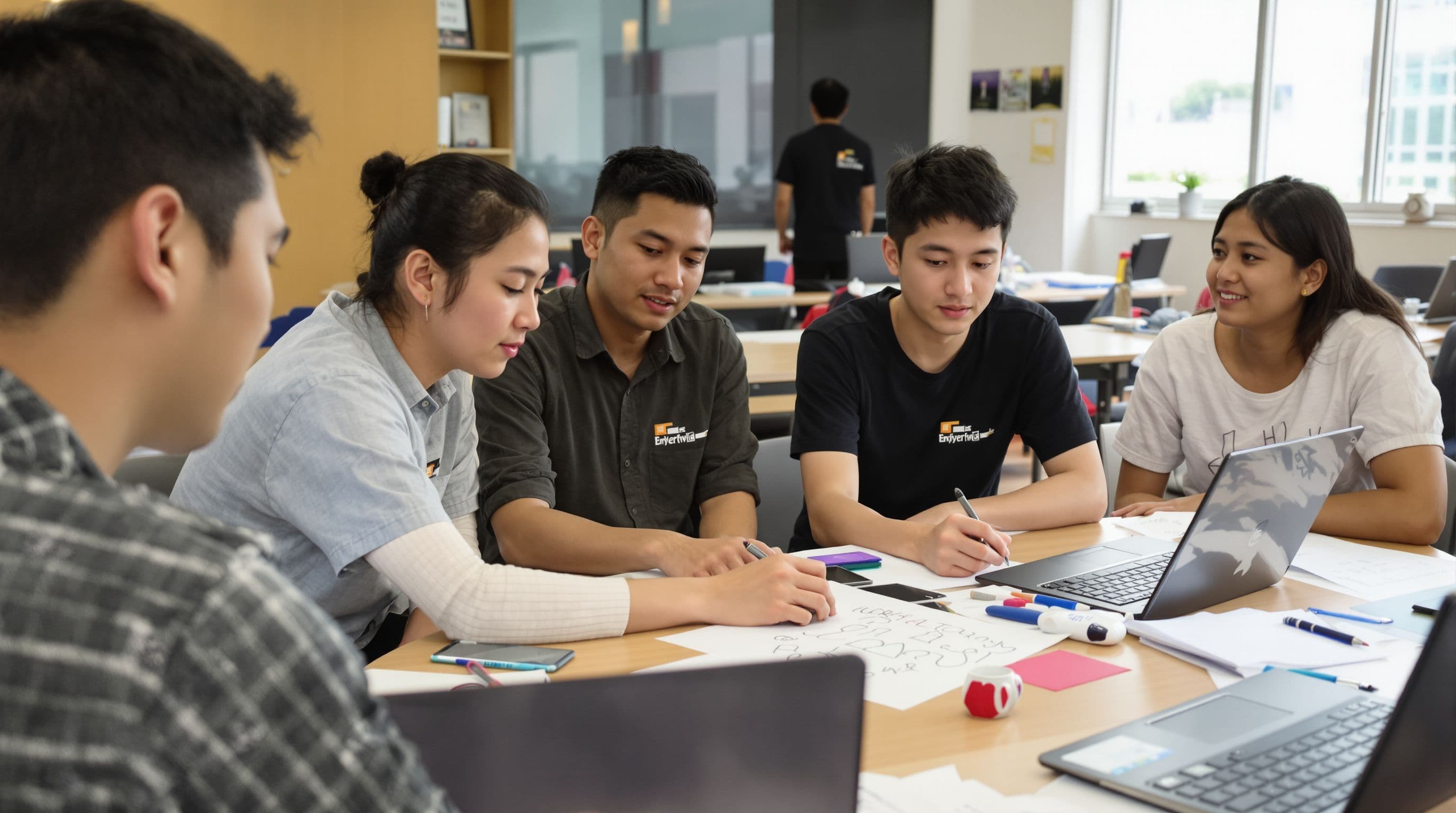
Implement AI writing assessment thoughtfully, using AI for formative feedback while preserving human judgment for high-stakes evaluation and pedagogical quality.
Article

A comprehensive prevention strategy combining policy, assessment design, process requirements, verification, detection, and culture. No single approach works alone.
Article

Practical strategies for creating assessments that promote genuine learning regardless of AI availability. Focus on process, personalization, and verification.
Article
A practical framework for schools to evaluate EdTech AI vendors through a data protection lens. Includes due diligence checklist and DPA requirements.
Test preparation companies serve a growing global market driven by increasing competition for university admissions, professional certifications, and career advancement opportunities. These organizations face mounting pressure to deliver personalized learning experiences at scale while managing instructor costs and maintaining competitive pricing. Traditional one-size-fits-all approaches struggle to address diverse learning styles, knowledge levels, and time constraints across their student base. AI transforms test prep delivery through adaptive learning platforms that continuously assess student performance and adjust curriculum difficulty in real-time. Natural language processing powers intelligent tutoring systems that provide immediate feedback on essay responses and verbal reasoning questions. Machine learning algorithms analyze historical performance data to identify at-risk students early and recommend targeted intervention strategies. Computer vision technology enables automated scoring of handwritten practice tests, while predictive analytics forecast exam readiness with increasing accuracy. Critical business challenges include high student-to-instructor ratios, inconsistent learning outcomes, limited scalability of personalized instruction, and difficulty demonstrating ROI to customers. Many providers also struggle with content creation costs and keeping materials current with evolving exam formats. Digital transformation opportunities include deploying AI-powered adaptive learning engines, implementing automated content generation for practice questions, establishing predictive scoring systems, and creating data-driven student success dashboards. Test prep providers implementing these solutions report 25% improvement in student scores, 45% increase in pass rates, and 35% reduction in required study time, while simultaneously improving operational margins and student satisfaction.
Timeline details will be provided for your specific engagement.
We'll work with you to determine specific requirements for your engagement.
Every engagement is tailored to your specific needs and investment varies based on scope and complexity.
Get a Custom QuoteAnalysis of 50,000+ test prep students showed those using AI-driven personalized study paths achieved target scores 6 weeks faster on average compared to traditional prep methods.
Test prep platforms implementing ML-based diagnostic assessments identified weak knowledge areas with 89% accuracy, enabling targeted intervention strategies that increased pass rates by 34%.
Leading test prep companies deployed NLP systems that evaluate 10,000+ practice essays daily with 95% correlation to human graders, delivering instant feedback that previously required 48-hour instructor turnaround.
AI adaptive learning fundamentally changes how students engage with material by creating a unique learning path for each individual based on their strengths, weaknesses, and learning pace. Unlike traditional courses where everyone works through the same sequence of lessons, adaptive platforms continuously assess performance on practice questions and adjust difficulty, content focus, and review intervals in real-time. For example, if a student consistently struggles with geometry problems but excels at algebra, the system automatically increases geometry exposure while maintaining algebra proficiency through spaced repetition. The measurable impact comes from eliminating wasted study time on already-mastered content and preventing students from advancing before they're ready. We've seen test prep providers report that students using adaptive platforms achieve score improvements 25% higher than traditional methods, with the most dramatic gains among mid-tier performers who previously got lost in one-size-fits-all curricula. The system also identifies conceptual gaps that students themselves don't recognize—like a student who can solve quadratic equations mechanically but doesn't understand when to apply them in word problems. The key differentiator is the feedback loop speed. Traditional courses might assess progress weekly or monthly, while adaptive AI evaluates every single interaction. This means intervention happens immediately when a student veers off track rather than weeks later when they've already developed misconceptions. For test prep companies, this translates to higher pass rates, better word-of-mouth referrals, and the ability to confidently guarantee score improvements.
The ROI timeline varies significantly based on which AI capabilities you implement first, but most test prep companies see measurable returns within 6-12 months for core applications like adaptive learning platforms and automated scoring. Initial investments typically range from $50,000 for off-the-shelf adaptive learning integrations to $300,000+ for custom-built solutions, with ongoing costs around 15-20% annually for maintenance and improvements. The fastest returns come from automated scoring systems that immediately reduce instructor grading time by 60-70%, freeing educators to focus on high-value personalized coaching rather than mechanical evaluation. We recommend a phased approach starting with applications that have clear, immediate cost savings. For instance, implementing AI-powered automated essay scoring can reduce operational costs by $15-25 per student while improving feedback consistency and speed. If you're serving 10,000 students annually, that's $150,000-250,000 in direct savings within the first year. The next phase—adaptive learning deployment—takes longer to show ROI (typically 9-12 months) because you need sufficient data to train algorithms and validate improvements, but it delivers the highest long-term value through increased pass rates that drive customer acquisition and retention. Beyond direct cost savings, consider the revenue expansion ROI. Test prep providers using AI to demonstrate superior outcomes can typically increase pricing by 10-15% while maintaining enrollment, as families willingly pay premiums for proven results. Additionally, AI-driven personalization enables companies to scale without proportionally increasing instructor costs—serving 50% more students with only 20% more instructors becomes feasible. The compound effect means companies often see 2-3x ROI within 24 months when combining cost reduction, price optimization, and scale efficiency.
The most critical risk is deploying AI systems that lack transparency in how they assess student performance and recommend content. When students or parents can't understand why the system is focusing on certain topics or predicting specific score ranges, trust erodes quickly—particularly when high-stakes exams like SAT, MCAT, or bar exams are involved. We've seen test prep companies face significant backlash when their AI made recommendations that contradicted what students felt they needed, without clear explanations. The solution is implementing explainable AI that shows students exactly which question patterns reveal knowledge gaps and how the predicted outcomes are calculated. Data quality and algorithmic bias present serious operational risks. If your AI trains primarily on data from high-performing students or specific demographic groups, it may perform poorly for others, actually widening achievement gaps rather than closing them. A test prep company serving diverse student populations must audit their training data and algorithm performance across different demographics, learning backgrounds, and starting proficiency levels. This means regularly testing whether score improvement rates are consistent across all student segments and adjusting when they're not. The third major challenge is instructor resistance and role confusion. Teachers and tutors often fear AI will replace them, leading to poor adoption, passive-aggressive non-compliance, or outright sabotage of new systems. The reality is that AI should augment instructors by handling mechanical tasks—grading multiple-choice practice tests, identifying patterns across hundreds of students, generating personalized practice sets—while elevating instructors to do what humans do best: motivation, complex reasoning explanation, test-taking strategy, and emotional support. We recommend involving instructors early in the implementation process, clearly defining their evolved roles, and showcasing how AI makes their jobs more impactful rather than obsolete. Companies that frame AI as 'instructor superpowers' rather than replacements see 3-4x higher adoption rates.
Start by identifying your most time-consuming operational bottleneck that directly impacts student outcomes or instructor costs. For most test prep companies, this is either manual grading and feedback provision or the inability to personalize learning paths beyond broad skill-level groupings. Begin with proven, off-the-shelf solutions rather than custom development—platforms like Area9, Knewton, or specialized test-prep AI tools offer integration-ready adaptive learning engines that don't require in-house data scientists. These typically cost $5,000-15,000 for initial setup plus per-student fees, making them accessible without massive capital investment. Your first 90 days should focus on data preparation and pilot testing. Audit what student performance data you currently collect—practice test scores, time spent per question type, topic mastery levels, final exam results—and ensure it's digitized and organized. Many smaller test prep companies still track significant information in spreadsheets or paper records, which makes AI implementation impossible. Run a pilot with 50-100 students using the AI solution alongside your traditional approach, comparing outcomes rigorously. This gives you proof-of-concept data before full rollout and helps you understand what instructor training and student onboarding is needed. We strongly recommend partnering with an implementation consultant who specializes in education technology for your first AI deployment, even if it feels like an unnecessary expense. The $15,000-30,000 you might spend on a 3-4 month consulting engagement will prevent the $100,000+ mistakes we see companies make when they rush implementation without proper change management, data integration, or performance monitoring frameworks. Look for consultants who have specific test prep industry experience rather than general ed-tech backgrounds—the nuances of standardized test preparation are unique, and you need someone who understands test-day psychology, score reporting requirements, and the regulatory environment around educational outcome claims.
AI-generated practice questions have reached a quality threshold where they're genuinely useful for test prep, but with important caveats about where they excel and where human expertise remains essential. Natural language processing models can now generate unlimited variations of question types that follow specific patterns—think SAT-style reading comprehension questions, GMAT quantitative comparisons, or bar exam multiple-choice scenarios. The AI analyzes thousands of real exam questions to understand structural patterns, difficulty calibration, and common distractor strategies, then creates new questions that match these parameters. This is transformative for generating high-volume practice content where students need repetition with variation. However, AI-generated questions still require human review and quality control, particularly for higher-stakes exams. We've found that approximately 60-70% of AI-generated questions are immediately usable, 20-25% need minor human editing to improve clarity or fix subtle logical flaws, and 10-15% should be discarded because they contain errors or don't accurately reflect real exam difficulty. The optimal workflow combines AI generation at scale with subject matter expert curation—letting AI produce 500 practice questions that experts then review, refine, and validate in a fraction of the time it would take to create them from scratch. This hybrid approach reduces content creation costs by 40-50% while maintaining quality standards. Where AI particularly excels is in generating adaptive difficulty progressions and creating personalized problem sets. Once your subject matter experts have validated a core question bank, AI can intelligently select and sequence questions based on each student's performance patterns, ensuring they're always working at the edge of their current ability. The AI can also generate slight variations of questions students missed, providing additional practice on the exact concept they struggled with without simply repeating the identical problem. For test prep companies, this means your content library effectively becomes infinite while your content creation costs become fixed rather than continuously scaling with student volume.
Let's discuss how we can help you achieve your AI transformation goals.
"Can AI truly replicate the motivational support of human tutors?"
We address this concern through proven implementation strategies.
"How do we ensure AI practice questions match actual test difficulty and format?"
We address this concern through proven implementation strategies.
"Will students trust AI-predicted scores and guaranteed score programs?"
We address this concern through proven implementation strategies.
"What happens to our instructor workforce with AI-powered self-study?"
We address this concern through proven implementation strategies.
No benchmark data available yet.
