Ongoing AI Strategy and Optimization Support
Monthly retainer for continuous AI advisory, troubleshooting, strategy refinement, and optimization as your AI maturity grows. All paths (A, B, C) lead here for ongoing support. The retention engine.
Duration
Ongoing (monthly)
Investment
$8,000 - $20,000 per month
Path
ongoing
As your public university navigates AI integration across research operations, student services, and administrative systems, our Advisory Retainer provides the continuous strategic guidance you need to maximize ROI while ensuring responsible deployment. We deliver monthly troubleshooting, strategy refinement, and optimization support that evolves with your institution's AI maturity—helping you balance innovation with compliance, scale AI-powered student success initiatives, streamline grant management and research workflows, and optimize resource allocation across decentralized departments. Unlike project-based engagements that end when implementation begins, our retainer model ensures you have expert guidance through the critical adoption phase and beyond, preventing costly missteps, accelerating time-to-value, and building internal AI capabilities that serve your mission of accessible, excellent education. This is the sustainable path to AI leadership in higher education.
Monthly office hours with CIOs and academic deans to refine AI governance frameworks as pilot programs scale across multiple colleges and departments.
Quarterly reviews of student-facing AI chatbot performance, recommending prompt refinements and integration improvements based on enrollment cycle analytics and student feedback.
Ongoing advisory support for research computing teams implementing AI tools, ensuring compliance with federal grant requirements and IRB protocols for human subjects.
Bi-weekly troubleshooting sessions addressing AI system integration challenges across legacy student information systems, learning management platforms, and administrative ERP solutions.
The retainer scales with your institution's growth through quarterly maturity assessments. We adjust focus from foundational strategy and stakeholder alignment to advanced optimization, cross-departmental integration, and research applications. Monthly sessions prioritize emerging challenges—whether student services automation, research computing needs, or compliance updates—ensuring resources match your current stage while preparing for next-phase capabilities.
Absolutely. We allocate monthly hours across your priority areas—student success analytics, research infrastructure, enrollment optimization, or operational efficiency. Your designated team coordinates requests from different departments, and we provide unified strategic guidance that ensures AI investments align with institutional goals while respecting academic freedom and administrative requirements.
We structure retainers as professional services agreements compatible with state purchasing requirements. Documentation includes detailed scope, deliverables, and hourly breakdowns. We accommodate multi-year contracts, quarterly reviews for budget cycles, and can work within existing vendor frameworks or educational consortiums to simplify procurement approval processes.
**Advisory Retainer Case Study – Midwestern State University System** Challenge: A 12-campus public university system launched AI-powered student advising but faced evolving compliance requirements, integration issues across legacy systems, and faculty resistance. Their IT team lacked bandwidth for continuous optimization. Approach: A 12-month advisory retainer provided monthly strategy sessions, quarterly system audits, and on-demand troubleshooting for their AI implementation team. Consultants guided phased rollouts, addressed ethical concerns, and refined algorithms based on student outcomes data. Outcome: Student retention improved 8% system-wide, advising costs decreased 23%, and faculty adoption reached 67%. The retainer model enabled agile response to policy changes and sustained AI maturity growth across all campuses.
Monthly advisory sessions (2-4 hours)
Quarterly strategy review and roadmap updates
On-demand support hours (included allocation)
Governance and policy updates
Performance optimization reports
Continuous improvement and optimization
Strategic guidance as needs evolve
Rapid problem resolution
Ongoing team capability building
Stay current with AI developments
Flexible month-to-month commitment after initial 3-month period. Cancel anytime with 30-day notice.
Let's discuss how this engagement can accelerate your AI transformation in Public Universities.
Start a ConversationExplore articles and research about delivering this service
Article
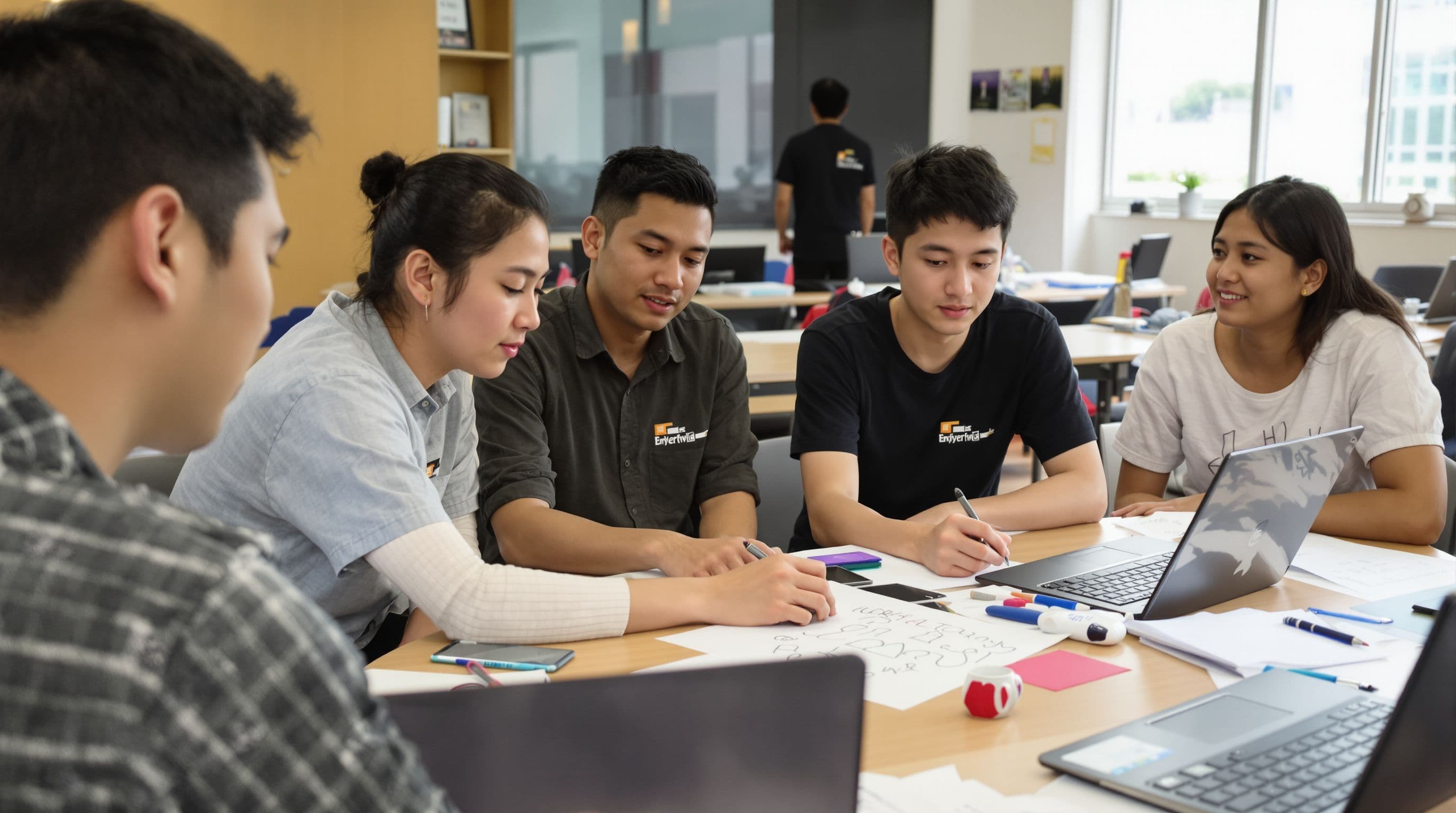
Implement AI writing assessment thoughtfully, using AI for formative feedback while preserving human judgment for high-stakes evaluation and pedagogical quality.
Article
Practical AI applications that give teachers time back. Focus on high-impact, low-risk uses for lesson planning, resource creation, and communication.
Article

A comprehensive prevention strategy combining policy, assessment design, process requirements, verification, detection, and culture. No single approach works alone.
Article

Comprehensive academic honesty policy template for AI use in schools. Includes use categories, disclosure requirements, consequences, and implementation roadmap.
Public universities face mounting pressures to improve student outcomes while managing constrained state funding, aging infrastructure, and increasingly diverse student populations. These institutions must balance educational quality, research excellence, and community service across sprawling campuses serving thousands of students with varied academic preparedness levels. AI transforms university operations through intelligent student support systems that identify at-risk students early, adaptive learning platforms that personalize instruction based on individual progress, and predictive analytics that optimize course scheduling and campus resource utilization. Natural language processing powers chatbots handling routine student inquiries, while machine learning algorithms streamline admissions review, financial aid allocation, and degree audit processes. Research operations benefit from AI-powered literature analysis, grant proposal matching, and laboratory automation. Key technologies include predictive analytics platforms, machine learning-based student information systems, NLP-powered virtual assistants, and computer vision for campus safety monitoring. Critical pain points include fragmented legacy systems creating data silos, limited IT resources for modernization, faculty resistance to technology adoption, and compliance requirements around student privacy and accessibility. Digital transformation opportunities span enrollment management optimization, automated administrative workflows, AI-enhanced tutoring systems, smart campus energy management, and data-driven strategic planning that demonstrates accountability to state legislatures and accreditation bodies while improving institutional effectiveness.
Timeline details will be provided for your specific engagement.
We'll work with you to determine specific requirements for your engagement.
Every engagement is tailored to your specific needs and investment varies based on scope and complexity.
Get a Custom QuotePublic universities implementing AI student success platforms have reduced dropout rates by identifying at-risk students with 87% accuracy, enabling timely academic support and counseling interventions.
Large state university systems deploying AI chatbots and process automation handle 64% of routine inquiries automatically, freeing staff for complex cases while maintaining 24/7 availability for 40,000+ students.
Universities using AI research management platforms report 31% faster grant submission cycles and 18% higher award rates by matching faculty expertise with funding opportunities and improving proposal quality through AI-powered reviews.
The ROI for AI in public universities comes primarily from operational efficiencies that free up constrained resources rather than direct revenue generation. Universities implementing AI-powered chatbots for student inquiries typically reduce call center staffing needs by 40-60%, allowing staff reallocation to high-touch advising for at-risk students. Predictive analytics for course scheduling can increase classroom utilization by 15-20%, deferring costly building expansions. One mid-sized state university saved $2.3 million annually by using AI to optimize energy management across campus buildings, demonstrating measurable returns within the first year. The strongest business case focuses on improving student outcomes, which directly impacts state performance-based funding formulas. Early alert systems using machine learning to identify struggling students can improve retention rates by 5-8 percentage points. For a university with 20,000 students and $12,000 average tuition, retaining just 100 additional students represents $1.2 million in preserved revenue. We recommend starting with high-impact, lower-cost implementations like admissions workflow automation or chatbots, then reinvesting savings into more ambitious projects. When presenting to state legislatures and boards of trustees, frame AI investments as accountability measures that demonstrate responsible stewardship of taxpayer dollars. Show how predictive analytics provides data-driven evidence of institutional effectiveness, supports accreditation requirements, and enables strategic resource allocation. Many universities successfully secure dedicated technology modernization funding by connecting AI initiatives directly to state workforce development priorities and graduation rate improvement mandates.
Before implementing any AI technology, we recommend conducting a comprehensive data infrastructure assessment. Most public universities have decades of accumulated legacy systems—separate databases for admissions, student records, financial aid, housing, and course management—that don't communicate effectively. AI models require integrated, clean data to function properly, so addressing these data silos is foundational. Start by mapping where critical student data lives, identifying gaps in data quality, and establishing a unified data warehouse or lake that can feed AI applications. This unglamorous groundwork determines whether your AI investments succeed or fail. Once basic data infrastructure exists, begin with a pilot project addressing a clearly defined pain point where success can be measured objectively. Student advising chatbots handling routine questions about registration deadlines, prerequisite requirements, or financial aid status offer quick wins with minimal risk. These implementations typically show results within one semester, build organizational confidence in AI, and generate user feedback for iterative improvement. Alternatively, automating degree audit processes—verifying whether students have completed graduation requirements—saves advisors hundreds of hours while ensuring accuracy. Critically, engage faculty and staff early through transparent communication about how AI will augment rather than replace their roles. Resistance to AI adoption in academic settings often stems from legitimate concerns about academic freedom, pedagogical control, and job security. We recommend forming cross-functional working groups that include faculty representatives, IT staff, student services professionals, and students themselves to co-design AI implementations. When faculty see AI as a tool that reduces administrative burden and allows more time for teaching and research, adoption accelerates dramatically.
Public universities face uniquely stringent privacy requirements under FERPA (Family Educational Rights and Privacy Act), state public records laws, and often additional accessibility requirements under Section 504 and ADA. When implementing AI systems, universities must ensure vendors sign Business Associate Agreements specifying data handling protocols, storage locations (often required to be within the US or specific states), and deletion timelines. Any AI system processing student data requires detailed data protection impact assessments documenting what data is collected, how algorithms use it, where it's stored, and who has access. These assessments become critical during audits and help identify compliance gaps before implementation. The challenge intensifies with predictive analytics and early alert systems that make inferences about student risk factors. If an AI model identifies a student as likely to drop out based on demographic factors, academic history, or engagement patterns, universities must ensure these predictions don't create discriminatory outcomes or violate students' rights to privacy. We recommend implementing algorithmic transparency protocols where students can understand why they received certain recommendations and request human review of automated decisions affecting their academic standing. Some states now require public institutions to disclose when AI systems materially influence decisions about admissions, financial aid, or academic progression. Accessibility compliance adds another layer—AI-powered learning platforms, chatbots, and video analysis tools must meet WCAG standards and provide accommodations for students with disabilities. Computer vision systems used for proctoring or campus safety must be tested for bias across different demographic groups and include opt-out provisions. We recommend establishing an AI ethics committee with representatives from legal, IT, student affairs, and disability services to review proposed implementations before deployment. This committee should maintain a public-facing AI transparency statement explaining what AI systems are in use and how students can exercise their data rights.
Early alert and intervention systems deliver the most measurable impact on student retention and graduation rates. These AI platforms integrate data from learning management systems, attendance tracking, grade submissions, library access, dining hall usage, and even campus card swipes to identify students showing early warning signs of disengagement. Machine learning models can predict with 75-85% accuracy which students are at risk of dropping out up to two semesters in advance, allowing advisors to intervene proactively. Georgia State University's implementation of such a system contributed to eliminating achievement gaps between student demographics and increasing graduation rates by over 20 percentage points across a decade. Adaptive learning platforms that personalize instruction based on individual student progress address a critical challenge for public universities: serving students with dramatically varied academic preparation levels. These AI-powered systems assess knowledge gaps in foundational courses like college algebra or introductory chemistry, then adjust content difficulty, provide targeted practice, and offer just-in-time support resources. Students who would have failed traditional lecture-based courses often pass using adaptive platforms, reducing costly course repetition and accelerating time to degree. Arizona State University reported that students using adaptive learning in developmental math courses showed a 17% improvement in pass rates compared to traditional instruction. AI-enhanced advising and degree planning tools help students navigate increasingly complex degree requirements and transfer credit rules. These systems analyze thousands of possible course sequences to recommend optimal paths that minimize time to graduation while considering prerequisites, course availability, and individual student constraints like work schedules. For transfer students—who comprise 40-50% of enrollment at many public universities—AI tools can instantly evaluate transfer credits and map them to degree requirements, a process that traditionally took weeks and often resulted in students taking unnecessary courses. The cumulative effect of reducing time to degree by even one semester translates to significant cost savings for students and improved throughput for institutions.
Faculty resistance represents one of the biggest barriers to AI adoption in higher education, and it's rooted in legitimate concerns about academic freedom, pedagogical expertise, and job security. We recommend positioning AI as a tool that handles low-level cognitive tasks—grading multiple-choice assessments, providing feedback on grammar in writing assignments, answering repetitive student questions—so faculty can focus on higher-order teaching activities like facilitating discussions, mentoring research, and developing critical thinking skills. When faculty see AI reducing administrative burden rather than replacing their disciplinary expertise, resistance typically transforms into advocacy. Involving faculty in selecting and customizing AI tools for their courses, rather than imposing top-down mandates, makes adoption more successful. The academic integrity concerns around AI, particularly generative AI like ChatGPT, require honest acknowledgment that traditional assessment methods may need reimagining. Rather than engaging in an arms race of AI detection tools—which often produce false positives and disproportionately flag non-native English speakers—forward-thinking universities are redesigning assessments to emphasize skills AI cannot easily replicate. This includes more oral examinations, process-oriented assignments where students document their thinking journey, collaborative projects, and authentic assessments tied to real-world applications. Some faculty are even incorporating AI tools into coursework explicitly, teaching students to use them critically and ethically as they will in professional contexts. Public universities should establish clear AI use policies developed collaboratively with faculty governance bodies, not imposed unilaterally by administration. These policies should distinguish between AI use in research (generally encouraged with proper attribution), teaching (faculty discretion within broad guidelines), and administrative functions (institutional decision). Providing professional development opportunities where faculty experiment with AI tools in low-stakes environments builds comfort and competency. Universities like the University of Michigan and Penn State have created faculty learning communities specifically focused on AI in education, where instructors share strategies, troubleshoot challenges, and develop discipline-specific best practices. This peer-to-peer knowledge sharing proves far more effective than top-down training mandates.
Let's discuss how we can help you achieve your AI transformation goals.
"Will AI retention predictions stigmatize students or create self-fulfilling prophecies?"
We address this concern through proven implementation strategies.
"How do we ensure AI respects student privacy under FERPA and academic freedom?"
We address this concern through proven implementation strategies.
"Can AI capture the holistic factors that influence student success beyond grades?"
We address this concern through proven implementation strategies.
"What if faculty resist AI course scheduling that limits their teaching preferences?"
We address this concern through proven implementation strategies.
No benchmark data available yet.
