
Indonesia's insurance industry is one of the most underpenetrated in the region, with total premium-to-GDP ratio below 2%, representing a massive growth opportunity. OJK is pushing insurers to modernize through digital transformation mandates, and leading players like Prudential Indonesia, Allianz, and BUMN insurer Jiwasraya's successor IFG Life are investing in AI for underwriting, claims, and distribution. The Muslim-majority population drives strong demand for Sharia-compliant (takaful) insurance products that AI can help design and distribute at scale.
Indonesia's insurance sector faces deep public trust issues following the Jiwasraya and Asabri scandals, making AI-driven transparency and governance tools particularly important. Agent-dependent distribution models create resistance to AI automation from the industry's large sales force. Low financial literacy means AI customer-facing tools must be exceptionally simple and educational. The vast geographic spread of policyholders across the archipelago complicates AI-powered claims verification, particularly for property and agricultural insurance in remote areas.
OJK regulates all insurance activities through comprehensive POJK frameworks covering solvency, product approval, and distribution channels. OJK's digital insurance regulations set specific requirements for AI-powered underwriting and claims processing. The DSN-MUI (National Sharia Board) sets standards for takaful products that AI pricing models must incorporate. POJK on risk-based minimum capital requirements influence how insurers allocate resources to AI investments versus capital reserves.
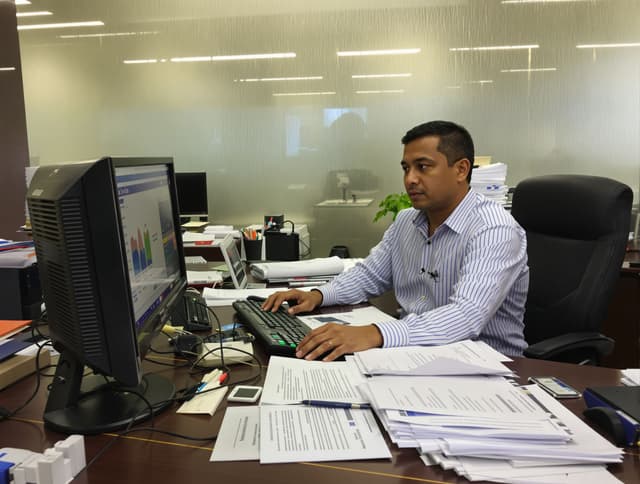
We understand the unique regulatory, procurement, and cultural context of operating in Indonesia
Indonesia's 2022 data protection law requiring data processors to obtain consent and implement security measures. Applies to AI systems handling personal data. Enforcement began 2024 with penalties up to 6 billion rupiah.
BRIN (National Research and Innovation Agency) guidelines emphasizing transparency, accountability, and human-centric AI development. Voluntary framework for responsible AI deployment across sectors.
Financial services data (banking, insurance) must be stored in Indonesia per OJK regulations. Government Regulation 71/2019 requires public sector data to remain in-country. Private sector data can use cloud providers with Indonesia regions (AWS Jakarta, Google Cloud Jakarta).
Enterprise procurement cycles 4-6 months with heavy emphasis on relationship building. State-owned enterprises (BUMN) follow formal tender processes requiring local partnership or presence. Private sector decision-making involves multiple stakeholder approval (finance, IT, business units, legal). Budget approvals centralized at group/holding company level for >500M IDR.
Prakerja program provides skills training subsidies for workers. Ministry of Industry offers Industry 4.0 readiness grants. Limited direct AI adoption subsidies compared to Singapore/Malaysia. Corporate training often funded directly by enterprises. Tax incentives available for R&D activities including AI development.
High power distance culture requires engagement with senior leadership first. Relationship building essential before business discussions. Bahasa Indonesia training delivery required despite English proficiency in management. Consensus-driven decision making involves broad stakeholder input. Regional diversity (Java, Sumatra, Sulawesi) requires localized approaches.
Explore articles and research about AI implementation in this sector and region
Article

A guide to Microsoft Copilot courses for Indonesian companies in 2026. Corporate training for M365 organisations in Jakarta and across Indonesia.
Article

A guide to ChatGPT courses for Indonesian companies in 2026. Corporate workshops in Jakarta, Surabaya, and Bandung. Kartu Prakerja eligible options and in-house training programmes.
Article

The Bank of Thailand (BOT) released mandatory AI Risk Management Guidelines in September 2025 for all financial service providers. Built on FEAT-aligned principles, they require governance structures, lifecycle controls, and fairness monitoring.
Article

Indonesia's Personal Data Protection Law (UU PDP), fully effective since October 2024, is modeled on GDPR and applies to all AI systems processing personal data. With mandatory AI regulations expected in early 2026, companies must comply now.
Our team has trained executives at globally-recognized brands


YOUR PATH FORWARD
Every AI transformation is different, but the journey follows a proven sequence. Start where you are. Scale when you're ready.
ASSESS · 2-3 days
Understand exactly where you stand and where the biggest opportunities are. We map your AI maturity across strategy, data, technology, and culture, then hand you a prioritized action plan.
Get your AI Maturity ScorecardChoose your path
TRAIN · 1 day minimum
Upskill your leadership and teams so AI adoption sticks. Hands-on programs tailored to your industry, with measurable proficiency gains.
Explore training programsPROVE · 30 days
Deploy a working AI solution on a real business problem and measure actual results. Low risk, high signal. The fastest way to build internal conviction.
Launch a pilotSCALE · 1-6 months
Roll out what works across the organization with governance, change management, and measurable ROI. We embed with your team so capability transfers, not just deliverables.
Design your rolloutITERATE & ACCELERATE · Ongoing
AI moves fast. Regular reassessment ensures you stay ahead, not behind. We help you iterate, optimize, and capture new opportunities as the technology landscape shifts.
Plan your next phaseFollowing the Jiwasraya and Asabri investment fraud scandals, OJK has mandated stricter governance and risk management standards that AI tools can help enforce. AI-powered investment monitoring systems provide real-time portfolio surveillance to prevent the asset-liability mismatches that led to these failures. Transparent AI-driven claims processing also helps rebuild consumer trust by reducing perceived subjectivity in claims decisions and providing faster, more consistent outcomes.
AI helps takaful operators design surplus-sharing models compliant with DSN-MUI fatwa requirements while remaining commercially viable. Automated Sharia compliance screening ensures investment portfolios backing takaful products avoid prohibited sectors. AI-powered distribution through Islamic digital platforms and partnerships with Islamic banks helps reach Indonesia's large Muslim population that prefers Sharia-compliant financial products but currently has very low takaful penetration rates.
Let's discuss how we can help you achieve your AI transformation goals.
