
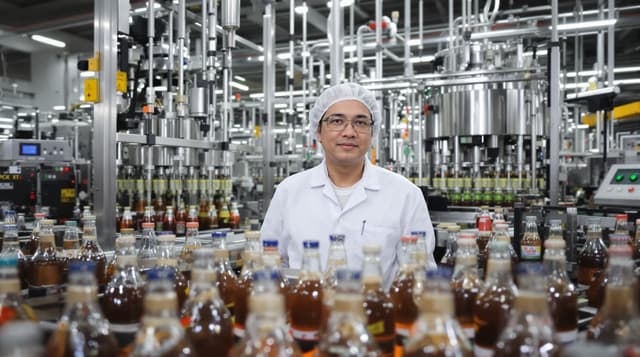
Vietnam's food and beverage manufacturing sector is a major contributor to the economy, with the country being a top global exporter of coffee, seafood, rice, and cashews. Companies like Masan Group, Vinamilk, and TH Group are investing in AI for quality control, supply chain optimization, and demand forecasting. MOIT's food processing industry development strategy targets high-value processed foods, and AI-driven traceability is becoming essential for meeting EU and US import requirements for Vietnamese food exports.
Vietnam's food supply chains involve millions of smallholder farmers and fragmented processing facilities, making end-to-end AI traceability extremely complex. Food safety standards enforcement varies between provinces, and data collection at farm level is minimal. The seasonal nature of agricultural inputs creates volatile supply patterns that AI models must handle. Many F&B manufacturers operate with legacy equipment that lacks IoT connectivity for AI-driven monitoring, and Vietnamese food safety incidents have heightened consumer and regulatory scrutiny.
The Ministry of Agriculture and Rural Development (MARD), MOH, and MOIT share food safety oversight depending on the product category. The Food Safety Law 2010 and Decree 15/2018 set requirements for food manufacturing. MARD's VietGAP certification for agricultural inputs and HACCP requirements for processing create compliance frameworks where AI can assist. For exports, AI traceability must meet destination market standards including EU IUU fishing regulations for seafood.
We understand the unique regulatory, procurement, and cultural context of operating in Vietnam
Vietnam's first comprehensive data protection law effective July 2024. Requires consent for personal data processing, notification of breaches, and data localization for sensitive categories. AI systems collecting personal data must comply with Ministry of Public Security regulations.
Requires foreign tech companies to store user data in Vietnam and establish local presence. Applies to AI platforms serving Vietnamese users. Mandates cooperation with government requests for data access.
Cybersecurity Law requires critical data (personal data, data affecting national security) to be stored in Vietnam. Banking data must remain in-country per State Bank of Vietnam (SBV) regulations. Foreign cloud providers must have Vietnam data centers or use local partners. Decree 13/2023 reinforces data localization requirements.
State-owned enterprises (SOEs) dominate economy with formal procurement requiring local partnership. Decision cycles 6-12 months with Communist Party approval for large projects. Private sector (Vingroup, FPT, Viettel) faster with 3-6 month cycles. Personal relationships and government connections critical. Budget approvals centralized at Ministry level for SOEs. Pilot budgets (500M-2B VND) approved at director level.
Government supports digital transformation through Project 06 (digital identity) and national digital transformation program. Ministry of Labour provides vocational training subsidies. Limited direct AI subsidies but growing under National Strategy on AI Development to 2030. State capital supports SOE technology adoption. Tax incentives for high-tech enterprises.
Vietnamese language training delivery essential - English proficiency lower than Singapore/Philippines. Communist Party influence requires government relationship management. Confucian values emphasize hierarchy and collective harmony. 'Saving face' culture requires diplomatic feedback delivery. Relationship building through shared meals and social events. North-South cultural differences (Hanoi vs Ho Chi Minh City) require localization.
Explore articles and research about AI implementation in this sector and region
Article

A guide to the best AI courses for Vietnamese companies in 2026. Corporate workshops in Ho Chi Minh City and Hanoi, government-supported programmes, and online options.
Article

Vietnam's Law on Artificial Intelligence, effective March 2026, is the first standalone binding AI law in Southeast Asia. It introduces risk-based classification, registration requirements, and penalties up to VND 2 billion for non-compliance.
Article

Navigate the complex landscape of AI regulations across Asia Pacific. From Singapore's AI Verify to Indonesia's PDP Law, understand compliance requirements across 6 key markets.
Article

Track 2026 AI regulatory changes across Singapore, Malaysia, Indonesia, and Hong Kong including enforcement trends, new guidance, and upcoming legislation.
Our team has trained executives at globally-recognized brands


YOUR PATH FORWARD
Every AI transformation is different, but the journey follows a proven sequence. Start where you are. Scale when you're ready.
ASSESS · 2-3 days
Understand exactly where you stand and where the biggest opportunities are. We map your AI maturity across strategy, data, technology, and culture, then hand you a prioritized action plan.
Get your AI Maturity ScorecardChoose your path
TRAIN · 1 day minimum
Upskill your leadership and teams so AI adoption sticks. Hands-on programs tailored to your industry, with measurable proficiency gains.
Explore training programsPROVE · 30 days
Deploy a working AI solution on a real business problem and measure actual results. Low risk, high signal. The fastest way to build internal conviction.
Launch a pilotSCALE · 1-6 months
Roll out what works across the organization with governance, change management, and measurable ROI. We embed with your team so capability transfers, not just deliverables.
Design your rolloutITERATE & ACCELERATE · Ongoing
AI moves fast. Regular reassessment ensures you stay ahead, not behind. We help you iterate, optimize, and capture new opportunities as the technology landscape shifts.
Plan your next phaseVietnam's position as a top exporter of coffee, seafood, and rice means AI-driven quality control and traceability are essential for meeting international standards. EU regulations increasingly require full supply chain transparency, and the US FSMA mandates preventive controls. Vietnamese food manufacturers like Masan and Vinamilk deploy AI to maintain export competitiveness and comply with destination market requirements.
Vietnam has faced food safety concerns including pesticide residues, antibiotic overuse in aquaculture, and adulteration. AI-powered inspection and testing analytics help manufacturers identify risks before products reach consumers. MARD's food safety inspection improvements and the National Agri-Food Quality Assurance Department (NAFIQAD) use risk-based approaches where AI can target high-risk products and supply chains.
Let's discuss how we can help you achieve your AI transformation goals.
