Automated visual inspection of products on manufacturing lines. Detect defects, scratches, dents, misalignments, and quality issues faster and more consistently than human inspectors. Sub-pixel [edge detection](/glossary/edge-detection) algorithms apply Canny gradient magnitude thresholding with non-maximum suppression and hysteresis connectivity analysis to isolate dimensional tolerance deviations at micrometer resolution, enabling go/no-go gauge verification for precision-machined components where surface finish Ra roughness parameters and geometric dimensioning concentricity callouts require coordinate measuring machine correlation validation. Hyperspectral imaging decomposition separates reflected radiance into constituent material absorption signatures across near-infrared wavelength bands, detecting contaminant inclusions, coating thickness heterogeneity, and alloy composition deviations invisible to conventional RGB machine vision systems operating within the human-perceptible electromagnetic spectrum. [Computer vision](/glossary/computer-vision) quality control systems implement multi-stage visual inspection architectures combining [anomaly detection](/glossary/anomaly-detection) algorithms, [semantic segmentation](/glossary/semantic-segmentation) networks, and object detection frameworks to enforce product conformance standards across diverse manufacturing and processing environments. These deployments address quality assurance requirements spanning textile weave pattern verification, printed circuit board solder joint evaluation, pharmaceutical tablet integrity assessment, and agricultural produce grading where visual characteristics determine product [classification](/glossary/classification) and marketability. The versatility of modern [deep learning](/glossary/deep-learning) vision architectures enables single platform investments to serve heterogeneous inspection applications through reconfigurable [model deployment](/glossary/model-deployment) rather than purpose-built hardware procurement for each distinct product family. Anomaly detection approaches employing [autoencoder](/glossary/autoencoder) reconstruction error analysis and generative adversarial network discriminator scoring enable defect identification without exhaustive labeled training datasets encompassing every possible defect manifestation. These unsupervised methodologies learn statistical representations of acceptable product appearance, flagging deviations that exceed learned normality boundaries regardless of whether specific anomaly types were previously encountered. Variational autoencoder extensions provide calibrated anomaly probability scores rather than binary classification decisions, enabling nuanced disposition routing where borderline specimens receive additional secondary inspection rather than outright rejection. Semantic segmentation networks partition inspection images into pixel-level class assignments distinguishing product regions, defect zones, background areas, and fixture elements. [Instance segmentation](/glossary/instance-segmentation) extensions individually delineate multiple discrete defects within single images, enabling precise defect dimension measurement, location mapping, and severity grading for each identified anomaly independently. [Panoptic segmentation](/glossary/panoptic-segmentation) architectures unify semantic and instance segmentation into comprehensive [scene understanding](/glossary/scene-understanding), simultaneously classifying product regions and individually identifying each discrete defect occurrence within complex multi-component assemblies. Multi-camera inspection architectures capture product surfaces from multiple viewing angles, illumination conditions, and focal distances to ensure comprehensive coverage of three-dimensional geometry. Image registration algorithms align multi-view acquisitions into unified product representations enabling holistic quality assessment that considers spatial relationships between features visible from different perspectives. Time-of-flight depth sensors supplement two-dimensional imagery with surface topology measurements, detecting warpage, planarity deviations, and protrusion anomalies invisible in conventional photographic capture. Color science modules calibrate chromatic measurements against CIE colorimetric standards, detecting hue drift, saturation inconsistency, and brightness non-uniformity against reference specifications. Metamerism analysis evaluates color appearance stability under varying illuminant conditions, ensuring products maintain acceptable appearance across retail, warehouse, and consumer lighting environments. Spectrophotometric integration provides laboratory-grade color measurement capability embedded within production line inspection stations, enabling real-time process adjustment when colorant mixing ratios drift beyond acceptable tolerance windows. Robotic integration enables active inspection where articulated manipulators reposition products to present occluded surfaces, rotate assemblies to inspect concealed features, and separate stacked items for individual evaluation. Collaborative robot deployments operate alongside human operators in shared workspaces without safety fencing requirements, combining automated and manual inspection for comprehensive quality verification. Robotic defect marking systems physically annotate detected anomaly locations on inspected products using laser etching, ink jet printing, or adhesive label application, guiding downstream repair operators directly to deficient areas. Yield analytics correlate visual inspection outcomes with upstream process variables through multivariate [regression](/glossary/regression) and Bayesian network models, quantifying process parameter contributions to defect generation probabilities. These causal insights direct process engineering improvements toward factors with highest leverage on yield enhancement rather than addressing symptoms through intensified downstream inspection. Shift-level performance benchmarking identifies operator and equipment combinations producing statistically superior quality outcomes, informing best-practice dissemination and underperforming configuration remediation. Traceability integration associates visual inspection records with individual product serial numbers, batch identifiers, and shipping container assignments, enabling targeted recall scope limitation when post-market quality issues emerge. Digital inspection certificates accompany shipments, providing customers with objective quality verification evidence. Blockchain-anchored inspection attestation creates tamper-evident quality documentation chains satisfying pharmaceutical serialization mandates and aerospace traceability requirements. Inspection recipe management maintains version-controlled inspection parameter configurations for each product variant, automatically loading appropriate camera settings, lighting profiles, and classification thresholds when production changeovers introduce different products to inspection stations. Automated validation protocols execute standardized test sequences upon recipe activation, confirming system readiness and detection sensitivity before production commencement using characterized reference standards with known defect characteristics.
1. Human inspectors visually check products on line 2. 3-5 second inspection per unit (limited throughput) 3. Subjective quality assessment (varies by inspector) 4. Fatigue reduces accuracy over shift (90-95% detection) 5. Defects sometimes reach customers 6. High labor cost for inspection team Total cost: 2-4% defect escape rate, high labor cost
1. AI vision system captures images at line speed 2. AI analyzes every unit in real-time (milliseconds) 3. AI flags defects with confidence scores 4. Quality team reviews flagged units only 5. System learns from feedback to improve 6. Consistent 99%+ detection rate, 24/7 Total cost: <0.5% defect escape rate, lower labor cost
Risk of false positives causing production slowdowns. May miss novel defect types not in training data. Requires significant setup and calibration.
Pilot on single product line firstContinuous model retraining with new defectsHuman review of all flagged units initiallyGradual confidence threshold adjustment
Initial setup costs range from $50,000-$200,000 per production line, including cameras, computing hardware, and software licensing. Ongoing costs include maintenance, software updates, and periodic model retraining, typically 10-15% of initial investment annually.
Implementation typically takes 8-16 weeks from project start to full deployment. This includes 2-4 weeks for data collection and model training, 4-8 weeks for system integration, and 2-4 weeks for testing and validation before going live.
You need consistent lighting conditions, stable product positioning, and high-resolution cameras capable of capturing relevant defects. Additionally, having 1,000-5,000 labeled images of both good and defective products is essential for training accurate AI models.
The primary risks include false positives leading to good product rejection and false negatives allowing defective products to pass through. These can be mitigated through proper model validation, human oversight during initial deployment, and continuous monitoring of detection accuracy.
Most manufacturers see 200-400% ROI within 18 months through reduced labor costs, fewer customer returns, and improved product quality. Additional benefits include 24/7 operation capability and consistent inspection standards that reduce quality-related warranty claims by 30-50%.
Explore articles and research about implementing this use case
Article
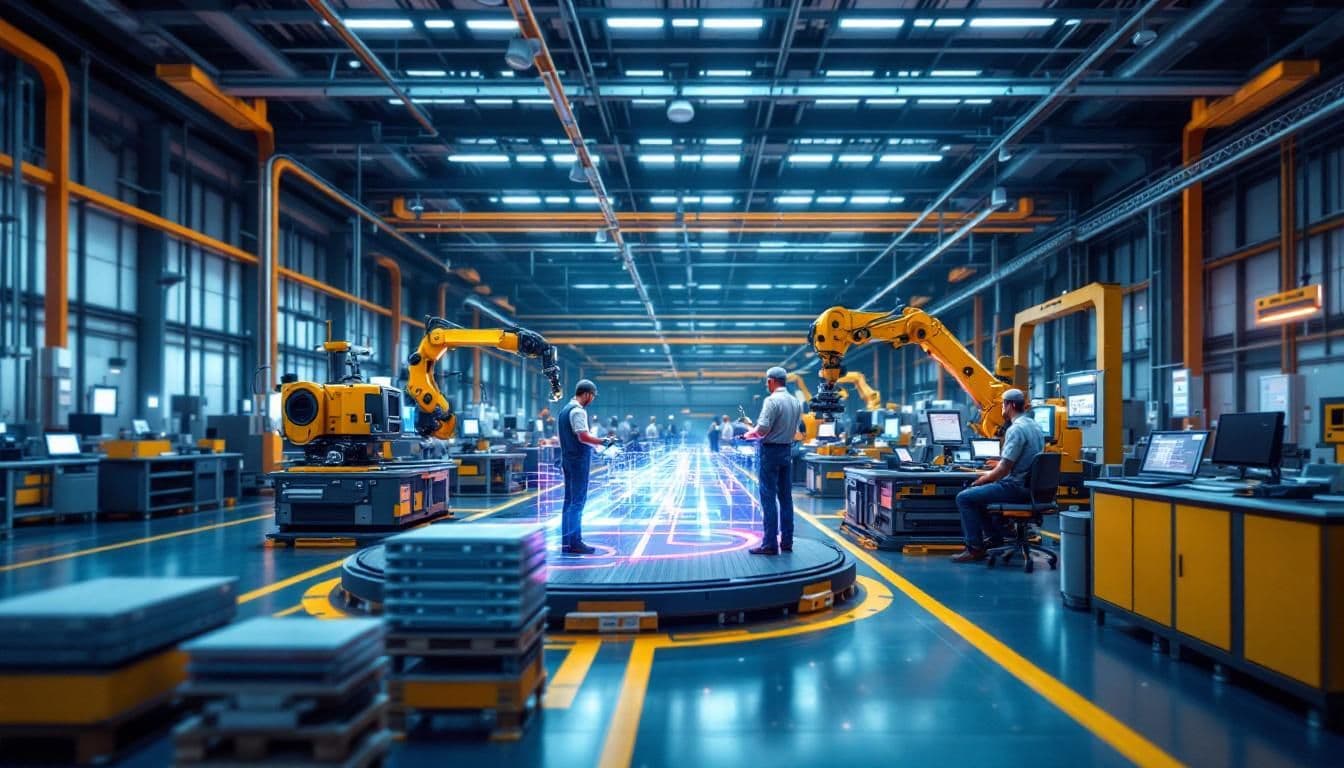
AI courses for manufacturing companies. Modules covering quality management documentation, safety compliance, operations optimisation, and supply chain intelligence with AI.
Article
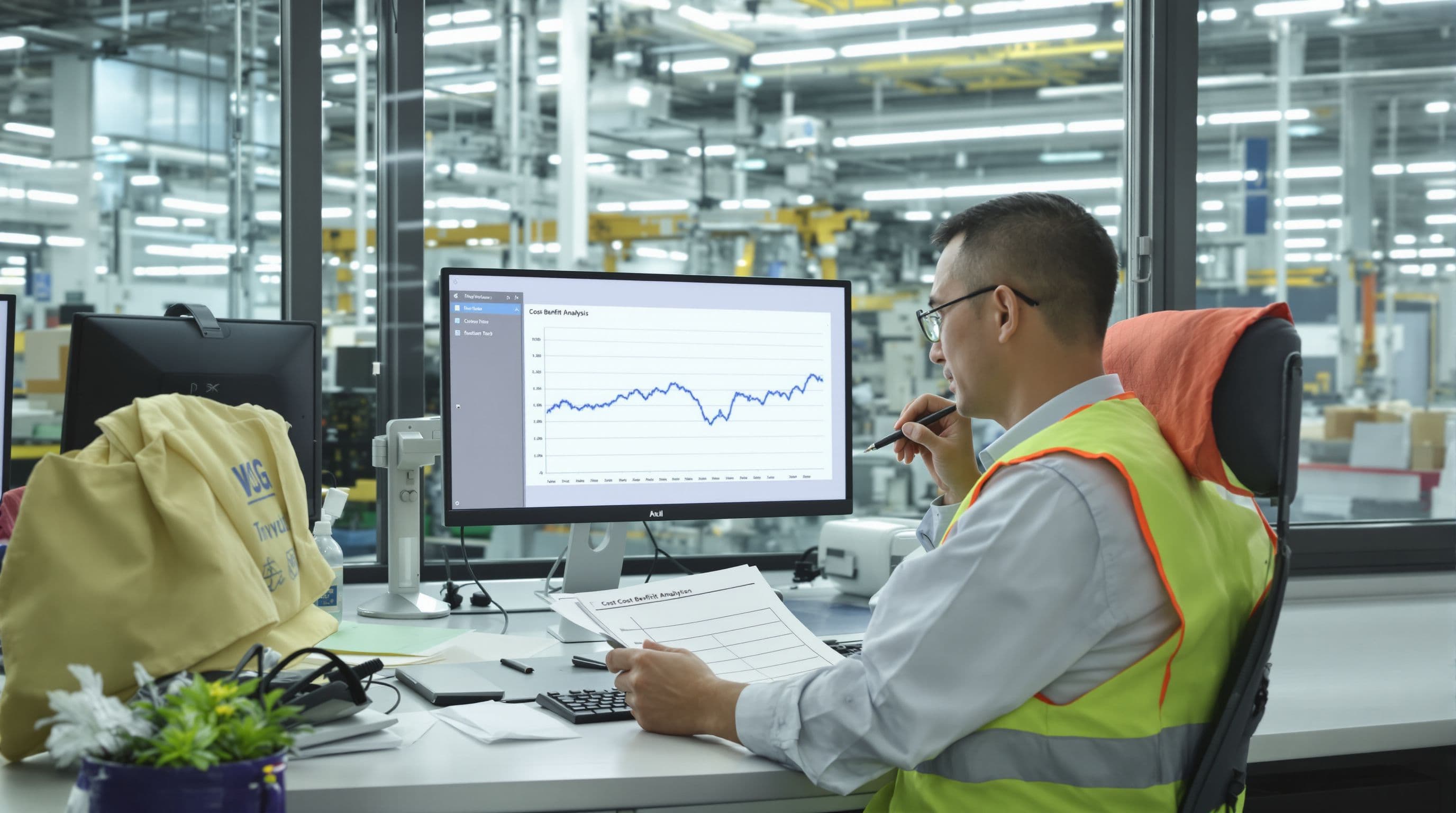
Manufacturing AI costs: Predictive maintenance $100K-$600K, quality control $120K-$500K, production optimization $150K-$700K. IIoT integration and OT/IT challenges.
THE LANDSCAPE
Discrete manufacturers produce distinct units like cars, electronics, and machinery using assembly lines and component-based processes. AI optimizes production scheduling, predictive maintenance, quality inspection, and supply chain coordination. Manufacturers implementing AI reduce downtime by 35%, improve quality control accuracy by 90%, and increase throughput by 25%.
The global discrete manufacturing market exceeds $8 trillion annually, encompassing automotive, aerospace, consumer electronics, and industrial equipment sectors. These manufacturers face intense margin pressure, complex multi-tier supply chains, and rising quality expectations from customers demanding zero-defect products.
DEEP DIVE
Key technologies transforming discrete manufacturing include computer vision for automated defect detection, machine learning for demand forecasting, digital twins for production simulation, and robotics for flexible assembly. IoT sensors enable real-time equipment monitoring across factory floors. Cloud-based MES and ERP systems provide end-to-end visibility from raw materials to finished goods.
1. Human inspectors visually check products on line 2. 3-5 second inspection per unit (limited throughput) 3. Subjective quality assessment (varies by inspector) 4. Fatigue reduces accuracy over shift (90-95% detection) 5. Defects sometimes reach customers 6. High labor cost for inspection team Total cost: 2-4% defect escape rate, high labor cost
1. AI vision system captures images at line speed 2. AI analyzes every unit in real-time (milliseconds) 3. AI flags defects with confidence scores 4. Quality team reviews flagged units only 5. System learns from feedback to improve 6. Consistent 99%+ detection rate, 24/7 Total cost: <0.5% defect escape rate, lower labor cost
Risk of false positives causing production slowdowns. May miss novel defect types not in training data. Requires significant setup and calibration.
Our team has trained executives at globally-recognized brands


YOUR PATH FORWARD
Every AI transformation is different, but the journey follows a proven sequence. Start where you are. Scale when you're ready.
ASSESS · 2-3 days
Understand exactly where you stand and where the biggest opportunities are. We map your AI maturity across strategy, data, technology, and culture, then hand you a prioritized action plan.
Get your AI Maturity ScorecardChoose your path
TRAIN · 1 day minimum
Upskill your leadership and teams so AI adoption sticks. Hands-on programs tailored to your industry, with measurable proficiency gains.
Explore training programsPROVE · 30 days
Deploy a working AI solution on a real business problem and measure actual results. Low risk, high signal. The fastest way to build internal conviction.
Launch a pilotSCALE · 1-6 months
Roll out what works across the organization with governance, change management, and measurable ROI. We embed with your team so capability transfers, not just deliverables.
Design your rolloutITERATE & ACCELERATE · Ongoing
AI moves fast. Regular reassessment ensures you stay ahead, not behind. We help you iterate, optimize, and capture new opportunities as the technology landscape shifts.
Plan your next phaseLet's discuss how we can help you achieve your AI transformation goals.
