Map Your AI Opportunity in 1-2 Days
A structured workshop to identify high-value [AI use cases](/glossary/ai-use-case), assess readiness, and create a prioritized roadmap. Perfect for organizations exploring [AI adoption](/glossary/ai-adoption). Outputs recommended path: Build Capability (Path A), Custom Solutions (Path B), or Funding First (Path C).
Duration
1-2 days
Investment
Starting at $8,000
Path
entry
For discrete manufacturers, Discovery Workshop addresses the unique challenge of implementing AI in complex production environments with legacy equipment and tight quality tolerances. We map AI opportunities across your value chain—from predictive maintenance and quality control to production scheduling and supply chain optimization—while accounting for shopfloor realities like machine compatibility, operator training needs, and production disruption constraints. Our workshop evaluates your current manufacturing execution systems (MES) and identifies AI use cases that integrate with existing infrastructure without requiring wholesale technology replacement. We scope solutions that deliver measurable ROI (reduced downtime, lower scrap rates, improved OEE) within 6-12 months, and design implementation roadmaps that minimize production interruptions during deployment. The deliverables include integration specifications for your PLCs, SCADA systems, and ERP platforms.
Predictive maintenance AI that analyzes vibration, temperature, and acoustic data to predict equipment failures 2-4 weeks in advance, reducing unplanned downtime by 35%
Computer vision quality inspection systems that detect defects invisible to human inspectors, reducing scrap rates from 3.2% to 0.8%
Production scheduling optimization that balances machine capacity, material availability, and order priorities to increase throughput by 15-25% without capital investment
Supply chain demand forecasting that combines historical orders, market signals, and seasonal patterns to optimize inventory levels and reduce working capital by 20%
Yes, through retrofit sensors and edge computing. Discovery Workshop includes a machine compatibility assessment—we identify which equipment can be instrumented with low-cost sensors (vibration, temperature, acoustic) that feed data to AI models without modifying the machines themselves. Even legacy equipment without digital interfaces can be monitored using computer vision or bolt-on IoT devices. Your workshop deliverables include a retrofit plan with cost estimates.
Discovery Workshop includes operator adoption planning. We design AI interfaces that match your operators' existing workflows—dashboards that show actionable alerts ('Machine 3 needs bearing replacement by Friday') rather than raw data. The implementation roadmap includes training modules, visual aids for non-technical staff, and change management protocols that involve operators in pilot testing to build buy-in before full rollout.
Discovery Workshop prioritizes non-disruptive deployment. We scope AI systems that can be piloted on one production line or shift while the rest of operations continue normally. The roadmap phases implementation during planned maintenance windows or low-volume periods. For real-time systems (quality inspection, scheduling), we design parallel operation modes where AI runs alongside existing processes until validated—you maintain production continuity throughout deployment.
The workshop includes ROI modeling based on your actual production data. Typical discrete manufacturers see 15-25% reduction in unplanned downtime (6-9 months), 30-50% reduction in quality inspection time (3-4 months), and 10-20% improvement in OEE (9-12 months). We prioritize use cases with payback periods under 18 months and quantify benefits in units your CFO cares about: reduced scrap costs, lower overtime, improved on-time delivery.
Discovery Workshop maps your current technology stack and designs integration architectures. We scope API connections, data pipelines, and middleware that allow AI systems to pull data from your ERP (SAP, Oracle, Epicor) and push insights to your MES (Rockwell, Siemens, Wonderware) without replacing either. The deliverables include integration specifications, data flow diagrams, and vendor coordination requirements.
A mid-sized electronics manufacturer used Discovery Workshop to scope a predictive maintenance system for their SMT production lines. The workshop identified that unplanned downtime from pick-and-place machine failures was costing them $180K annually in lost production. We designed an AI solution using existing machine logs plus $15K in vibration sensors that now predicts bearing failures 3 weeks in advance, reducing unplanned downtime by 40% and delivering ROI in 11 months.
AI Opportunity Map (prioritized use cases)
Readiness Assessment Report
Recommended Engagement Path
90-Day Action Plan
Executive Summary Deck
Clear understanding of where AI can add value
Prioritized roadmap aligned with business goals
Confidence to make informed next steps
Team alignment on AI strategy
Recommended engagement path
If the workshop doesn't surface at least 3 high-value opportunities with clear ROI potential, we'll refund 50% of the engagement fee.
Let's discuss how this engagement can accelerate your AI transformation in Discrete Manufacturing.
Start a ConversationExplore articles and research about delivering this service
Article
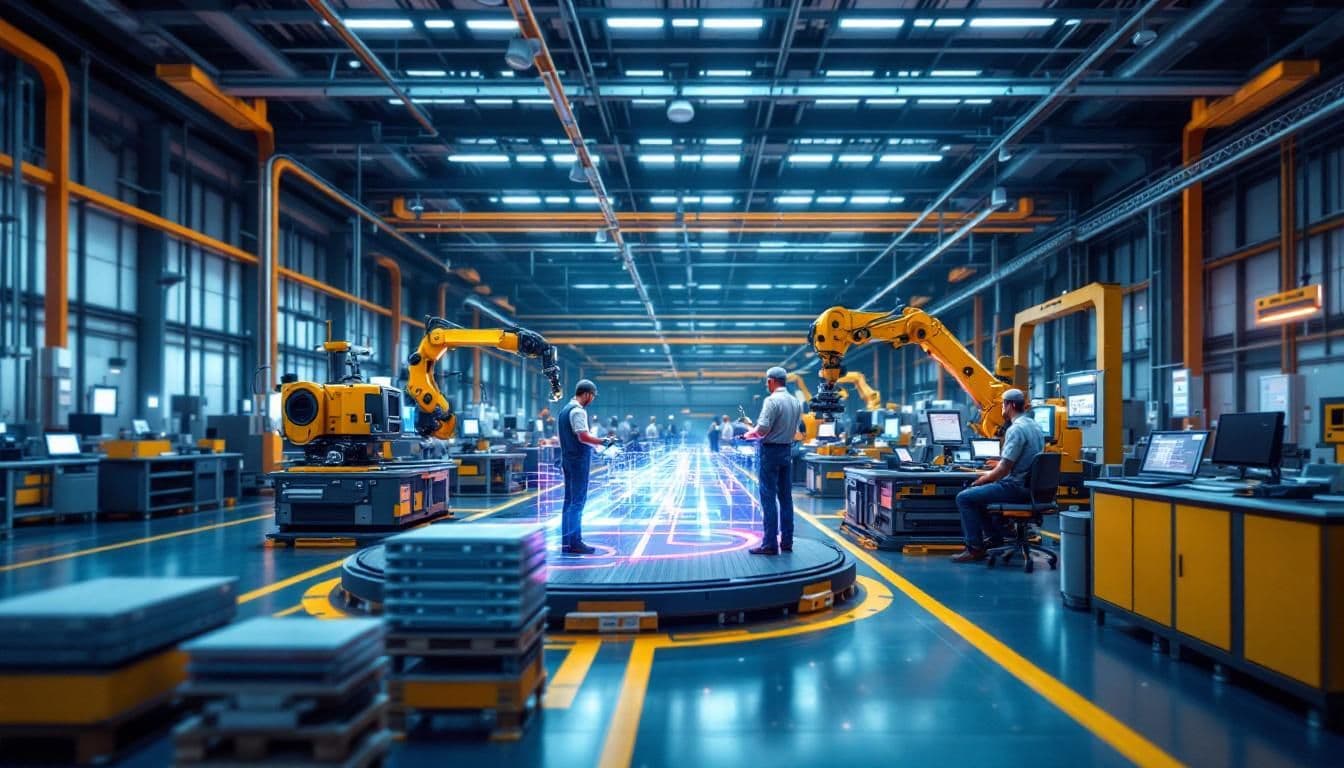
AI courses for manufacturing companies. Modules covering quality management documentation, safety compliance, operations optimisation, and supply chain intelligence with AI.
Article
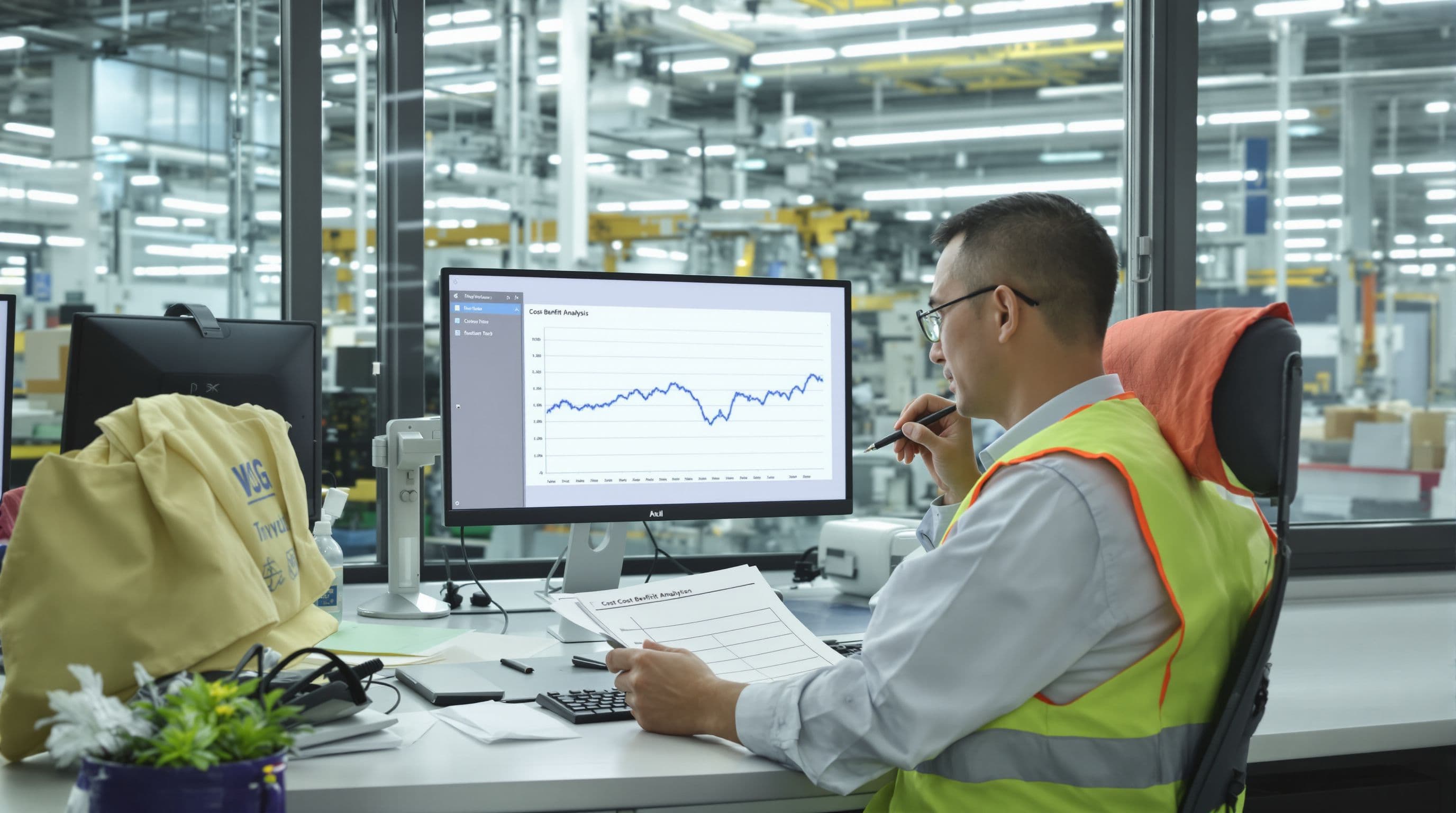
Manufacturing AI costs: Predictive maintenance $100K-$600K, quality control $120K-$500K, production optimization $150K-$700K. IIoT integration and OT/IT challenges.
Discrete manufacturers produce distinct units like cars, electronics, and machinery using assembly lines and component-based processes. AI optimizes production scheduling, predictive maintenance, quality inspection, and supply chain coordination. Manufacturers implementing AI reduce downtime by 35%, improve quality control accuracy by 90%, and increase throughput by 25%. The global discrete manufacturing market exceeds $8 trillion annually, encompassing automotive, aerospace, consumer electronics, and industrial equipment sectors. These manufacturers face intense margin pressure, complex multi-tier supply chains, and rising quality expectations from customers demanding zero-defect products. Key technologies transforming discrete manufacturing include computer vision for automated defect detection, machine learning for demand forecasting, digital twins for production simulation, and robotics for flexible assembly. IoT sensors enable real-time equipment monitoring across factory floors. Cloud-based MES and ERP systems provide end-to-end visibility from raw materials to finished goods. Common pain points include unplanned equipment downtime costing $260,000 per hour, quality escapes resulting in costly recalls, inefficient changeovers between product variants, and inventory imbalances. Labor shortages and skills gaps compound operational challenges. Revenue drivers center on production efficiency, first-pass yield rates, asset utilization, and time-to-market for new product introductions. Digital transformation opportunities include lights-out manufacturing, autonomous quality loops, AI-driven production scheduling, and predictive supply chain orchestration that anticipates disruptions before they impact delivery commitments.
Timeline details will be provided for your specific engagement.
We'll work with you to determine specific requirements for your engagement.
Every engagement is tailored to your specific needs and investment varies based on scope and complexity.
Get a Custom QuoteThai Automotive Parts manufacturer implemented computer vision quality control, achieving 47% defect reduction and 89% inspection accuracy across high-volume production lines.
BMW's AI-driven production optimization system increased manufacturing throughput by 23% while reducing scheduling conflicts by 34%.
Fortune 500 manufacturers deploying AI for assembly optimization and quality control achieved an average 6.2-month payback period with sustained operational improvements.
AI-powered predictive maintenance analyzes real-time sensor data from production equipment—vibration patterns, temperature fluctuations, acoustic signatures, and power consumption—to identify failure patterns weeks before breakdowns occur. Unlike traditional preventive maintenance that follows rigid schedules regardless of actual equipment condition, AI models learn the unique degradation signatures of each asset. For example, a CNC machining center might show subtle vibration changes 3-4 weeks before bearing failure, allowing scheduled replacement during planned downtime rather than catastrophic failure during a production run. The financial impact is substantial. When unplanned downtime costs $260,000 per hour in automotive assembly, predicting just one major equipment failure per quarter saves over $1 million annually. We've seen discrete manufacturers reduce unplanned downtime by 35% within the first year of implementation. The system continuously improves as it ingests more operational data, learning to distinguish between normal operational variations and genuine failure precursors across different product runs and environmental conditions. Implementation typically starts with high-value, high-risk equipment where downtime costs are most severe—stamping presses, robotic welders, or automated assembly stations. Modern IoT platforms make retrofitting existing equipment feasible, even in facilities with mixed-vintage machinery. The key is ensuring sufficient historical failure data or augmenting with physics-based models during the initial training period.
AI-powered computer vision systems deliver compelling ROI through three primary value streams: dramatically higher defect detection rates, 100% inspection coverage, and immediate cost avoidance from prevented quality escapes. Traditional manual inspection catches 80-85% of defects at best, while AI systems consistently achieve 90%+ accuracy, identifying microscopic surface flaws, assembly errors, and dimensional variations that human inspectors miss due to fatigue or inconsistent lighting conditions. For a consumer electronics manufacturer producing 50,000 units daily, improving detection from 80% to 95% prevents 750 defective units from reaching customers every single day. The recall avoidance alone often justifies the investment. A single automotive recall averages $10 million in direct costs, not counting brand damage and regulatory consequences. Computer vision systems inspecting every weld, paint finish, and component placement create auditable quality records for each unit while identifying systematic process issues in real-time. We've seen manufacturers achieve payback periods of 6-12 months when factoring in reduced scrap rates, lower warranty claims, and eliminated manual inspection labor. Beyond defect detection, these systems provide actionable process intelligence. When the AI identifies a drift in paint thickness or alignment errors clustering around specific timeframes, it signals upstream process degradation before producing significant scrap volumes. This closed-loop quality control transforms inspection from a pass/fail checkpoint into a continuous improvement engine that optimizes production parameters automatically.
Start with turnkey solutions addressing your most painful operational bottleneck rather than building custom AI from scratch. If unplanned downtime is your primary challenge, industrial IoT platforms like those from equipment manufacturers or specialized predictive maintenance vendors offer pre-trained models that adapt to your specific machinery. These solutions come with implementation support and don't require PhD-level data scientists on staff. Your maintenance engineers and production managers provide the domain expertise while the vendor handles model training and deployment. We recommend beginning with a focused pilot project on 3-5 critical assets or a single production line. This contained scope lets you validate ROI, build internal competency, and demonstrate value to stakeholders before scaling enterprise-wide. Choose applications where data already exists—most modern equipment generates sensor data even if you're not currently analyzing it—and where success metrics are unambiguous. Reduced downtime hours, defect rates, or cycle times provide clear before-and-after comparisons that build momentum for broader adoption. Partner selection matters more than technology sophistication at this stage. Look for vendors with deep discrete manufacturing experience who understand your specific challenges, whether that's automotive paint defects, electronics assembly precision, or aerospace compliance requirements. They should offer managed services that handle data integration, model maintenance, and performance monitoring while gradually transferring knowledge to your team. Many manufacturers successfully deploy initial AI applications without hiring a single data scientist, then build internal capabilities once they've proven value and understand their specific requirements.
The primary challenge isn't the AI algorithm itself—it's integrating with the complex reality of discrete manufacturing operations where the schedule is constantly disrupted by equipment failures, material shortages, engineering changes, and rush orders. Traditional MES and ERP systems treat production as deterministic: if you schedule operation A for 2 hours, it takes 2 hours. Real factories don't work that way. AI scheduling systems must ingest real-time data from dozens of sources—machine availability, actual cycle times, quality hold statuses, inventory positions, labor availability—and continuously re-optimize while respecting constraints like setup time penalties, tooling availability, and customer priority hierarchies. Data quality and system integration represent the largest implementation hurdles. Your AI scheduler is only as good as the data it receives, and many discrete manufacturers discover their MES data is incomplete, their inventory records are inaccurate by 15-20%, or their equipment status isn't updated in real-time. We typically see companies spending 60-70% of their implementation effort on data infrastructure and integration rather than the AI model itself. Legacy systems that weren't designed for real-time data exchange require middleware layers or even operational process changes to provide the data freshness AI scheduling demands. The human factor is equally critical. Production planners who've spent years developing intuition about their specific lines often resist algorithmic recommendations, especially when the AI suggests counterintuitive sequences that optimize globally rather than locally. Successful implementations treat AI as decision support initially, building trust by explaining recommendations and allowing planners to override while logging outcomes. Over time, as the system proves its ability to balance throughput, on-time delivery, and changeover efficiency better than manual methods, acceptance grows naturally. Change management and phased autonomy increases matter as much as technical capability.
AI transforms the economics of high-mix manufacturing by dramatically reducing changeover times and optimizing production sequences that minimize setup penalties. Traditional approaches group identical products into large batches to amortize changeover costs, forcing longer lead times and higher inventory. AI scheduling algorithms analyze thousands of possible production sequences simultaneously, finding optimal groupings based on setup similarity—running products that share tooling, fixtures, or process parameters in succession even if they're different SKUs. A fabrication shop might sequence parts by material gauge and hole patterns rather than customer order, reducing tool changes by 40% while maintaining acceptable delivery windows. Computer vision and adaptive robotics powered by AI enable faster product transitions on the same line. Instead of mechanical fixtures requiring 2-3 hour changeovers, vision-guided robots identify part variations automatically and adjust gripping, placement, and assembly parameters in software. An electronics assembly line that previously needed dedicated configuration for each product variant can now handle mixed-model flow, assembling different products sequentially with minimal transition time. This flexibility lets manufacturers quote competitively on smaller lot sizes that were previously unprofitable. Digital twin technology allows manufacturers to validate new product introductions virtually before consuming production capacity. When a customer requests a custom variant, AI simulates the production process, identifies potential quality issues, optimizes process parameters, and generates validated work instructions—all before the first physical unit runs. This capability compresses time-to-market while reducing the trial-and-error waste typical of low-volume specialty production. We've seen aerospace component manufacturers cut NPI cycles from 6 weeks to 10 days while improving first-pass yields on custom orders from 60% to 85%, fundamentally changing their competitive positioning in specialty markets.
Let's discuss how we can help you achieve your AI transformation goals.
""Our production is too custom and variable - can AI handle the complexity?""
We address this concern through proven implementation strategies.
""What if AI scheduling creates bottlenecks or resource conflicts our planners would have caught?""
We address this concern through proven implementation strategies.
""How do we train AI on legacy machines without modern sensors or automation?""
We address this concern through proven implementation strategies.
""Will AI recommendations conflict with our experienced shop floor supervisors' judgment?""
We address this concern through proven implementation strategies.
No benchmark data available yet.
