Deploy a predictive AI system that forecasts demand, monitors inventory across locations, detects supply chain disruptions, and autonomously triggers purchase orders to optimize stock levels. Perfect for enterprises with complex multi-location supply chains ($50M+ inventory value). Requires 4-6 month implementation with supply chain and data science teams. Control tower [digital twin](/glossary/digital-twin) synchronization mirrors physical logistics network node states through event-driven architecture publish-subscribe topologies with eventual consistency guarantees. [Predictive supply chain orchestration](/for/discrete-manufacturing/use-cases/predictive-supply-chain-orchestration) integrates demand anticipation, inventory positioning, transportation optimization, and production scheduling into a unified decision intelligence layer that coordinates material flows across multi-echelon networks in response to continuously evolving market conditions. This holistic orchestration paradigm transcends functional planning silos, simultaneously optimizing procurement timing, manufacturing sequencing, warehouse allocation, and fulfillment routing through interconnected algorithmic decision frameworks. Control tower architectures aggregate real-time visibility signals from enterprise resource planning transaction streams, warehouse management system inventory snapshots, transportation management system shipment milestones, and supplier portal order acknowledgment feeds into consolidated operational dashboards. Predictive exception management algorithms detect emerging execution anomalies—delayed inbound shipments, production schedule slippages, inventory imbalance accumulations—before they manifest as customer service failures. Inventory optimization engines compute stocking level recommendations across distribution network echelons using multi-echelon inventory theory, simultaneously determining safety stock allocations at raw material warehouses, work-in-process buffers, finished goods distribution centers, and forward deployment locations. These computations explicitly model demand variability, lead time uncertainty, and service level requirements across interconnected network nodes rather than treating each stocking location independently. Transportation network design algorithms evaluate modal selection, carrier allocation, consolidation opportunities, and routing configurations using mixed-integer linear programming formulations that minimize total logistics expenditure subject to delivery time window, capacity constraint, and carbon emission reduction objectives. Dynamic route optimization adjusts delivery plans in response to real-time traffic conditions, weather disruptions, and order priority changes. Production scheduling optimization sequences manufacturing orders across constrained resource configurations including parallel production lines, shared tooling fixtures, and sequential processing stages, minimizing changeover losses while satisfying customer delivery commitments and raw material availability constraints. Finite capacity scheduling algorithms generate executable production plans respecting equipment maintenance windows, labor shift patterns, and regulatory operating hour limitations. Supplier collaboration portals share demand forecast visibility, inventory consumption signals, and quality performance feedback with strategic sourcing partners, enabling upstream production capacity alignment and raw material procurement optimization. Vendor-managed inventory arrangements transfer replenishment decision authority to suppliers equipped with consumption telemetry, reducing purchase order transaction overhead and improving material availability reliability. Carbon footprint optimization modules incorporate greenhouse gas emission factors for transportation modes, energy source carbon intensities, and packaging material lifecycle assessments into supply chain planning objective functions. Multi-criteria decision frameworks balance cost minimization, service level maximization, and environmental impact reduction across Pareto-efficient solution frontiers. Autonomous execution capabilities enable algorithmic approval of routine replenishment orders, carrier bookings, and inventory transfer authorizations within predefined policy guardrails, reserving human decision-making capacity for genuinely exceptional situations requiring judgment, relationship management, or strategic consideration beyond algorithmic scope. Performance analytics synthesize operational execution data into supply chain balanced scorecard metrics spanning perfect order fulfillment rates, cash-to-cash cycle duration, total supply chain cost-to-serve, and inventory turnover velocity, benchmarking organizational performance against industry peer cohorts and historical trajectory trends.
1. Planners manually review sales history and forecasts 2. Check inventory levels across warehouses 3. Calculate reorder points based on rules of thumb 4. Create purchase requisitions manually 5. Submit for approval (3-5 day cycle) 6. Place orders with suppliers 7. React to stockouts after they happen 8. Deal with excess inventory from overordering Result: 15-25% stockout rate, 20-30% excess inventory carrying costs, 5-10 day reorder cycle, reactive management.
1. AI system continuously monitors: sales velocity, inventory levels, supplier lead times, market signals 2. Predictive models forecast demand by SKU/location (14-90 day horizon) 3. Optimization engine calculates optimal reorder points and quantities 4. System detects anomalies: supply disruptions, demand spikes, quality issues 5. For routine items: AI autonomously generates and sends POs to approved suppliers 6. For non-routine items: AI recommends order, flags for human approval 7. Real-time adjustments based on actual vs forecast performance 8. Proactive alerts: potential stockouts 2-3 weeks in advance Result: 3-5% stockout rate, 10-15% inventory reduction, same-day reorder decisions, proactive management.
High risk: Autonomous ordering could create expensive mistakes (over-ordering, wrong items). Forecast errors amplified at scale. Supplier relationship strain if AI places inappropriate orders. System outage could halt entire supply chain. Data quality issues lead to bad predictions. Difficult to explain AI decisions to stakeholders.
Phased rollout: start with low-risk, high-volume SKUsSpending limits: AI autonomous up to $X per order, human approval aboveConfidence thresholds: only autonomous ordering when forecast confidence >85%Supplier agreements: ensure suppliers understand AI-generated ordersHuman override: planners can always override AI recommendationsReal-time monitoring: alert if AI behavior deviates from normsRegular model validation: backtest forecasts vs actuals monthlyDisaster recovery: manual ordering process documented and testedGradual autonomy increase: expand as system proves accuracy
Most manufacturers see initial ROI within 8-12 months through reduced carrying costs and stockout prevention. Full ROI typically materializes within 18-24 months, with average inventory cost reductions of 15-25% and stockout incidents decreased by 60-80%.
You'll need at least 2-3 years of historical demand data, real-time inventory tracking across all locations, and supplier lead time records. Integration with existing ERP systems (SAP, Oracle, etc.) and IoT sensors for inventory monitoring are essential for accurate predictions.
The AI incorporates external data feeds (weather, geopolitical events, supplier financial health) and uses ensemble modeling to detect anomalies. When novel disruptions occur, the system flags them for human review while applying conservative safety stock rules until new patterns are learned.
The biggest risks include data quality issues from legacy systems and change management resistance from procurement teams. Poor master data governance can lead to inaccurate forecasts, while inadequate training may result in users overriding AI recommendations unnecessarily.
Initial implementation typically costs $500K-$2M depending on complexity and data infrastructure needs. Ongoing annual costs average $200K-$500K for software licensing, cloud computing, and dedicated data science support to maintain model accuracy.
Explore articles and research about implementing this use case
Article
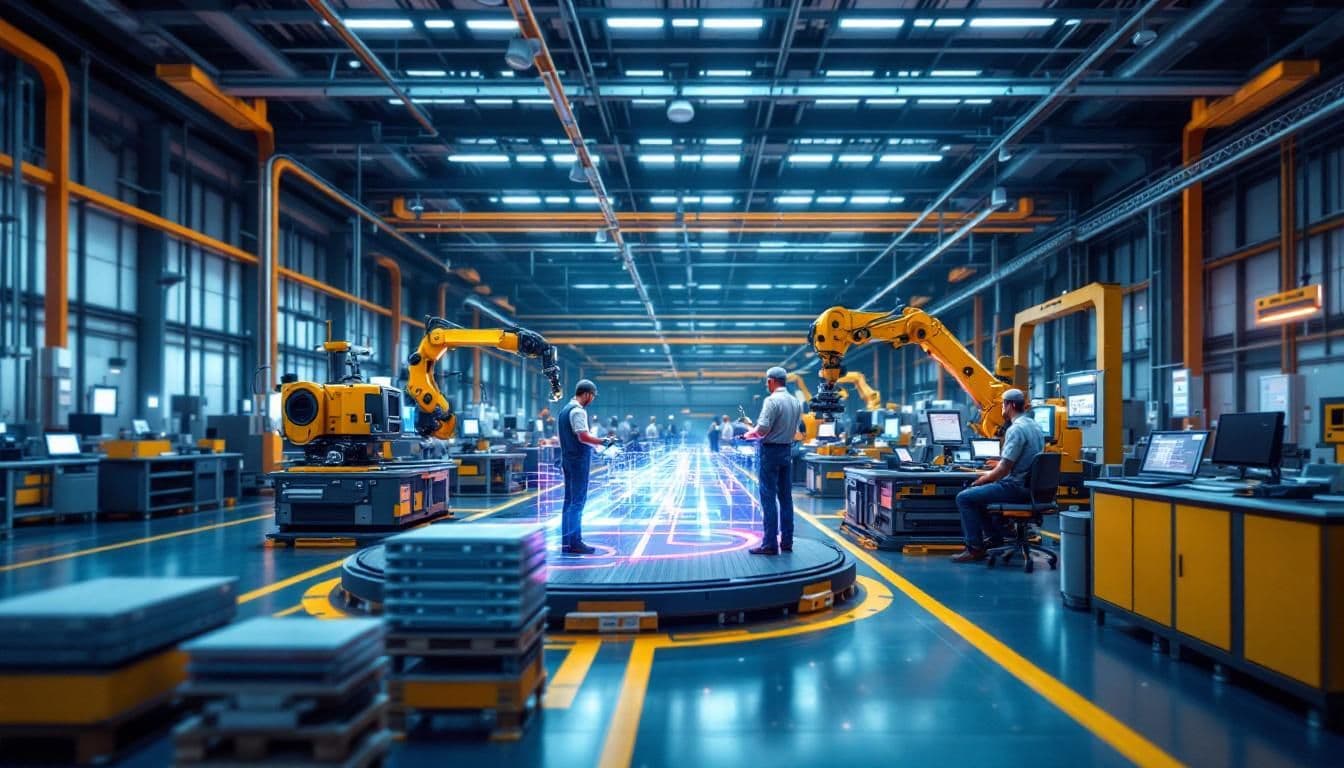
AI courses for manufacturing companies. Modules covering quality management documentation, safety compliance, operations optimisation, and supply chain intelligence with AI.
Article
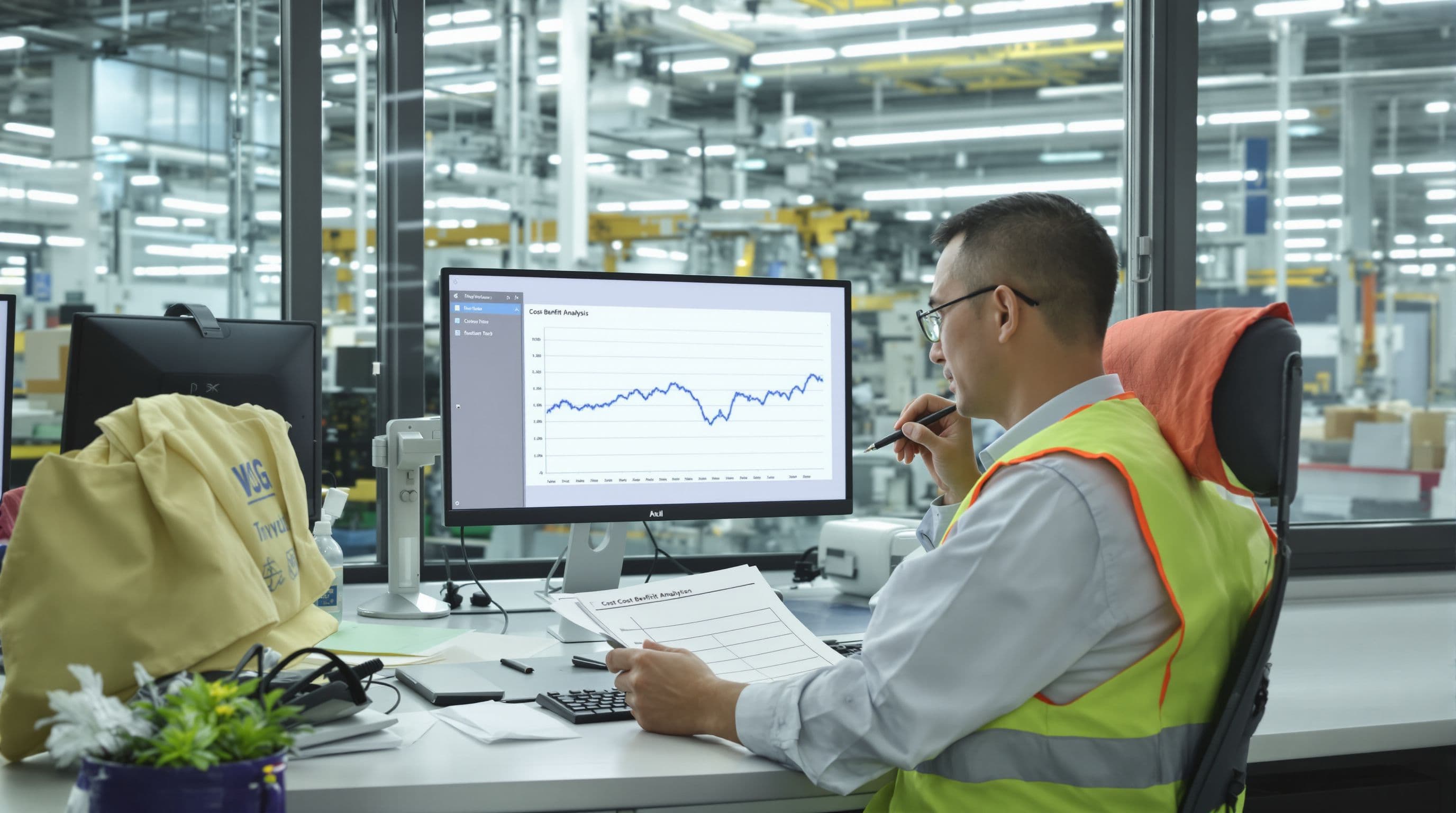
Manufacturing AI costs: Predictive maintenance $100K-$600K, quality control $120K-$500K, production optimization $150K-$700K. IIoT integration and OT/IT challenges.
THE LANDSCAPE
Discrete manufacturers produce distinct units like cars, electronics, and machinery using assembly lines and component-based processes. AI optimizes production scheduling, predictive maintenance, quality inspection, and supply chain coordination. Manufacturers implementing AI reduce downtime by 35%, improve quality control accuracy by 90%, and increase throughput by 25%.
The global discrete manufacturing market exceeds $8 trillion annually, encompassing automotive, aerospace, consumer electronics, and industrial equipment sectors. These manufacturers face intense margin pressure, complex multi-tier supply chains, and rising quality expectations from customers demanding zero-defect products.
DEEP DIVE
Key technologies transforming discrete manufacturing include computer vision for automated defect detection, machine learning for demand forecasting, digital twins for production simulation, and robotics for flexible assembly. IoT sensors enable real-time equipment monitoring across factory floors. Cloud-based MES and ERP systems provide end-to-end visibility from raw materials to finished goods.
1. Planners manually review sales history and forecasts 2. Check inventory levels across warehouses 3. Calculate reorder points based on rules of thumb 4. Create purchase requisitions manually 5. Submit for approval (3-5 day cycle) 6. Place orders with suppliers 7. React to stockouts after they happen 8. Deal with excess inventory from overordering Result: 15-25% stockout rate, 20-30% excess inventory carrying costs, 5-10 day reorder cycle, reactive management.
1. AI system continuously monitors: sales velocity, inventory levels, supplier lead times, market signals 2. Predictive models forecast demand by SKU/location (14-90 day horizon) 3. Optimization engine calculates optimal reorder points and quantities 4. System detects anomalies: supply disruptions, demand spikes, quality issues 5. For routine items: AI autonomously generates and sends POs to approved suppliers 6. For non-routine items: AI recommends order, flags for human approval 7. Real-time adjustments based on actual vs forecast performance 8. Proactive alerts: potential stockouts 2-3 weeks in advance Result: 3-5% stockout rate, 10-15% inventory reduction, same-day reorder decisions, proactive management.
High risk: Autonomous ordering could create expensive mistakes (over-ordering, wrong items). Forecast errors amplified at scale. Supplier relationship strain if AI places inappropriate orders. System outage could halt entire supply chain. Data quality issues lead to bad predictions. Difficult to explain AI decisions to stakeholders.
Our team has trained executives at globally-recognized brands


YOUR PATH FORWARD
Every AI transformation is different, but the journey follows a proven sequence. Start where you are. Scale when you're ready.
ASSESS · 2-3 days
Understand exactly where you stand and where the biggest opportunities are. We map your AI maturity across strategy, data, technology, and culture, then hand you a prioritized action plan.
Get your AI Maturity ScorecardChoose your path
TRAIN · 1 day minimum
Upskill your leadership and teams so AI adoption sticks. Hands-on programs tailored to your industry, with measurable proficiency gains.
Explore training programsPROVE · 30 days
Deploy a working AI solution on a real business problem and measure actual results. Low risk, high signal. The fastest way to build internal conviction.
Launch a pilotSCALE · 1-6 months
Roll out what works across the organization with governance, change management, and measurable ROI. We embed with your team so capability transfers, not just deliverables.
Design your rolloutITERATE & ACCELERATE · Ongoing
AI moves fast. Regular reassessment ensures you stay ahead, not behind. We help you iterate, optimize, and capture new opportunities as the technology landscape shifts.
Plan your next phaseLet's discuss how we can help you achieve your AI transformation goals.
