Deploy [computer vision](/glossary/computer-vision) AI to automatically inspect products on manufacturing lines, detecting defects, anomalies, and quality issues faster and more consistently than human inspectors. Reduces defect rates, speeds production, and lowers warranty costs. Essential for middle market manufacturers competing on quality. GD&T tolerance verification overlays coordinate measuring machine probe data onto CAD nominal geometry meshes, computing true-position deviations, profile-of-surface conformance zones, and maximum material condition virtual boundary violations that determine acceptance dispositions for precision-machined aerospace and automotive powertrain components requiring PPAP dimensional layout certification. Statistical process control chart automation computes Western Electric zone rules, Nelson trend detections, and CUSUM cumulative deviation triggers from inline measurement streams, initiating containment protocols when assignable-cause variation signatures emerge. Manufacturing quality control through image analysis deploys convolutional neural network architectures, hyperspectral imaging sensors, and structured light profilometry systems to detect surface defects, dimensional deviations, assembly verification failures, and material contamination at production line speeds exceeding human visual inspection capabilities. These machine vision implementations operate across [semiconductor fabrication](/glossary/semiconductor-fabrication), automotive body panel stamping, pharmaceutical blister packaging, and food processing environments where defect escape carries disproportionate recall liability and brand reputation consequences. The economic calculus favoring automated inspection intensifies as product complexity increases, because human inspector fatigue-induced error rates escalate nonlinearly with inspection point density and shift duration. Camera system configurations span monochrome area-scan sensors for static object inspection, line-scan cameras for continuous web material evaluation, three-dimensional structured illumination for surface topology measurement, and multispectral imaging arrays for subsurface defect penetration. Illumination engineering employs directional diffuse, dark-field, bright-field, coaxial, and backlighting configurations optimized to maximize defect contrast for specific anomaly types including scratches, dents, porosity, discoloration, and foreign particle inclusions. Polarization filtering techniques suppress specular reflection artifacts from glossy surfaces that would otherwise mask underlying defect signatures, enabling reliable inspection of polished metals, lacquered finishes, and transparent polymer substrates. Defect [classification](/glossary/classification) [neural networks](/glossary/neural-network) trained on curated datasets comprising thousands of annotated defect exemplars achieve granular discrimination between cosmetic blemishes, functional impairments, and acceptable surface variation within tolerance specifications. [Transfer learning](/glossary/transfer-learning) techniques enable rapid deployment on novel product geometries by [fine-tuning](/glossary/fine-tuning) pretrained feature extraction layers with limited samples of new defect categories. Synthetic defect generation through generative adversarial networks augments training datasets with photorealistic artificially rendered anomaly images, overcoming the data scarcity challenge inherent in manufacturing contexts where genuine defects occur infrequently. Statistical process control integration triggers automated corrective actions when defect density metrics exceed control chart alarm thresholds, communicating upstream process parameter adjustments to programmable logic controllers governing temperature setpoints, pressure profiles, cycle times, and material feed rates. This closed-loop quality feedback eliminates defective production propagation during the interval between defect generation and human detection under conventional inspection regimes. Western Electric zone rules and Nelson trend tests supplement traditional Shewhart charting with pattern recognition heuristics that detect systematic process drift before control limit violations occur. Measurement uncertainty quantification calibrates dimensional inspection results against traceable reference standards, calculating expanded measurement uncertainties compliant with GUM (Guide to the Expression of Uncertainty in Measurement) methodologies. Gage repeatability and reproducibility assessments validate machine vision measurement system adequacy for intended tolerance verification applications. Temperature compensation algorithms correct dimensional measurements for thermal expansion effects when production environment temperatures deviate from calibration reference conditions, maintaining measurement accuracy across seasonal facility temperature variations. Edge computing architectures process image acquisition and [inference](/glossary/inference-ai) computation at the inspection station, eliminating network latency dependencies and ensuring deterministic cycle time performance synchronized with production line takt intervals. Distributed processing topologies scale inspection throughput by parallelizing analysis across multiple hardware accelerator modules. Failover redundancy configurations maintain inspection continuity during individual processor failures by automatically redistributing computational workload across remaining operational nodes without interrupting production line operation. Defect genealogy tracking associates detected anomalies with specific production parameters, raw material lots, and equipment operating conditions, enabling manufacturing engineers to perform systematic root cause correlation analysis. Pareto classification identifies dominant defect categories warranting focused process improvement initiatives. Design of experiments integration enables controlled process parameter variation studies where machine vision inspection provides the dependent variable measurement, accelerating process optimization convergence through automated response surface exploration. Regulatory documentation modules generate inspection audit records satisfying FDA current good manufacturing practice requirements, automotive IATF 16949 control plan specifications, and aerospace AS9100 quality management system documentation obligations including measurement traceability and inspector qualification evidence. Electronic batch record integration for pharmaceutical manufacturing links visual inspection results to product lot release documentation, ensuring only batches passing all appearance criteria receive quality assurance disposition approval. Continuous model performance monitoring detects classification accuracy degradation caused by product design revisions, raw material specification changes, or environmental condition shifts, triggering [automated retraining](/glossary/automated-retraining) workflows that maintain inspection reliability throughout product lifecycle evolution. Golden sample validation procedures periodically present known-defective reference specimens to verify sustained detection sensitivity, providing documented evidence that inspection system discriminative capability remains within validated performance boundaries.
Human quality inspectors visually examine products at various production stages. Inspection pace limited by human speed (5-10 seconds per unit). Inspector fatigue leads to inconsistent defect detection rates. Small defects often missed until customer complaints. Bottleneck in production throughput. High cost of inspector headcount.
High-speed cameras capture images of every product unit on production line. AI vision system analyzes images in real-time (0.5 seconds per unit), comparing to known defect patterns. Flags defective units for removal from line. Automatically logs defect types and frequencies for trend analysis. Inspectors focus on flagged items and complex judgment calls only.
High upfront investment in camera hardware and AI system. Requires extensive training data (thousands of labeled defect images). May have difficulty with novel defect types not seen in training. Lighting conditions and camera positioning critical to accuracy. Integration with existing production line systems complex.
Start with pilot on one production line before full deploymentBuild comprehensive labeled defect image dataset before go-liveMaintain human inspectors as backup and for edge casesImplement regular AI model retraining with new defect examplesWork with experienced machine vision integrator familiar with manufacturing environments
Initial implementation typically ranges from $50K-$200K depending on production line complexity and number of inspection points. Most deployments take 3-6 months from pilot to full production, including camera installation, model training, and integration with existing manufacturing execution systems.
You'll need stable lighting conditions, proper camera mounting points, and network connectivity to your production lines. Most importantly, you need historical defect data and quality standards documentation to train the AI models effectively.
Well-trained AI systems typically achieve 95-99% accuracy versus 80-90% for human inspectors, especially for repetitive defect types. The main risk is false positives initially causing production slowdowns, but this decreases rapidly as models are refined with real production data.
Most manufacturers see 15-25% reduction in defect rates and 30-50% faster inspection speeds within the first year. ROI typically ranges from 200-400% over three years through reduced warranty claims, lower rework costs, and increased production throughput.
Modern computer vision platforms offer APIs and connectors for major ERP systems like SAP, Oracle, and Microsoft Dynamics. Integration typically involves real-time data feeds to your quality management system and automated alerts to production supervisors when defects are detected.
Explore articles and research about implementing this use case
Article
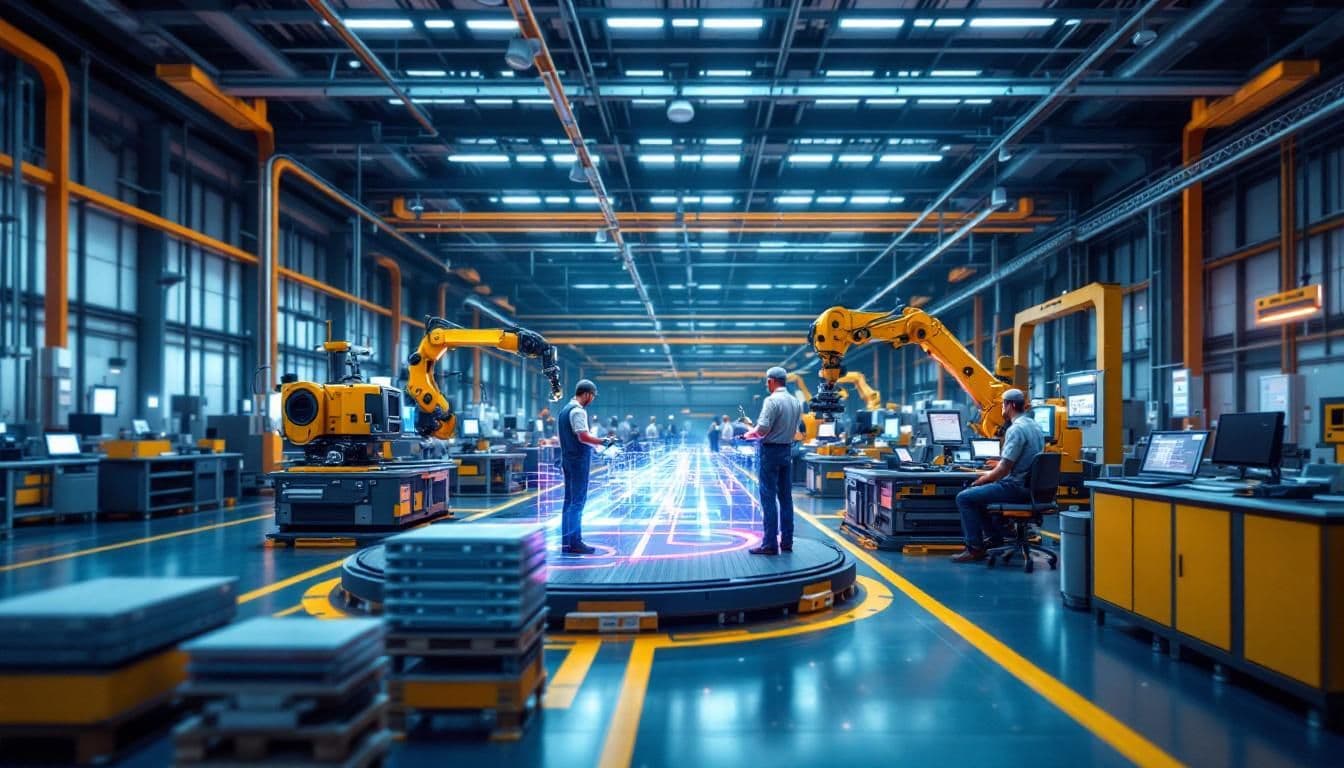
AI courses for manufacturing companies. Modules covering quality management documentation, safety compliance, operations optimisation, and supply chain intelligence with AI.
Article
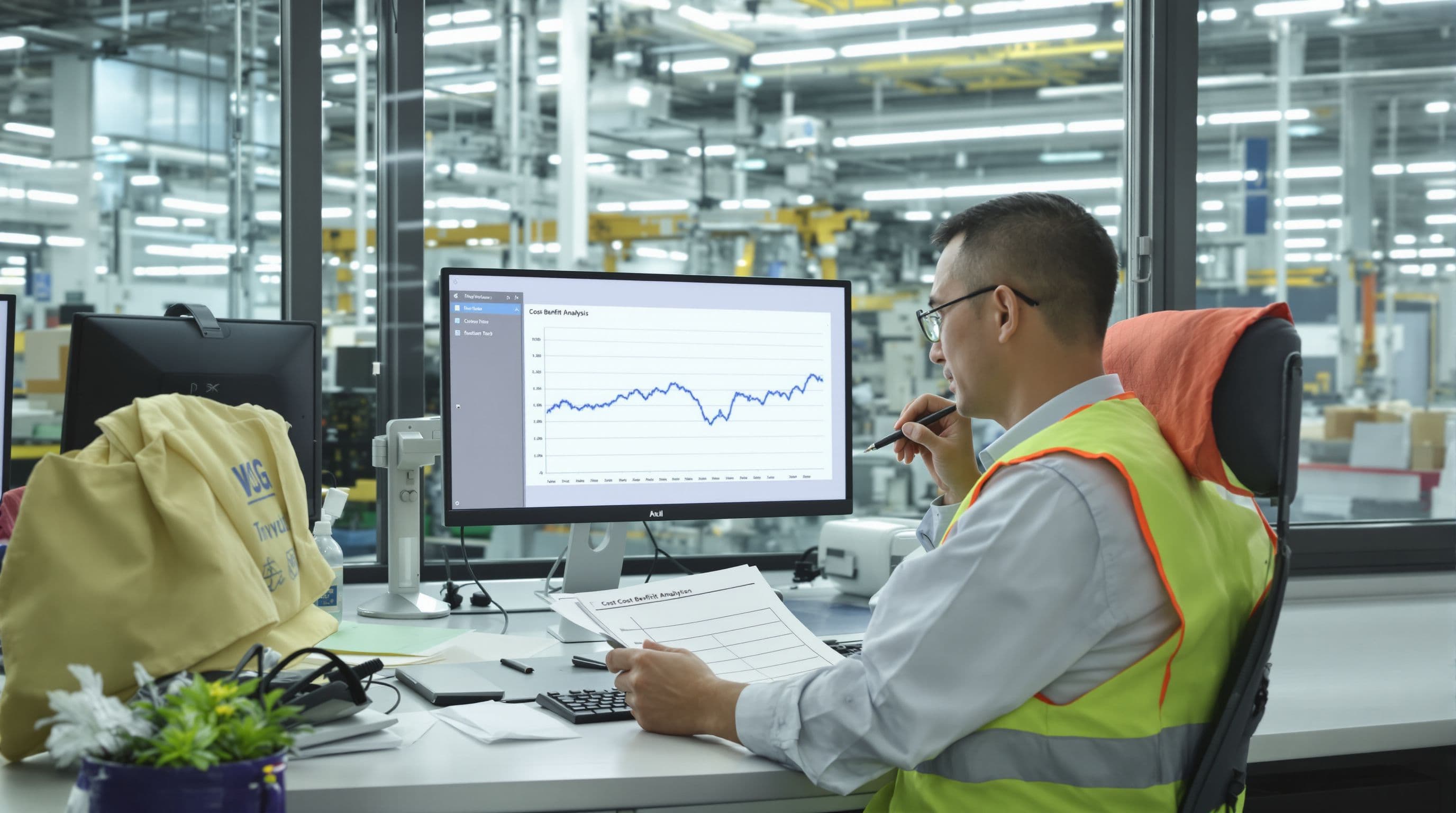
Manufacturing AI costs: Predictive maintenance $100K-$600K, quality control $120K-$500K, production optimization $150K-$700K. IIoT integration and OT/IT challenges.
THE LANDSCAPE
Discrete manufacturers produce distinct units like cars, electronics, and machinery using assembly lines and component-based processes. AI optimizes production scheduling, predictive maintenance, quality inspection, and supply chain coordination. Manufacturers implementing AI reduce downtime by 35%, improve quality control accuracy by 90%, and increase throughput by 25%.
The global discrete manufacturing market exceeds $8 trillion annually, encompassing automotive, aerospace, consumer electronics, and industrial equipment sectors. These manufacturers face intense margin pressure, complex multi-tier supply chains, and rising quality expectations from customers demanding zero-defect products.
DEEP DIVE
Key technologies transforming discrete manufacturing include computer vision for automated defect detection, machine learning for demand forecasting, digital twins for production simulation, and robotics for flexible assembly. IoT sensors enable real-time equipment monitoring across factory floors. Cloud-based MES and ERP systems provide end-to-end visibility from raw materials to finished goods.
Human quality inspectors visually examine products at various production stages. Inspection pace limited by human speed (5-10 seconds per unit). Inspector fatigue leads to inconsistent defect detection rates. Small defects often missed until customer complaints. Bottleneck in production throughput. High cost of inspector headcount.
High-speed cameras capture images of every product unit on production line. AI vision system analyzes images in real-time (0.5 seconds per unit), comparing to known defect patterns. Flags defective units for removal from line. Automatically logs defect types and frequencies for trend analysis. Inspectors focus on flagged items and complex judgment calls only.
High upfront investment in camera hardware and AI system. Requires extensive training data (thousands of labeled defect images). May have difficulty with novel defect types not seen in training. Lighting conditions and camera positioning critical to accuracy. Integration with existing production line systems complex.
Our team has trained executives at globally-recognized brands


YOUR PATH FORWARD
Every AI transformation is different, but the journey follows a proven sequence. Start where you are. Scale when you're ready.
ASSESS · 2-3 days
Understand exactly where you stand and where the biggest opportunities are. We map your AI maturity across strategy, data, technology, and culture, then hand you a prioritized action plan.
Get your AI Maturity ScorecardChoose your path
TRAIN · 1 day minimum
Upskill your leadership and teams so AI adoption sticks. Hands-on programs tailored to your industry, with measurable proficiency gains.
Explore training programsPROVE · 30 days
Deploy a working AI solution on a real business problem and measure actual results. Low risk, high signal. The fastest way to build internal conviction.
Launch a pilotSCALE · 1-6 months
Roll out what works across the organization with governance, change management, and measurable ROI. We embed with your team so capability transfers, not just deliverables.
Design your rolloutITERATE & ACCELERATE · Ongoing
AI moves fast. Regular reassessment ensures you stay ahead, not behind. We help you iterate, optimize, and capture new opportunities as the technology landscape shifts.
Plan your next phaseLet's discuss how we can help you achieve your AI transformation goals.
