ChatGPT
 Google AI
 Claude
 Perplexity
 Grok
Grok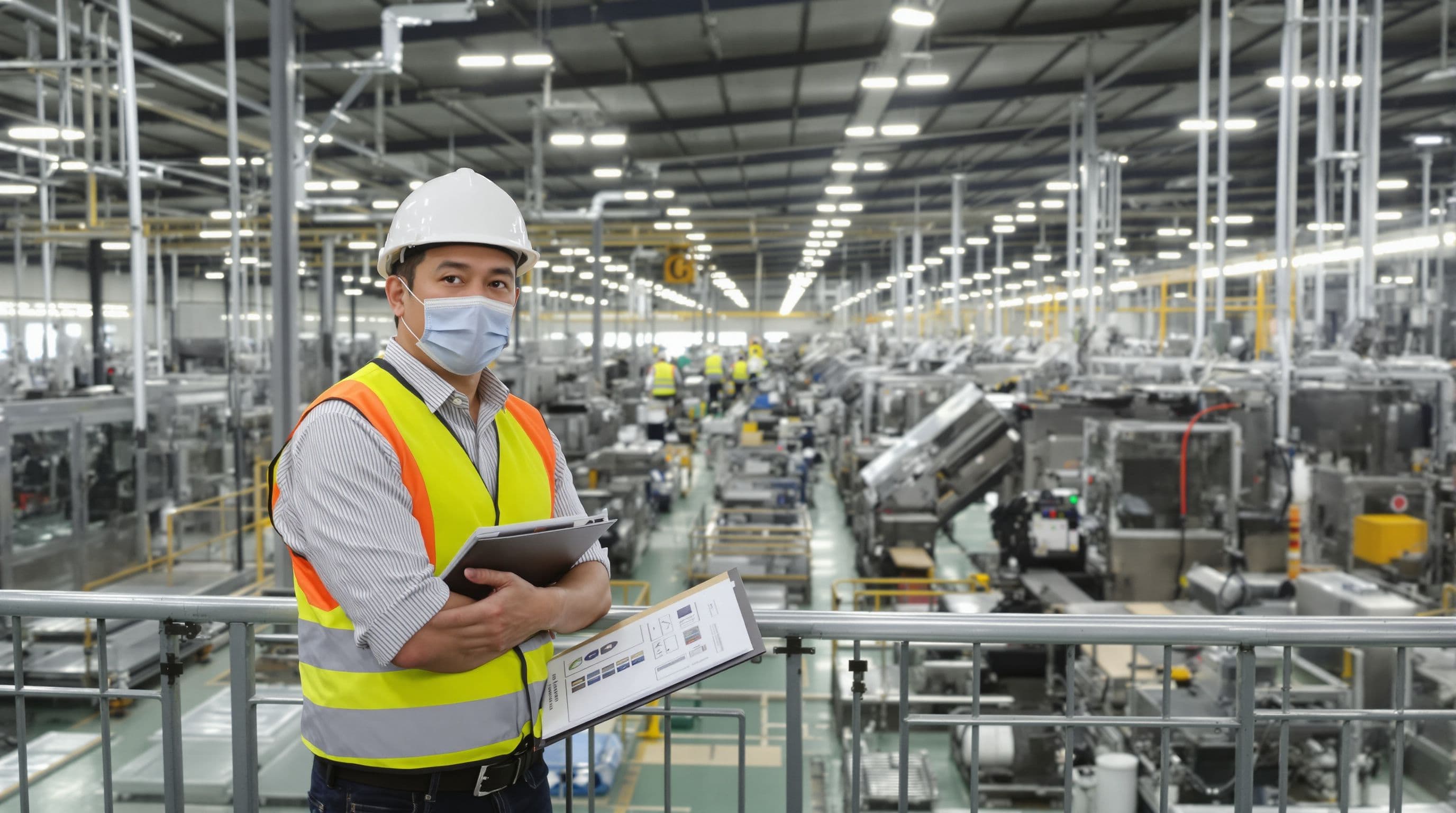
The Factory Floor Reality
Manufacturing AI promises predictive maintenance, quality inspection automation, and production optimization. Yet 76% of manufacturing AI projects fail to scale beyond pilot phase. Unlike software industries where AI deployments happen in clean cloud environments, manufacturing AI must survive factory floors with vibration, dust, electromagnetic interference, temperature extremes, and legacy machinery from the 1980s that wasn't designed to communicate with anything.
The gap between lab success and production failure is measured in degrees Celsius, decibels, and decades of technical debt.
Why Manufacturing AI Fails Differently Than Other Sectors
Manufacturing's 76% failure rate has a distinct root cause: operational technology (OT) and information technology (IT) integration complexity that doesn't exist in pure software deployments.
The OT/IT divide: Manufacturing runs on two incompatible technology stacks. IT systems (ERP, MES, databases) speak modern protocols like REST APIs and SQL. OT systems (PLCs, SCADA, industrial controllers) speak proprietary protocols from the 1990s like Modbus, Profibus, and vendor-specific formats. An AI model needs data from both worlds, and getting them to communicate requires custom middleware that AI vendors rarely budget for.
Environmental constraints software engineers never face: A computer vision AI achieves 99% defect detection accuracy in the lab. On the factory floor, it drops to 67% because: lighting changes throughout the day as sun angles shift, vibration from adjacent machinery blurs camera images, dust accumulates on camera lenses requiring daily cleaning, and temperature fluctuations cause thermal expansion that throws off calibration.
Legacy equipment that predates modern connectivity: The average factory's critical equipment is 18-25 years old. These machines were built when "connectivity" meant a serial port for firmware updates, not streaming sensor data to cloud AI models. Retrofitting sensors costs $50K-200K per machine, a budget line AI pilots never include.
The Four Failure Patterns Specific to Manufacturing AI
Pattern 1: Pilot on Clean Data, Deploy on Reality
A predictive maintenance AI trains on 2 years of sensor data from a well-maintained pilot line. Model accuracy in testing: 94% for predicting bearing failures 48 hours in advance.
Deployment to actual production lines reveals: sensor data has 30-40% missing values due to network dropouts, machine operators bypass sensors when they interfere with production quotas, environmental noise creates false positives that production teams learn to ignore, and the AI trained on "normal" operation has never seen the workarounds operators use daily.
Why this happens: AI teams get curated historical data from the pilot line's most reliable sensors. Production lines have sensor gaps, intermittent connectivity, and operator interventions that create data patterns the AI never trained on. No one tested the AI with real-world data corruption.
Pattern 2: Ignoring Shopfloor Culture and Operator Trust
A quality inspection AI launches to reduce defect rates. The system flags products for rejection based on computer vision analysis. Adoption after 6 months: operators override 73% of AI recommendations.
Operators explain: AI flags cosmetic issues that don't affect function and customers accept, AI misses defects visible to human eye but outside training parameters, AI recommendations slow production below quota thresholds, and decades of experience tells them the AI is wrong, and they're often right.
Why this happens: Engineers optimize for accuracy metrics (precision, recall, F1) without involving operators who understand what "defect" means in practice. The AI lacks context operators have: which defects matter to which customers, how defects interact with downstream processes, when cosmetic issues are acceptable trade-offs for delivery deadlines.
Pattern 3: Underestimating OT Security and Safety Constraints
A production optimization AI connects to PLCs controlling robotic arms, conveyors, and automated systems. The AI recommends process changes in real-time to maximize throughput.
Safety engineering discovers the AI's recommendations violate: OSHA-required safety interlocks, UL certification parameters for equipment operation, emergency stop protocols mandated by insurance, and operational limits defined in ISO 26262 functional safety standards. The project is halted after 4 months.
Why this happens: AI teams treat OT systems like IT systems, mutable, upgradeable, configurable. Industrial equipment has safety certifications that become invalid if operating parameters change. An AI recommending "speed up the conveyor 15%" might invalidate $2M in safety certifications and expose the company to liability.
Pattern 4: Cloud AI vs Edge Reality
A visual inspection AI is built assuming cloud connectivity for model inference. The factory floor has: 200ms latency to cloud due to limited internet bandwidth, production line running at 100 units/minute requiring sub-50ms inference, network downtime 2-3 times per week that would halt inspection, and data sovereignty regulations prohibiting sending images of proprietary parts to cloud.
Solution requires edge deployment, but the AI was never designed to run on edge hardware with limited compute, and retraining for edge optimization takes 9 months.
Why this happens: AI architects assume cloud infrastructure availability. Manufacturing has bandwidth constraints, latency requirements, uptime demands (99.9%+ for critical lines), and regulatory constraints that make cloud AI impractical. Edge deployment isn't a deployment choice, it's a fundamental architectural requirement they discover too late.
The Hidden Costs of Manufacturing AI Failures
Production disruption during failed pilots: Testing AI on live production lines means downtime when things go wrong. A failed vision system pilot that halted a automotive part line for 6 hours cost $240K in lost production, more than the entire pilot budget. Manufacturers become risk-averse after one expensive failure.
Operator skepticism that persists for years: Factory workers who experience AI systems that don't work in real conditions become resistant to all future AI initiatives. One facility abandoned AI entirely after operators developed a culture of "AI doesn't understand our work" following three failed deployments.
Technical debt from halfway implementations: Manufacturing facilities end up with sensor infrastructure, networking upgrades, and edge computing hardware from failed AI projects. This equipment needs maintenance but delivers no value, a recurring cost with no ROI.
What Successful Manufacturing AI Projects Do Differently
1. Environmental stress testing before deployment
Successful teams don't just test accuracy, they test robustness under factory conditions. They run pilots through: temperature cycling (10°C to 45°C), vibration profiles matching production floor reality, dust and contamination exposure, lighting variation throughout production shifts, and electromagnetic interference from nearby equipment.
Example: A pharmaceutical manufacturing AI company built a test chamber mimicking factory conditions, temperature, humidity, vibration, particulates. They discovered their camera housing failed at 38°C (factory ambient temperature in summer). Redesign before deployment prevented a costly field failure.
2. Operator co-design from day one
Successful projects embed AI teams on the factory floor for 1-2 months before writing code. They observe: how operators actually use existing systems, what workarounds they've developed, which process variations are documented vs tribal knowledge, what "defect" means in practice vs specification, and what information would actually help vs distract.
Example: A quality inspection AI team shadowed operators for 6 weeks. They learned operators could distinguish 5 defect categories by sound, information not in any specification. The final AI incorporated acoustic sensors based on this operator knowledge, achieving 91% accuracy vs 67% for vision-only approaches.
3. OT/IT integration architecture from the start
The successful 24% budget OT/IT integration as 40-50% of total project cost, not an afterthought. They: audit existing OT protocols and connectivity before proposing AI architecture, design for edge deployment with cloud sync (not cloud-first), build in offline fallback modes for network outages, and engage OT engineering teams as co-owners, not stakeholders.
Example: A production optimization AI team mapped OT architecture for 3 months before development. They discovered 7 different PLC vintages with 4 incompatible protocols. They built a universal OT gateway as infrastructure before the AI model, enabling not just the current project but future initiatives.
4. Phased deployment with production safeguards
Successful manufacturing AI doesn't start controlling equipment on day one. They deploy in phases: monitor-only mode (shadow existing systems, no actions), advisory mode (provide recommendations, operator decides), semi-autonomous mode (AI acts within defined bounds, operator can override), and full autonomous mode (only after 6-12 months of validation).
Example: A predictive maintenance AI ran in monitor-only mode for 9 months, logging predictions vs actual failures. This built operator trust ("it really works") and identified edge cases (maintenance scheduled during holidays, cold-start failures). Full deployment achieved 89% adoption vs industry's typical 23%.
Regional Variations in Manufacturing AI Success
Southeast Asian manufacturing shows different patterns than US/European facilities:
Singapore: Higher success rates (35-40%) driven by newer factories with Industry 4.0 infrastructure built-in, government incentives for smart manufacturing (A*STAR programs), and IMDA's AI governance framework providing clearer guidelines than most regions. Singapore's high labor costs justify AI ROI faster.
Malaysia: Mixed results. Electronics manufacturing (Penang) achieves better AI adoption due to existing automation infrastructure. Traditional manufacturing sectors struggle with legacy equipment and cost justification. Successful projects cluster in automotive (Proton's Tanjung Malim plant) and semiconductor facilities.
Thailand: Moderate success (30-35%) in automotive manufacturing (Toyota, Honda facilities) where Japanese manufacturing practices already emphasize data collection and process control. Food and beverage manufacturing lags due to smaller scale and cost sensitivity. Government's Thailand 4.0 initiative accelerating adoption.
Indonesia: Lower success rates (20-25%) due to: highly fragmented manufacturing base (many SME facilities), limited OT infrastructure in existing plants, cost sensitivity making AI ROI harder to justify, and skills gap in OT/IT integration expertise. Success concentrates in large foreign-owned facilities (automotive, electronics) in Karawang and Cikarang industrial zones.
Vietnam: Emerging market (25-30% success) with newer manufacturing infrastructure (advantage: less legacy technical debt) but limited local AI expertise requiring foreign consultants. FDI-driven electronics manufacturing (Samsung, LG facilities) showing higher success than domestic SME manufacturers.
Common Questions
Manufacturing AI must operate in harsh physical environments (vibration, dust, temperature extremes) and integrate with decades-old operational technology (OT) using proprietary protocols. Unlike software deployed in controlled cloud environments, manufacturing AI faces environmental variability, legacy equipment constraints, and OT/IT integration complexity that doubles or triples deployment costs beyond initial estimates.
Assuming pilot success on clean lab data translates to production. Pilots use curated sensor data from well-maintained equipment in controlled conditions. Real production floors have sensor gaps (30-40% missing data), environmental noise, operator workarounds, and equipment variability that AI never trained on. Testing must happen under actual factory conditions—temperature, vibration, dust, lighting variation—not lab perfection.
Successful projects budget $500K-2M for pilot deployments on single production lines and $3-8M for factory-wide scale. Critically, 40-50% of budget should go to OT/IT integration infrastructure (sensors, edge computing, protocol gateways), not AI model development. Manufacturers allocating <25% to integration infrastructure consistently fail during deployment.
Edge deployment is mandatory for most manufacturing AI due to: latency requirements (sub-100ms for real-time decisions), bandwidth constraints (production data can exceed available internet capacity), uptime requirements (factory networks have 99.9%+ availability but internet doesn't), and data sovereignty (regulations often prohibit sending production images/data to cloud). Budget for edge hardware and edge-optimized AI from the start.
Involve operators from day one in co-design, not just final training. Successful projects embed AI teams on factory floor for 1-2 months observing actual work (not just specifications), deploy AI in monitor-only mode for 6-9 months building trust before any autonomous actions, design override capabilities that respect operator expertise, and incorporate operator tribal knowledge (like identifying defects by sound) into AI models rather than dismissing it.
Industrial equipment has safety certifications (UL, ISO 26262, OSHA compliance) that become invalid if operating parameters change. An AI recommending process optimizations might violate certified safety limits, trigger emergency stops, or void insurance coverage. Engage safety engineering teams before deployment, ensure AI operates within certified parameters, and document all changes for recertification requirements.
SEA has newer manufacturing infrastructure (less legacy technical debt) but more fragmented facilities (many SMEs vs large plants) and higher cost sensitivity. Singapore achieves 35-40% success due to Industry 4.0 infrastructure and government support, while Indonesia sees 20-25% due to SME fragmentation and skills gaps. Electronics and automotive sectors show higher success than traditional manufacturing across the region.
References
- AI Risk Management Framework (AI RMF 1.0). National Institute of Standards and Technology (NIST) (2023). View source
- ISO/IEC 42001:2023 — Artificial Intelligence Management System. International Organization for Standardization (2023). View source
- Model AI Governance Framework (Second Edition). PDPC and IMDA Singapore (2020). View source
- Cybersecurity Framework (CSF) 2.0. National Institute of Standards and Technology (NIST) (2024). View source
- OWASP Top 10 for Large Language Model Applications 2025. OWASP Foundation (2025). View source
- Enterprise Development Grant (EDG) — Enterprise Singapore. Enterprise Singapore (2024). View source
- OECD Principles on Artificial Intelligence. OECD (2019). View source