
NSDA AI Training for Financial Services in Thailand
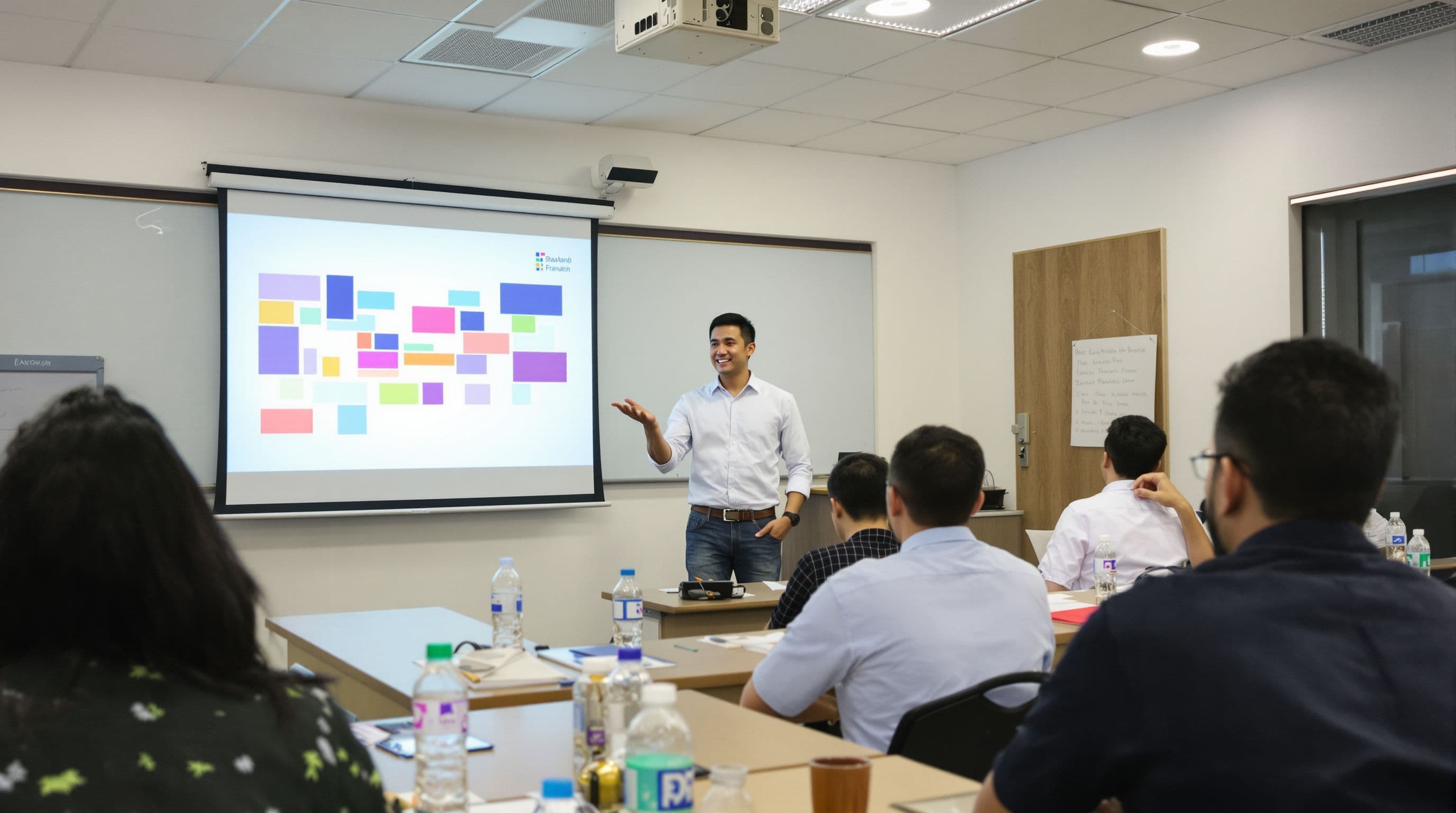
Thai banks, insurance companies, and fintech firms can leverage Thailand's national skills development system to build AI capabilities while maximising government incentives. This guide covers relevant training programmes, regulatory alignment with Bank of Thailand and SEC Thailand requirements, and how financial institutions can claim the 200% tax deduction for AI training.
- Thai-registered financial institutions (banks, insurance companies, fintech)
- BOT-licensed and SEC-licensed entities
- Individual employees must be Thai citizens for free DSD courses
- Companies must register training with DSD for the 200% tax deduction
- SME fintech firms eligible for depa grants
- Assess workforce AI training needs aligned with BOT and SEC requirements
- Design or select training programmes meeting DSD and regulatory standards
- Register training with DSD via Form SDP 1 at least 15 days in advance
- Deliver training using qualified instructors
- Submit Form SDP 2 to DSD within 60 days of completion
- For depa grants: submit application through depa portal with fintech training proposal
- Claim 200% deduction in annual corporate tax filing with complete documentation
AI in Thai Financial Services
Thailand's financial services sector is undergoing rapid digital transformation, driven by regulatory encouragement and competitive pressure. The Bank of Thailand (BOT) has actively promoted fintech innovation through regulatory sandboxes, open banking frameworks, and digital payment infrastructure (PromptPay). The Securities and Exchange Commission Thailand (SEC) has established frameworks for digital assets and AI-powered trading. For financial institutions, AI skills are essential for compliance, competitiveness, and customer experience.
Key AI applications in Thai financial services:
- Credit scoring: AI models for the large unbanked population and thin-file borrowers in Thailand
- Fraud detection: Real-time transaction monitoring for PromptPay and digital banking channels
- Regulatory compliance: Automated Anti-Money Laundering (AML) and Know Your Customer (KYC) processes
- Customer service: AI chatbots and virtual assistants for LINE-based banking (Thailand's dominant messaging platform)
- Risk management: Predictive analytics for credit, market, and operational risk
- Insurance: AI-powered claims processing, underwriting, and telematics-based pricing
Regulatory Context for AI in Thai Finance
Bank of Thailand (BOT) Requirements
The BOT has issued guidance on technology risk management that affects AI adoption:
- BOT Notification on IT Risk Management: Requires financial institutions to assess and manage risks associated with new technologies including AI. Staff using AI systems must be adequately trained.
- Responsible AI Guidelines: The BOT encourages banks to adopt AI responsibly, with requirements for explainability, fairness, and human oversight. Training on these principles is essential.
- Digital Payment Supervision: AI systems used in PromptPay and payment processing must meet BOT security standards, requiring trained staff to monitor and manage these systems.
- Open Banking Framework: BOT's open API framework requires banks to manage third-party AI integrations, necessitating AI literacy among compliance and technology teams.
SEC Thailand Requirements
The SEC has established specific requirements for AI in capital markets:
- Digital Asset Regulation: Operators of digital asset exchanges and ICO portals must demonstrate technology competency, including AI-powered surveillance and compliance systems.
- Algorithmic Trading: Firms using AI for trading must have qualified staff who understand model risk and can explain AI-driven decisions to regulators.
- AI in Investment Advisory: Robo-advisory services must meet SEC licensing requirements, with staff trained in AI model governance and client suitability.
Office of Insurance Commission (OIC) Guidance
The OIC is developing frameworks for AI in insurance:
- AI-powered underwriting must meet fairness and non-discrimination standards
- Claims processing AI must be explainable and auditable
- Insurers must train staff to oversee and validate AI decisions
Relevant NSDA Programmes for Financial Services
DSD Courses Applicable to Finance
- Data Analytics and Business Intelligence — 90 hours at ISD centres. Covers data analysis, visualisation, and predictive analytics using tools commonly deployed in Thai financial institutions.
- Programming and Software Development — 120 hours. Python programming with financial applications, API integration, and basic ML model development.
- Cybersecurity Fundamentals — 80 hours. Critical for protecting financial data and meeting BOT security requirements.
depa Financial Sector Digital Training
depa has specific programmes relevant to financial services:
- Fintech Innovation Programme: Training on AI applications in payments, lending, and insurance
- Digital Risk Management: AI tools for compliance, fraud detection, and cybersecurity
- Data-Driven Finance: Advanced analytics and ML for financial modelling
TPQI Financial Technology Qualifications
TPQI has developed professional qualifications relevant to financial services AI:
- Financial Data Analyst: Levels 4-5, covering AI-powered financial analysis
- Fintech Developer: Levels 4-6, including AI/ML development for financial applications
- IT Security Professional: Levels 4-6, including AI-powered security monitoring
Building AI Capabilities in Thai Financial Institutions
Recommended Training Architecture
Tier 1 — AI Literacy for All Staff (Free via DSD)
- Basic AI concepts and terminology
- AI tools for everyday productivity (email, document processing, data entry)
- Responsible AI awareness (bias, privacy, fairness)
- 1-2 days, delivered at DSD centres or online
Tier 2 — Functional AI Skills (200% Tax Deduction)
- Role-specific AI tool training (credit, compliance, risk, operations)
- Hands-on practice with institution's AI systems
- Regulatory compliance for AI-assisted decisions
- 3-5 days, delivered in-house with DSD registration
Tier 3 — Advanced AI Development (depa Grants + Tax Deduction)
- ML model development and deployment
- AI governance and model risk management
- Advanced NLP for regulatory document analysis
- 2-4 weeks, delivered by specialised providers like Pertama Partners
BOT Compliance Training Integration
AI training for financial institutions should explicitly address BOT requirements:
- Model risk management: Staff must understand AI model limitations, validation requirements, and documentation standards
- Explainability: Teams using AI for credit decisions must be able to explain model outputs to customers and regulators
- Bias monitoring: Training should cover how to detect and mitigate bias in AI models, particularly for credit scoring and insurance pricing
- Incident response: Staff must know how to identify and respond to AI system failures
Tax Deduction Maximisation for Financial Institutions
Financial institutions can maximise the 200% tax deduction by:
- Registering all AI training with DSD: Even internal workshops and seminars can qualify if properly registered
- Using TPQI-aligned curricula: Programmes mapped to TPQI qualifications are readily approved
- Documenting comprehensively: Maintain attendance records, assessment results, and training materials for Revenue Department audits
- Training broadly: The more employees trained, the greater the deduction — AI literacy for all staff maximises the benefit
Pertama Partners for Thai Financial Services
Pertama Partners specialises in AI training for financial services across Southeast Asia. Our Thailand programmes are:
- Registered with DSD for the 200% tax deduction
- Aligned with BOT responsible AI guidelines
- Compliant with SEC requirements for digital asset and algorithmic trading training
- Mapped to TPQI professional qualification standards
Our Financial Services AI programmes cover:
- AI for credit risk modelling (BOT-aligned)
- Machine learning for AML and fraud detection
- NLP for regulatory compliance automation
- AI governance for Thai financial institutions
- Responsible AI in lending, insurance, and investment
Contact us to design a regulatory-aligned AI training programme for your Thai financial institution.
Common Questions
The BOT's IT Risk Management notifications require financial institutions to ensure staff are adequately trained on technologies they use, which includes AI systems. While there is no specific "AI training mandate," banks deploying AI are expected to demonstrate that staff understand the systems, can monitor outputs, and can intervene when necessary. Documented training is essential for regulatory examinations.
Yes. Fintech startups registered in Thailand qualify for the 200% tax deduction for training expenses. Startups may also be eligible for depa digital transformation grants of up to THB 100,000. BOI-promoted fintech companies can access additional incentives under their investment promotion certificates. DSD centre courses are free for all Thai employees regardless of company type.
Register your training programme with DSD to qualify for the tax deduction, and ensure the curriculum explicitly addresses BOT responsible AI guidelines including explainability, fairness, and human oversight. Pertama Partners designs programmes that satisfy both DSD registration requirements and BOT expectations, providing documentation for both regulatory compliance and tax filing.
The Office of Insurance Commission (OIC) is developing AI governance guidelines that will include training expectations. Insurers using AI for underwriting, claims processing, or pricing should proactively train staff on AI model management, fairness assessment, and regulatory compliance. Starting training now positions your company ahead of formal requirements.
References
- Department of Skill Development - Ministry of Labour. DSD Thailand (2025). View source
- DEPA Digital Skill Roadmap. Digital Economy Promotion Agency (2024). View source
- BOI Thailand. BOI (2025). View source
Explore AI consulting, training, and solutions in Thailand.
View Thailand hubBuild AI capabilities in your Thai financial institution
We help organizations navigate funding programs and deliver claimable AI training. Let us know what you are working on.
Start a Conversation