
Decree 182 High-Tech Training: 50% AI & Advanced Technology Subsidies in Vietnam
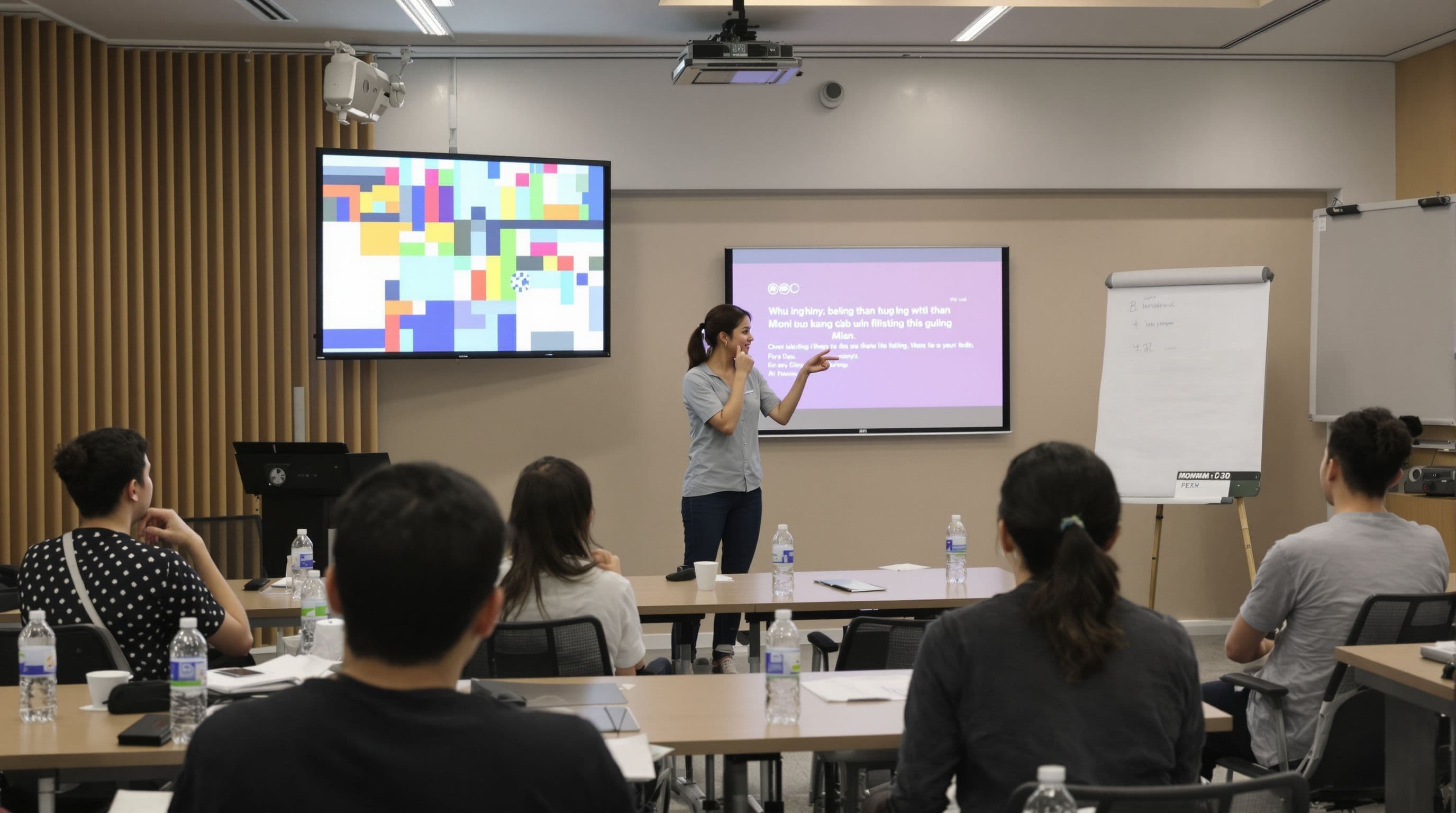
Decree 182/2021/ND-CP provides 50% reimbursement for AI, semiconductor, automation, and advanced manufacturing training, with up to VND 100 million per employee annually. This program accelerates Vietnam's high-tech workforce development.
- High-tech enterprises certified under Law on High-Tech 2008 and Decree 76/2018/ND-CP
- Must meet R&D investment, technical personnel, or technology level criteria
Verify high-tech status → Submit training plan to MOST or provincial Dept. of Science & Technology → Receive pre-approval → Execute training → Submit completion documentation → Receive 50% reimbursement in 90-120 days
Understanding Decree 182 High-Tech Training Support
Decree 182/2021/ND-CP represents Vietnam's strategic investment in high-technology workforce development. While offering a lower subsidy percentage (50%) than SME-focused programs, Decree 182 provides significantly higher per-employee caps and covers cutting-edge technology training that other programs don't fund.
Why Decree 182 Matters for Tech Companies
Vietnam aims to become a regional high-tech manufacturing and R&D hub. Decree 182 directly supports this goal by subsidizing training in:
- Artificial Intelligence & Machine Learning: Development, deployment, and maintenance
- Semiconductor Design & Manufacturing: IC design, testing, fabrication processes
- Advanced Manufacturing: Industry 4.0, robotics, IoT integration
- Biotechnology: Pharmaceutical development, medical devices
- New Materials: Composites, nanomaterials, advanced polymers
- Renewable Energy: Solar, wind, battery technology
Key Program Details (2026)
Subsidy Rate: 50% reimbursement
Maximum per Employee: VND 100,000,000 annually (double Decree 80)
Eligible Companies: High-tech enterprises as defined by Law on High-Tech 2008 and Decree 76/2018/ND-CP
Priority Industries:
- Information Technology (AI, cloud, cybersecurity)
- Electronics & Semiconductors
- Automation & Mechatronics
- Biotechnology & Pharmaceuticals
- New Materials
- Clean Energy
Approval Authority: Ministry of Science and Technology (MOST) or authorized provincial departments
High-Tech Enterprise Status: Do You Qualify?
To access Decree 182, your company must meet high-tech enterprise criteria:
Automatic Qualification
Companies with valid High-Tech Enterprise Certificate issued by MOST.
Certification Requirements (Decree 76/2018/ND-CP)
Meet ANY of these criteria:
R&D Investment:
- Minimum 0.5% of revenue on R&D activities
- Or minimum 1% of revenue for trading companies
- Sustained for minimum 3 consecutive years
Technical Personnel:
- Minimum 5% of workforce holds university degrees in science/technology
- Or minimum 10% for manufacturing companies
Technology Level:
- Use technology classified as "high-tech" per MOST's High-Tech List
- Or develop products on the High-Tech Product List
- Or provide services on the High-Tech Service List
Revenue from High-Tech:
- Minimum 30% of revenue from high-tech products/services
- Must be verifiable through sales records and product documentation
How to Obtain High-Tech Enterprise Certificate
Timeline: 3-6 months from application to certificate issuance
Process:
- Prepare documentation proving criteria compliance
- Submit to MOST or provincial Department of Science & Technology
- Undergo technical evaluation
- Receive certificate (valid 5 years, renewable)
Benefits Beyond Decree 182:
- 10% Corporate Income Tax rate (vs. standard 20%)
- Import duty exemptions on equipment
- Priority land allocation in high-tech zones
- Preferential credit access
Pertama Partners Note: If you're considering Decree 182 but don't have high-tech status, we can assess your eligibility and guide the certification process.
Eligible Training: What Qualifies?
Tier 1: Maximum Priority (Easiest Approval)
Artificial Intelligence:
- Machine learning engineering
- Deep learning and neural networks
- Natural language processing
- Computer vision applications
- AI ethics and responsible AI development
Semiconductor & Microelectronics:
- IC design (analog, digital, mixed-signal)
- Semiconductor fabrication processes
- Testing and quality assurance
- Packaging and assembly technology
Advanced Manufacturing:
- Industrial IoT implementation
- Robotics programming and maintenance
- Additive manufacturing (3D printing)
- Smart factory systems integration
Tier 2: Strong Priority (Approved with Justification)
Software Development:
- Cloud architecture (AWS, Azure, GCP)
- Cybersecurity and penetration testing
- Blockchain development
- DevOps and CI/CD practices
Data Science & Analytics:
- Big data processing (Hadoop, Spark)
- Data engineering and pipelines
- Business intelligence and visualization
- Statistical modeling
Automation Engineering:
- PLC programming (Siemens, Allen-Bradley)
- SCADA systems
- Industrial automation protocols
- Predictive maintenance systems
Tier 3: Conditional Approval (Requires Strong Business Case)
Digital Transformation:
- ERP implementation and customization
- Digital twin technology
- AR/VR for industrial applications
Project Management:
- Agile/Scrum for tech projects
- Technical project management
- R&D project leadership
Ineligible Training
- General business skills unrelated to technology
- Basic computer literacy (MS Office)
- Non-technical management training
- Language training (unless for technical communication in high-tech field)
- Training in technologies not on MOST's High-Tech List
Application Process: Step-by-Step
Phase 1: Confirm High-Tech Status (Weeks 1-2)
If You Have Certificate:
- Verify certificate is current (not expired)
- Confirm training aligns with your certified high-tech field
If You Don't Have Certificate:
- Assess eligibility against Decree 76 criteria
- Decide: pursue certification OR use alternative funding (Decree 80, tax deductions)
- Certification timeline: 3-6 months (plan accordingly)
Phase 2: Develop Training Plan (Weeks 2-4)
Strategic Alignment Required:
Decree 182 requires demonstrating training supports your high-tech business strategy. Your plan must include:
- Technology Roadmap: Where is your company headed technologically?
- Skill Gaps: What technical capabilities are missing?
- Business Impact: How will training improve products/services?
- Measurement: How will you assess training effectiveness?
Example (AI company):
- Roadmap: Expanding from chatbots to computer vision products
- Gap: No in-house CV expertise, relying on consultants
- Training: Computer vision and OpenCV for 8 engineers
- Impact: Launch CV product Q4 2026, reduce consultant costs 70%
- Measurement: Product launch milestone, consultant spend tracking
Phase 3: Select Training Provider (Weeks 3-5)
Provider Requirements:
- Valid vocational training license OR
- Recognized university with relevant programs OR
- Foreign training institutions with MOET approval OR
- Technology companies with certified training divisions (Microsoft, AWS, etc.)
Popular Providers for High-Tech Training:
- International: Coursera Enterprise, Udacity, AWS Training, Microsoft Learn
- Regional: NUS-ISS (Singapore), HKUST, Skillsoft
- Local: FPT Software Academy, VNG Academy, VNUHCM
Obtain:
- Detailed curriculum and learning objectives
- Trainer/instructor qualifications
- Certification details (if applicable)
- Pricing with breakdown
- Training delivery format (in-person, online, hybrid)
Phase 4: Prepare Application Dossier (Weeks 5-6)
Required Documents:
-
Application Letter: Formal request on company letterhead to MOST or provincial Dept. of Science & Technology
-
High-Tech Enterprise Certificate: Certified copy with verification
-
Technology Development Plan: Strategic document showing:
- Current technology capabilities
- Development goals for 2-3 years
- How training fits into strategy
- Expected R&D outcomes
-
Training Plan: Comprehensive plan including:
- List of participants with current roles and qualifications
- Training curriculum mapped to business needs
- Schedule and duration
- Expected competencies post-training
- Assessment methodology
-
Financial Documentation:
- Training cost breakdown and quotations
- Calculation of 50% subsidy request
- Company's financial statements (latest year)
- R&D expenditure records (proving high-tech status)
-
Provider Documentation:
- Training provider's license or certification
- Curriculum vitae of instructors
- Accreditation documents (for certifications)
Phase 5: Submit Application (Week 6-7)
Submission To:
- Central: Ministry of Science and Technology (for companies in Hanoi or with national scope)
- Provincial: Department of Science and Technology (for locally-operating companies)
Processing Timeline:
- Initial review: 2 weeks
- Technical evaluation: 2-4 weeks (may include site visit or interview)
- Approval decision: 30-45 days from complete submission
Common Requests for Additional Information:
- Clarification on how training supports R&D activities
- More detailed technology roadmap
- Evidence of instructor qualifications
- Justification for international vs. local training providers
Phase 6: Execute Training (As Approved)
Documentation During Training:
- Daily attendance records (signed by participants)
- Training materials (slides, exercises, resources)
- Photos/videos of training sessions
- Progress assessments or checkpoints
- Any certifications or credentials earned
Compliance Requirements:
- Minimum 80% attendance per participant
- Completion of all assessments
- Training delivered as approved (no major deviations)
- Use of approved training provider
Phase 7: Submit Reimbursement Claim (Post-Training)
Within 60 Days of Training Completion, Submit:
- Completion report detailing outcomes
- Attendance records with signatures
- Training certificates or credentials issued
- Payment receipts and invoices (must match quotations)
- Post-training assessment results
- Participant evaluations/feedback
- Evidence of knowledge application (optional but helpful: project outputs, code samples, process improvements)
Phase 8: Receive Reimbursement (90-120 Days)
Processing:
- Document verification: 3-4 weeks
- Technical assessment: 2-4 weeks (may request proof of training effectiveness)
- Payment approval: 2-3 weeks
- Bank transfer: 1-2 weeks
Payment: 50% of approved training costs via bank transfer
Maximizing Your Decree 182 Benefit
Strategy 1: Combine with AI Law PIT Exemption
For AI professionals, stack benefits:
- 50% training cost reimbursement (Decree 182)
- 5-year PIT exemption for AI workers (AI Law)
Example: Train 10 AI engineers @ VND 80M each
- Total cost: VND 800M
- Decree 182 reimbursement: VND 400M (50%)
- Net cost: VND 400M
- PLUS 5-year PIT savings per engineer: ~VND 150M-300M (depending on salary)
Strategy 2: International Certifications
Invest in globally recognized certifications within the VND 100M cap:
- AWS Solutions Architect Professional: ~VND 85M (training + exam)
- Certified Information Systems Security Professional (CISSP): ~VND 60M
- Google Professional ML Engineer: ~VND 70M
These deliver both immediate capability and recruitment advantages.
Strategy 3: Quarterly Reimbursement Cadence
Decree 182 allows quarterly claims. Instead of one annual training event:
- Q1: Cloud architecture training
- Q2: AI/ML fundamentals
- Q3: Advanced ML specialization
- Q4: Cybersecurity
This maintains cash flow and spreads learning over time for better retention.
Strategy 4: Blend In-Person and Online
International providers offer both:
- Self-paced online: Lower cost, flexible, but less interactive
- Instructor-led online: Moderate cost, scheduled, more engagement
- In-person bootcamps: Higher cost, intensive, maximum impact
Mix formats to maximize VND 100M cap:
- Core concepts: Self-paced (VND 20M)
- Applied skills: Instructor-led online (VND 40M)
- Capstone project: In-person workshop (VND 40M)
- Total: VND 100M (VND 50M reimbursed)
Common Challenges and Solutions
Challenge 1: Don't Have High-Tech Enterprise Certificate
Solution Options:
- Pursue certification if you meet criteria (3-6 month process, but unlocks 10% CIT rate too)
- Use Decree 80 instead if you're an SME (70-100% subsidy vs. 50%, but only VND 50M cap)
- Use CIT deduction (150% deductibility) without subsidy
- Partner with certified company for joint training (advanced strategy)
Challenge 2: Training Provider Isn't Vietnam-Licensed
Issue: International platforms (Coursera, Udacity) don't have Vietnam vocational licenses
Solution:
- Providers partner with local licensed institutions (common practice)
- Or obtain temporary MOET approval for specific program
- Pertama Partners maintains provider partnerships for this purpose
Challenge 3: Proving "High-Tech" Nature of Training
Issue: MOST questions whether training qualifies as high-tech
Solution:
- Reference MOST's High-Tech List explicitly in application
- Map training curriculum to specific technologies on the list
- Demonstrate connection to your certified high-tech products/services
- Include technical syllabi showing advanced concepts
Challenge 4: Long Reimbursement Timeline (90-120 days)
Issue: Cash flow impact from paying full costs upfront
Solution:
- Negotiate payment terms with provider (50% upfront, 50% post-reimbursement)
- Plan training budget assuming 4-month receivable
- Use quarterly claim cycle for steady reimbursement flow
- Consider training credit facilities (some providers offer)
Real Company Examples
Case Study 1: AI Startup (Hanoi)
Company: 35-person AI development company, high-tech certified
Training: Advanced ML specialization from Coursera + Stanford online
Participants: 12 ML engineers
Cost: VND 840,000,000 (VND 70M per engineer)
Subsidy: VND 420,000,000 (50%)
Outcome:
- Launched 2 new AI products using techniques from training
- Reduced reliance on foreign ML consultants
- 3 engineers received promotions to senior roles
- Combined with AI Law PIT exemption: total benefit ~VND 1.2B over 5 years
Case Study 2: Semiconductor Manufacturer (Ho Chi Minh City)
Company: 180-person IC testing facility, high-tech certified
Training: Advanced testing methodologies from Advantest (Japan)
Participants: 25 test engineers and technicians
Cost: VND 1,950,000,000 (VND 78M per engineer)
Subsidy: VND 975,000,000 (50%)
Challenge: Required MOET approval for Japanese provider
Outcome:
- Qualified to test new 7nm chips (previously outsourced)
- Increased testing throughput 40%
- Won contract with major client worth $2M annually
Case Study 3: Robotics Integrator (Da Nang)
Company: 55-person automation company, pursuing high-tech certification
Training: Industrial robotics programming (ABB, KUKA)
Timeline: Applied for high-tech status in Q1, received in Q3, then applied for Decree 182
Cost: VND 520,000,000 for 8 engineers
Subsidy: VND 260,000,000 (50%) + 10% CIT rate benefit
Outcome: Certification process took 5 months but unlocked both Decree 182 and lower tax rate, saving VND 450M in year 1 tax alone
Working with Pertama Partners
Decree 182 involves navigating both technology policy and training regulations. Pertama Partners provides:
High-Tech Status Assessment:
- Evaluate eligibility for high-tech enterprise certification
- Guide certification application if beneficial
- Alternative funding strategies if certification not viable
Training Plan Development:
- Technology roadmap aligned with MOST priorities
- Provider selection from certified network
- Curriculum mapping to High-Tech List
Application Management:
- Complete dossier preparation
- Liaison with MOST or provincial Dept. of Science & Technology
- Technical justification development
Reimbursement Optimization:
- Quarterly claim scheduling
- Complete documentation for fast processing
- Integration with AI Law PIT exemption where applicable
Typical Results:
- VND 300M-1.5B subsidy per client annually
- 85%+ approval rate for first-time applicants
- 30-40% faster processing than industry average
Contact Pertama to assess your Decree 182 eligibility and maximize high-tech training ROI.
Common Questions
Yes. Pure software/IT companies qualify if they meet the criteria: minimum 0.5% revenue on R&D, minimum 5% workforce with science/tech degrees, and minimum 30% revenue from high-tech services. AI development, cybersecurity services, and cloud platforms are recognized high-tech services under Decree 76.
Per employee per year. You can send one employee to multiple courses totaling VND 100M annually, and you'll receive 50% reimbursement (VND 50M) across all their training. The cap resets each calendar year, so planning multi-year development programs can maximize total subsidy.
Yes, with conditions: (1) training provider must obtain MOET approval or partner with Vietnam-licensed institution, (2) training must be in high-tech field aligned with your certificate, (3) costs must be reasonable and justified (MOST may question excessive international fees). Many companies successfully claim for training in Singapore, Japan, US, and Europe.
No. You must have a valid high-tech enterprise certificate BEFORE submitting Decree 182 training applications. However, you can prepare training plans in parallel with your certification application, so you're ready to apply for subsidy immediately upon receiving the certificate. Typical timeline: 3-6 months for certification, then 1-2 months for training approval.
Not for the same company simultaneously. You must choose one program. If you're a high-tech enterprise, you use Decree 182 exclusively. If you're an SME without high-tech status, you use Decree 80. However, companies can potentially use Decree 182 for technical staff and regular CIT deductions for non-technical staff training.
If your certificate was valid when you received training approval, you remain eligible for that specific approved program even if the certificate expires during execution. However, you cannot apply for new programs until you renew the certificate. High-tech certificates are valid for 5 years and renewable with demonstration of continued compliance.
Yes, if they partner with a Vietnam-licensed institution or obtain MOET approval. Major platforms have established partnerships specifically for Vietnam market. Pertama Partners maintains relationships with these platforms' Vietnam representatives to streamline approval. The key is ensuring proper documentation and invoicing structure for reimbursement.
References
- Vietnam Decree 182 - Investment Support Fund. Vietnam Briefing (2024). View source
- Vietnam New CIT Law. EY Global (2025). View source
- Vietnam Corporate Tax Incentives. PwC (2025). View source
Explore AI consulting, training, and solutions in Vietnam.
View Vietnam hubMaximize Decree 182 High-Tech Training Subsidies
We help organizations navigate funding programs and deliver claimable AI training. Let us know what you are working on.
Start a Conversation