
SkillsFuture AI Training for Executives: Leadership in the Age of AI
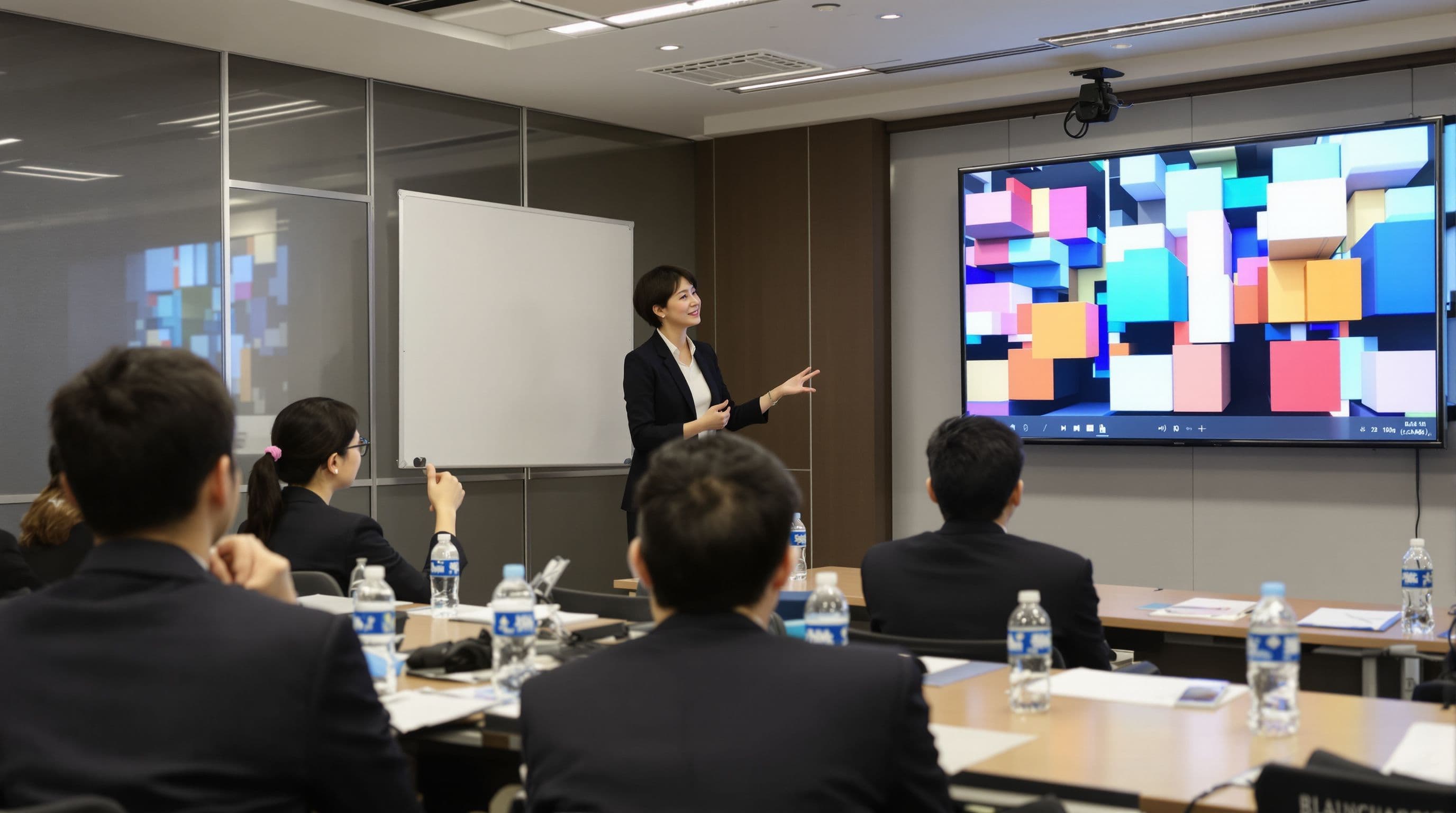
Singapore executives need AI fluency to lead digital transformation. This guide covers SkillsFuture-funded AI training tailored for C-suite and senior leadership, focusing on strategic decision-making, governance, and organizational change management.
- Singapore Citizen or Permanent Resident
- Typically hold executive or senior leadership roles (C-suite, VP, Director)
- Age 40+ for maximum 90% MCES subsidy
- Age 25-39 for 70% subsidy
- No specific educational prerequisites for most executive programs
- Assess your AI learning needs and strategic priorities
- Browse executive AI programs on MySkillsFuture portal (filter by 'Leadership' or 'Executive')
- Verify your automatic subsidy rate (70-90% based on age)
- Register using SingPass
- Pay subsidized course fee (can use SkillsFuture Credit for balance)
- Complete the program and apply learning to your organization
- Consider using company SFEC if multiple executives are training
Why Executives Need AI Training
Artificial intelligence is not just a technology shift—it's a business model transformation. Executives who understand AI's capabilities, limitations, and strategic implications are better positioned to:
Make Informed Investment Decisions: Evaluate AI vendors, tools, and platforms with technical literacy
Set Realistic Expectations: Understand what AI can and cannot do, avoiding costly missteps
Lead Change Management: Guide organizations through AI-driven transformation with confidence
Ensure Ethical AI Use: Implement governance frameworks that mitigate risks
Yet most executives lack formal AI education. SkillsFuture funding makes executive AI training affordable and accessible.
AI Competencies for Executives
Executive AI training differs from technical training. Focus areas include:
Strategic AI Understanding
- AI's impact on business models and competitive advantage
- When to build, buy, or partner for AI capabilities
- AI ROI calculation and value realization
- Industry-specific AI applications and case studies
AI Governance and Ethics
- Responsible AI principles and frameworks
- Data privacy, bias, and fairness considerations
- Regulatory compliance (Singapore PDPA, international standards)
- AI risk management and audit processes
Leading AI Transformation
- Change management for AI adoption
- Building AI-ready organizational culture
- Talent strategies for AI teams
- Communicating AI initiatives to boards and stakeholders
AI in Decision-Making
- Using AI insights to inform strategic decisions
- Understanding AI model outputs and limitations
- Balancing human judgment with algorithmic recommendations
- AI in scenario planning and forecasting
SkillsFuture-Funded Executive AI Programs
WSQ Specialist Diploma in AI Strategy and Leadership
Duration: 6-12 months part-time
Format: Evening/weekend classes or executive modules
Target: C-suite, VPs, Senior Directors
Curriculum Highlights:
- AI Strategy and Business Transformation
- Leading AI Projects and Teams
- AI Governance and Risk Management
- AI-Driven Innovation and Product Development
- Financial Modeling for AI Investments
Funding: 90% subsidy for executives age 40+, reducing S$10,000 program to S$1,000 out-of-pocket
Executive Certificate in AI for Business Leaders
Duration: 3-6 months part-time
Format: Modular, with intensive workshops
Target: CEOs, CFOs, COOs, Board Members
Curriculum Highlights:
- AI Strategy Frameworks for Executives
- AI Economics: Cost, ROI, and Value Creation
- Ethical AI and Corporate Responsibility
- AI Vendor Evaluation and Procurement
- AI-Driven Business Model Innovation
Funding: 70-90% subsidy depending on age, making this S$5,000-8,000 program highly affordable
Customized Executive AI Workshops
Many training providers offer executive-focused workshops (1-3 days):
- "AI for the Boardroom": Half-day to full-day intensive
- "AI Strategy Bootcamp": 2-3 day immersive program
- "Industry AI Masterclass": Sector-specific AI deep dives
These shorter programs are ideal for busy executives and can be SFEC-funded if delivered to multiple executives from the same company.
How Executives Can Access SkillsFuture Funding
Individual SkillsFuture Credit
All Singaporeans age 25+ have SkillsFuture Credit (minimum S$500, with periodic top-ups). Executives can use this for:
- Short executive courses and workshops
- Modular certifications
- Supplementing longer programs after subsidies
Example: An executive attending a S$3,000 AI Strategy workshop receives 70% subsidy (S$2,100), then uses S$500 SkillsFuture Credit, leaving only S$400 out-of-pocket.
MCES (Mid-Career Enhanced Subsidy)
Executives age 40+ qualify for 90% subsidies on eligible courses, dramatically reducing training costs.
Example: A 45-year-old CEO enrolls in a WSQ Specialist Diploma (S$10,000). With 90% MCES, they pay only S$1,000. Using S$500 SkillsFuture Credit brings their cost to S$500.
Company SkillsFuture Enterprise Credit (SFEC)
If multiple executives from your company need training, use SFEC (S$10,000 per company):
- Train 3-4 executives in AI strategy courses
- Combine with individual MCES and SkillsFuture Credit for maximum savings
Example: A company enrolls 3 executives (all 40+) in a S$5,000 AI Leadership program each.
- Total fees: S$15,000
- MCES (90%): -S$13,500
- Net: S$1,500
- SFEC applied: -S$1,500
- Company cost: S$0
Choosing the Right Executive AI Program
Assess Your AI Maturity
Early Stage (Exploring AI): Start with shorter executive certificates or workshops to build foundational understanding before committing to longer programs.
Scaling Stage (Implementing AI): WSQ Specialist Diploma provides depth needed to lead complex AI initiatives.
Advanced Stage (AI-Native): Focus on cutting-edge topics like generative AI, AI ethics at scale, or AI-driven business model innovation.
Match to Your Role
CEOs and Managing Directors: Prioritize AI strategy, business model transformation, and board-level communication.
CFOs: Focus on AI ROI modeling, financial implications of AI investments, and risk management.
COOs and Operations Leaders: Emphasize AI in process automation, supply chain optimization, and operational efficiency.
CTOs and CIOs: Blend strategic and technical content, covering AI architecture decisions, vendor management, and team building.
Board Members: Short, high-level programs covering fiduciary duties related to AI governance and oversight.
Consider Time Commitment
Executive programs are designed for busy schedules:
- Modular formats: Attend modules over several months
- Weekend intensives: Concentrate learning into full weekends
- Online components: Reduce travel and maximize flexibility
- Cohort-based: Learn with peer executives, enhancing networking
Evaluate your schedule realistically before committing.
Industry-Specific Executive AI Training
Financial Services Executives
AI is reshaping banking, insurance, and wealth management. Executive training includes:
- AI in credit underwriting and risk assessment
- Regulatory compliance for AI in finance (MAS guidelines)
- AI-driven customer acquisition and retention
- Fraud detection and prevention using AI
Recommended: Programs with guest speakers from MAS, Singapore banks, and fintech leaders.
Healthcare Executives
Medical AI applications require understanding of clinical workflows and patient safety. Focus areas:
- AI in diagnostics: opportunities and regulatory considerations
- Healthcare data governance and patient privacy
- AI-powered telemedicine and remote care
- ROI of medical AI investments
Recommended: Programs co-developed with healthcare providers or medical institutions.
Manufacturing and Logistics Executives
Operations leaders benefit from AI applications in:
- Predictive maintenance and asset optimization
- Supply chain resilience through AI forecasting
- Quality control automation
- AI-driven sustainability and ESG reporting
Recommended: Hands-on factory or warehouse visits to see AI in action.
Retail and E-Commerce Executives
Retail AI spans customer experience to backend operations:
- Personalization engines and recommendation systems
- Dynamic pricing and demand forecasting
- Inventory optimization using AI
- Generative AI for marketing content
Recommended: Case studies from Singapore retail leaders and global best practices.
Learning Alongside Your Team
The most successful AI transformations happen when executives and teams learn together:
Cascading Training Model
- Executives train first: Build AI literacy and strategic vision
- Mid-managers train next: Develop operational AI implementation skills
- Employees train last: Gain hands-on AI tool proficiency
This top-down approach ensures alignment and leadership support for AI initiatives.
Cohort-Based Learning
Some companies enroll executives, managers, and employees in tiered programs simultaneously:
- Executives: WSQ Specialist Diploma in AI Strategy
- Managers: WSQ Diploma in AI and Data Analytics
- Employees: WSQ Certificate in AI Fundamentals
Everyone learns concurrently but at appropriate depth for their role.
Avoiding Common Executive AI Training Pitfalls
Pitfall 1: Too Technical
Executives don't need to code. Avoid programs heavy on programming languages (Python, R) unless you're a technical executive. Focus on strategic and governance content.
Pitfall 2: Too Generic
Generic "Introduction to AI" courses lack actionable insights. Choose programs with:
- Industry-specific case studies
- Practical frameworks you can apply immediately
- Peer interaction with executives facing similar challenges
Pitfall 3: No Follow-Through
Training without application is wasted investment. Before enrolling:
- Identify specific AI initiatives you'll lead post-training
- Allocate budget for AI pilots
- Commit to internal knowledge sharing
Pitfall 4: Solo Learning
AI transformation requires organizational alignment. Encourage your leadership team to train together, creating shared language and vision.
Measuring ROI of Executive AI Training
How do you know if executive AI training was worthwhile?
Leading Indicators (0-6 months)
- Executives speaking fluently about AI in board meetings
- Strategic AI initiatives launched or accelerated
- Improved AI vendor evaluation and procurement decisions
- Enhanced internal AI governance policies implemented
Lagging Indicators (6-24 months)
- Increased revenue or cost savings from AI initiatives
- Faster time-to-market for AI-powered products/services
- Improved employee AI adoption rates
- Industry recognition or awards for AI leadership
Next Steps: Enrolling in Executive AI Training
- Assess Your AI Learning Needs: What strategic AI decisions are you facing?
- Browse Executive AI Programs: Visit MySkillsFuture and filter for executive/leadership courses
- Check Funding Eligibility: Confirm your subsidy rate (likely 70-90%)
- Discuss with Board/CEO: Align training with organizational AI priorities
- Register: Use your SingPass to enroll in chosen program
- Apply Learning: Implement AI frameworks immediately in your organization
For personalized recommendations on executive AI training programs, contact Pertama Partners. We advise C-suite leaders across Southeast Asia on AI strategy and capability building.
Common Questions
No, executive AI programs focus on strategy, governance, and leadership—not coding. You'll learn enough technical concepts to make informed decisions, but won't be writing code. If a program requires coding, it's likely not designed for executives.
Most executive programs are designed for working professionals, requiring 4-8 hours per week. Many offer weekend intensives or modular formats that concentrate learning into specific periods. Check with the training provider for exact schedules.
Yes, if your company has SkillsFuture Enterprise Credit (SFEC), it can be used to fund your executive training. This is especially cost-effective when combined with your individual MCES subsidy (90% if you're 40+), making training nearly free.
Yes, most programs offer certificates or diplomas. WSQ programs provide nationally recognized credentials. Even non-WSQ executive certificates from reputable providers enhance your professional profile. Many executives list these on LinkedIn and CVs.
Ideally before. Executive AI training provides frameworks for planning and launching initiatives effectively. However, executives with active AI projects also benefit by learning how to course-correct and optimize ongoing efforts. Either timing works.
References
- SkillsFuture Credit. SkillsFuture Singapore (2025). View source
- SkillsFuture Mid-Career Enhanced Subsidy. SkillsFuture Singapore (2025). View source
- SkillsFuture Level-Up Programme. Ministry of Education Singapore (2025). View source
- •WSQ Specialist Diploma in AI Strategy and Leadership
- •Executive Certificate in AI for Business Leaders
- •AI Strategy for the C-Suite
- •AI Governance and Ethics for Executives
- •Leading Digital and AI Transformation
- •AI for Board Members and Directors
- •AI ROI and Value Realization
- •Generative AI for Business Strategy
- •Industry-Specific AI Masterclasses (Finance, Healthcare, Retail, Manufacturing)
Explore AI consulting, training, and solutions in Singapore.
View Singapore hubReady to Explore AI Training in Singapore?
We help organizations navigate funding programs and deliver claimable AI training. Let us know what you are working on.
Start a Conversation