
HRDF AI Training for Healthcare Sector
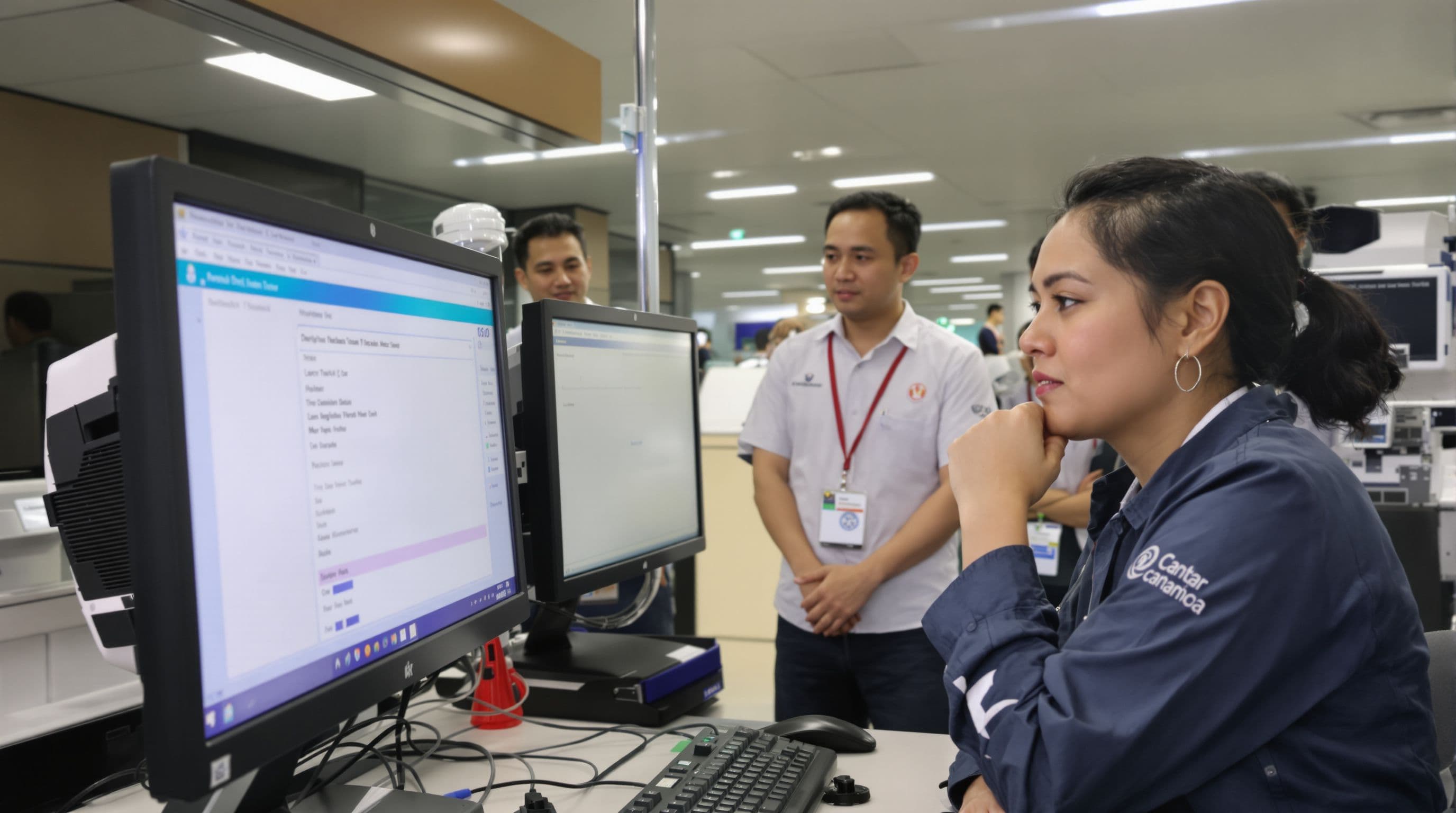
Healthcare providers in Malaysia can access HRDF subsidies for AI training that improves patient care, operational efficiency, and regulatory compliance while maintaining strict data privacy standards.
- Healthcare provider registered with HRDF
- Participants are medical, nursing, or administrative staff
- Training supports patient care improvement
Standard HRDF process. We provide complete application support.
This is a comprehensive, Malaysia-specific guide explaining why and how healthcare providers (hospitals, clinics, diagnostic centers, nursing homes) should adopt AI and use HRDF (HRD Corp) funding to train their staff in 2026, while staying compliant with MMC and MOH regulations.
It covers:
- The business and clinical drivers for AI in Malaysian healthcare (doctor shortages, rising patient volumes, medical errors, regulatory pressure, cost management, and patient expectations).
- HRDF subsidy structures and rates for healthcare (group training, individual training, SBL-KHAS for small providers, and Strategic Training Programs for large hospital groups) with typical subsidy percentages and daily caps.
- Six high-impact AI use cases tailored to Malaysian healthcare:
- AI-powered diagnostics in radiology, pathology, and dermatology (with TB and tropical disease focus, PACS integration, and a Sunway Medical Centre case study).
- Predictive patient flow and resource management (ED, OR, ICU, staffing) with local seasonality patterns and a Pantai Hospital KL case study.
- Clinical Decision Support Systems (CDSS) with MMC-compliant usage rules and a Gleneagles KL case study.
- Patient engagement and health chatbots (multilingual, PDPA-compliant) with a KPJ Healthcare case study.
- Automated medical billing and claims processing (ICD-10/CPT, MyHSR, insurance panels) with a Columbia Asia case study.
- Nursing care optimization and staffing (documentation, risk scoring, med safety, burnout reduction) with a Prince Court case study.
- A detailed, week-by-week operational guide on how to plan, document, and claim HRDF for AI training:
- Pre-training: HRDF registration and levy check, Training Needs Analysis (TNA), selecting an HRDF-registered healthcare AI provider, and submitting SBL applications.
- During training: attendance tracking (including partial attendance for emergencies), material collection, and certificate requirements.
- Post-training: compiling documentation (Borang 5, attendance, certificates, invoices, TNA, approvals, syllabus), submitting claims within 3 months, and tracking reimbursement.
- Common HRDF pitfalls specific to healthcare and how to avoid them, including:
- Mixing eligible and ineligible participants (e.g., locums) in one cohort.
- Poor attendance documentation for staff pulled away for emergencies.
- Choosing generic, non-healthcare AI courses.
- Late claim submission beyond 3 months.
- Mixing clinical and non-clinical training in a single claim.
- Role-based AI training program outlines with HRDF subsidy examples and ROI calculations for:
- Doctors and physicians (AI CDSS, MMC/medical-legal issues, CPD points).
- Nurses and allied health (AI for documentation, risk scoring, patient safety, CNE credits).
- Hospital administrators and operations (patient flow, OR optimization, revenue cycle).
- Pharmacists and lab technicians (AI in pharmacy and lab medicine, inventory, safety).
- Healthcare IT and digital health teams (integrations, standards, chatbots, cybersecurity).
- A positioning section on how Pertama Partners supports healthcare providers end-to-end:
- Clinically grounded trainers and Malaysian case studies.
- Customized, facility-specific programs.
- Full HRDF paperwork and claim support.
- 90-day post-training implementation advisory and vendor connections.
- A concise FAQ addressing eligibility (locums, students), CPD/CNE credits, vendor-led training, large-scale (50+ / 300+ staff) strategic programs, partial attendance, online vs. in-person training, and AI-focused patient safety programs.
- Clear next steps and contact channels (advisory call, email, WhatsApp, website) plus a timestamp indicating information is current as of February 2026.
Overall, the document functions as a practical playbook for Malaysian healthcare organizations to design AI training roadmaps, structure HRDF-claimable programs by role, avoid common claim rejections, and quantify ROI from AI adoption in clinical, operational, and financial domains.
Common Questions
No, all training uses anonymized or synthetic healthcare data. We never use actual patient information in training sessions.
While our training doesn't directly provide CME points, the knowledge gained supports professional development and can be logged for annual CPD requirements. We provide certificates of completion.
Yes, we can tailor training to your specific systems and workflows, including integration scenarios with your EMR platform.
References
- HRD Corp Malaysia. HRD Corp (2025). View source
- HRDF Malaysia 2026 Guide. QuickHR (2026). View source
- Who Needs to Pay HRD Corp Levy?. Crescentech (2025). View source
Explore AI consulting, training, and solutions in Malaysia.
View Malaysia hubSchedule healthcare AI training consultation
We help organizations navigate funding programs and deliver claimable AI training. Let us know what you are working on.
Start a Conversation